
Oil Refiners’ Big Yellow Cash Cow
The Iran war taught the world about chemicals that otherwise never get public attention.
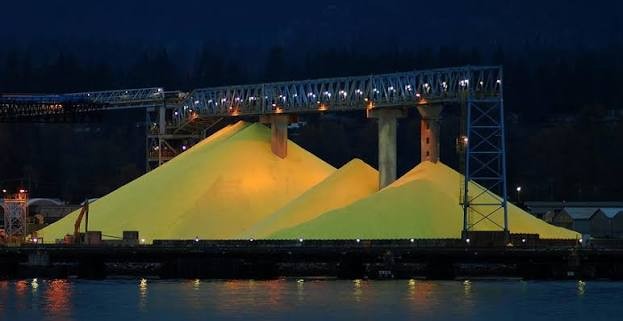
Take sulfur for example. This yellow element goes in nearly everything. The market for sulfur is relatively small, about $6.5 billion per year (in 2025). But we use it in a broad swath of critical stuff:
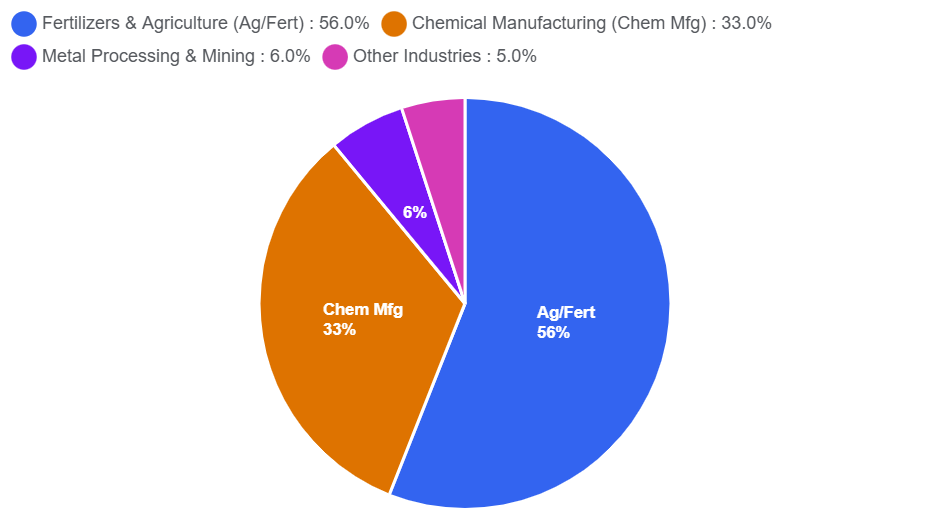
Sulfuric acid is the most important use for sulfur. The largest consumer is phosphate fertilizer. You simply can’t make enough phosphate fertilizer (DAP) without a large supply of sulfur.
It’s also a critical processing agent for many metal refiners including copper, nickel, cobalt, and neodymium. Sulfur is even used in some electric vehicle batteries.
It’s one of those commodities we don’t think about until the price goes up. And boy has it gone up.
Most of the sulfur we use comes from oil refining. A large part of global sulfur comes from refineries in the Persian Gulf…behind the Strait of Hormuz. Fully 50% of the world’s seaborne sulfur got shut down with the Strait closed. And about 40% of the Middle East’s supplies are offline due to military strikes on oil refineries there.
As the shortage hit, Russia, China, and Turkey all restricted or cut off exports to makes sure they had enough for their own use.
As you can imagine, a shortage of something this critical drove prices through the roof. According to a study by the Colorado School of Mines:
Middle East seaborne sulfur prices surged past $800 per ton on arrival in Asia. Some Western benchmarks peaked around $1,500 per ton. Even with a shaky U.S.-Iran peace deal, destroyed regional processing infrastructure and lingering export controls will keep supply bottlenecks tight and maintain a price premium for years. A return to normal global shipping will likely take months, and maybe longer.
Remember, this stuff is critical for phosphate fertilizer manufacturers. A ton of diammonium phosphate fertilizer (DAP) takes almost half a ton of sulfuric acid to make. And it takes about 10 tons of sulfuric acid to make a ton of nickel from ore. When you jack up the price of sulfur, it changes the economics of these, dramatically.
As you can see from the chart below, the price of sulfur soared from 2025 to today. It’s up 10X since January 2025.
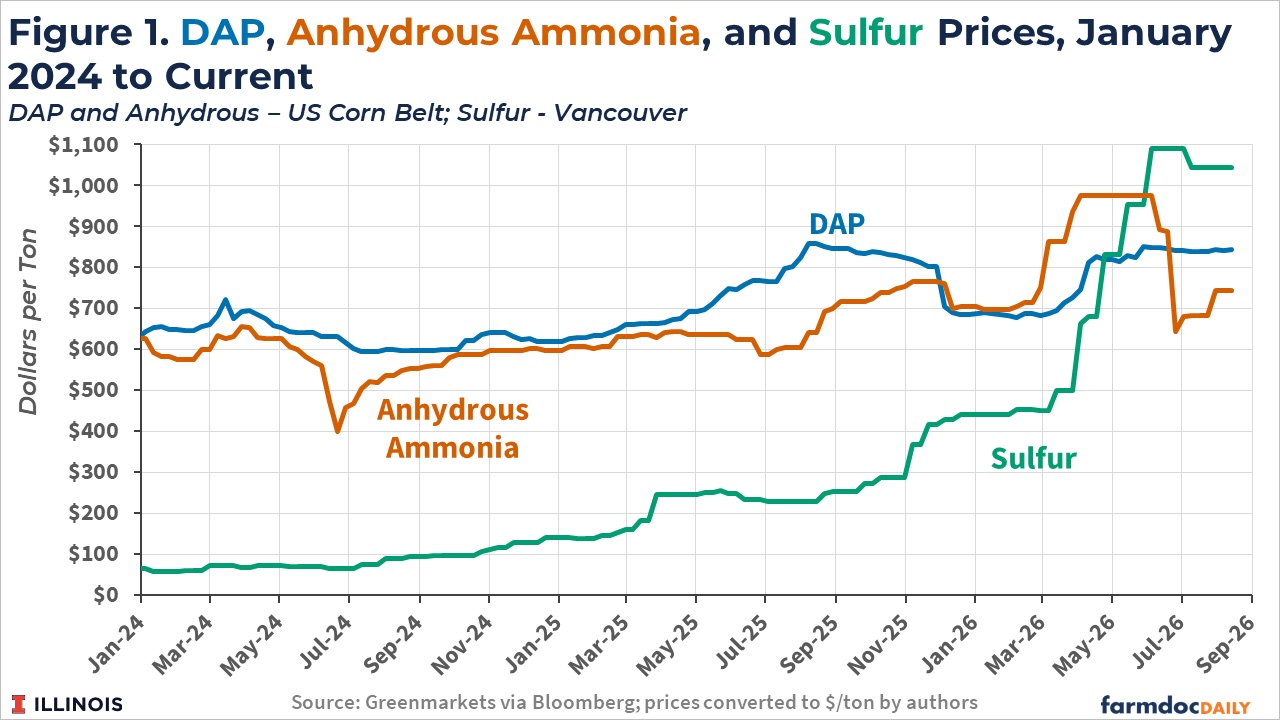
That drove fertilizer makers like Mosaic to cut production due to the high input price. That means farmers will pay more and/or produce less.
This is bad news for food prices and inflation in general. But there is a silver lining. Refiners that source oil from outside the middle east are generating excellent cash flows from sulfur today.
Refiners with sulfur recovery units (SRU) specialize in sour crude oil. Initially, that was done so they could use low-cost crude oil. SRU’s remove sulfur before the refiner makes gasoline or diesel. Companies like Valero (NYSE: VLO), Marathon (NYSE: MRO), and ExxonMobil (NYSE: XOM) all produce sulfur as a byproduct. And the revenues are soaring.
The simple way to play high sulfur prices today is through these refiners. And the easiest way to do that is through the VanEck Oil Refiners ETF (NYSE: CRAK):
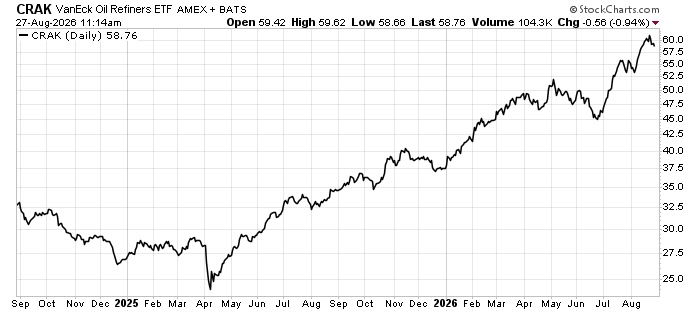
We will look back on 2026 and 2027 as a boom period for refining companies. If you don’t have a position in them yet, do so. Because this trend has legs and will continue for months if not years.

Comments: