"Fear Gauge" at its Lowest in Over a Year
1) As we approach the end of the decade, we take stock of The Daily Reckoning’s beloved “Trade of the Decade.” You know it by heart, right? “Buy gold on dips, sell stocks on rallies.” Bloomberg News has tallied up and reported the satisfying results…
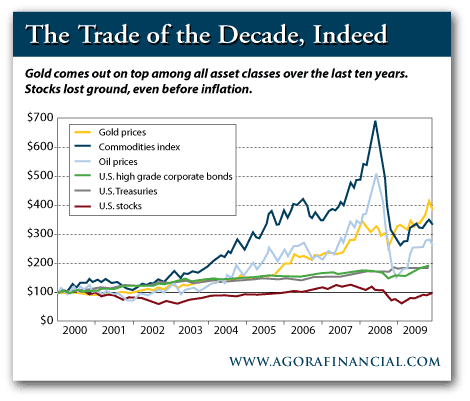
“A $100 investment in gold would now be more than $380,” Bloomberg calculates, “while the same sum in commodities would have grown to about $357, according to the Standard & Poor’s GSCI Enhanced Total Return Index.”
How will this trade perform during the NEXT ten years? Check back in December of 2019 and we’ll let you know.
2) If the consumer is supposed to generate economic recovery, he’s going to have to do better than this. The relevant data points yesterday morning:
- Personal spending rose 0.5% between October and November – a bit less than analysts expected. Incomes rose 0.4%, also less than expected. On the bright side, the spending figure has risen six of the last seven months.
- Consumer sentiment as measured by Reuters and the University of Michigan is up from last month, at 72.5. But that’s lower than the initial estimate, and lower than analysts expected.
- New home sales fell 11.3%, to their lowest level since March. Yes, that was lower than expected too. The perky activity of late in existing home sales is not translating to new construction.
3) US stock indexes are taking all of this in stride. The NASDAQ Composite reached a new 14-month high in yesterday’s trading and no investor, it seems, can think of any reason NOT to buy stocks. Accordingly, the VIX – the index measuring stock market volatility – shows a very high level of investor optimism. This index, also known as the “Fear Gauge” is the lowest it’s been since August 2008 – just before everything hit the fan.
4) The stock market may be feeling mellow, but the bond market is becoming a bit agitated…about inflation.
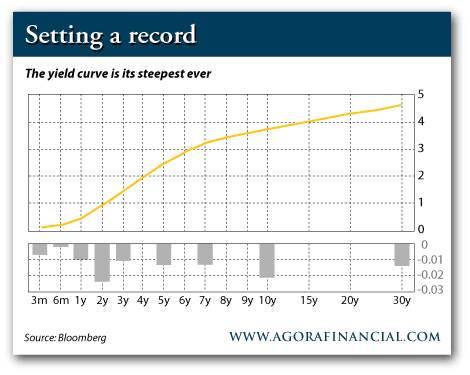
The yield curve – the difference in yield between a 2-year Treasury note and a 10-year Treasury note – sits at a record 285 basis points. Fork over your money to the gubmint for two years and you get a paltry 0.88%.
But 10 years? You get 3.73%. Yes, that’s paltry too. But it’s hard to ignore the gap being this wide. Bond buyers expect a substantially higher yield if they’re going to lend money to Uncle Sam for the next 10 years. That means they sense the value of the dollars they get back will be diminishing.
At least that’s what they sense right now. We hesitate to suggest the bond vigilantes are out in force, but at least they’re out. There’s also evidence the mortgage vigilantes are out wandering around again. The spread between 10-year notes and 30-year mortgage rates is widening, and also points to growing inflation expectations for 2010.
Then again, some of the most celebrated hedge fund managers are seeing the same thing we’re seeing. “An increase in the monetary base leads to an increase in the money supply, which leads to inflation,” John Paulson said in a recent speech. (He also retains his big positions in gold.) Julian Robertson is also playing the yield curve with long-dated out-of-the-money puts on Treasuries.
Short term, we may get a clearer picture when the Treasury plans to auction a record-tying $118 billion in notes next week.

Comments: