

AI is Just Gravy for Copper
Here is an unpopular opinion… I think the data center buildout will fall far short of expectations. And I’m not the only skeptic.
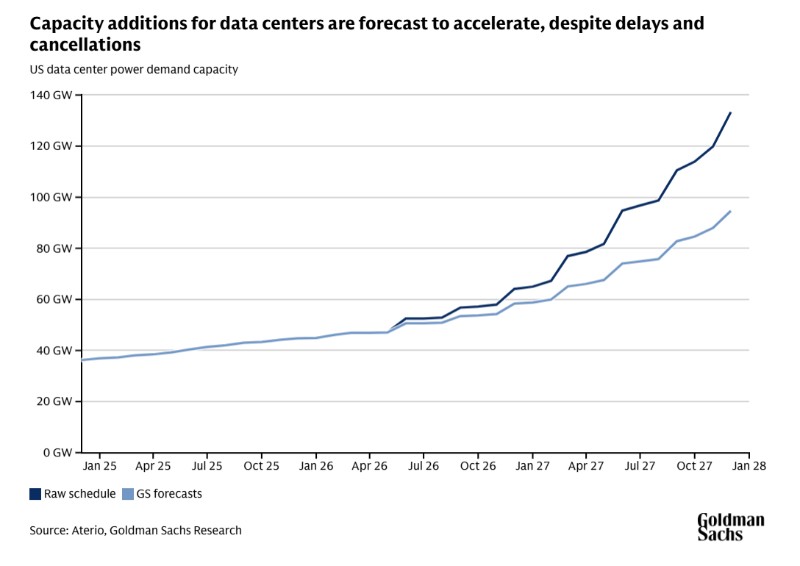
Giant investment bank Goldman Sachs expects companies to complete only about 50% to 60% of data center capacity. That’s due to delays and cancellations.
Data centers are incredibly unpopular. Ask anybody.
According to Gallup’s March 2026 poll, 71% of Americans oppose data centers in their area. Half of those polled are strongly against them. The big reasons are:
- Resource Usage (water and electricity): 50%
- Quality of Life (traffic and congestion): 22%
- Effect on Costs (tax increases): 20%
- Pollution (noise, light, and water): 16%
- Negative View of AI: 27%
Meanwhile, data centers get special treatment from politicians. For example, in Texas, Meta (the parent company of Facebook) spent $1.3 million on the Texas primary elections. Elon Musk put $500,000 into state senator candidates.
People smell a rat. You can’t escape the rising cost of electricity.
According to Dr. Ben Green, assistant professor at the University of Michigan School of Information and School of Public Policy, tech companies are right to be concerned about public disdain for data centers. In a recent interview with The Harvard Gazette, he laid out the worries of everyday Americans:
The public is concerned about rising electricity rates caused by data centers. They are concerned about the enormous water use that data centers require. They’re concerned about public handouts in the form of tax breaks that are going to data center developers, and they’re also aware that data centers don’t bring meaningful economic development, especially in the form of jobs.
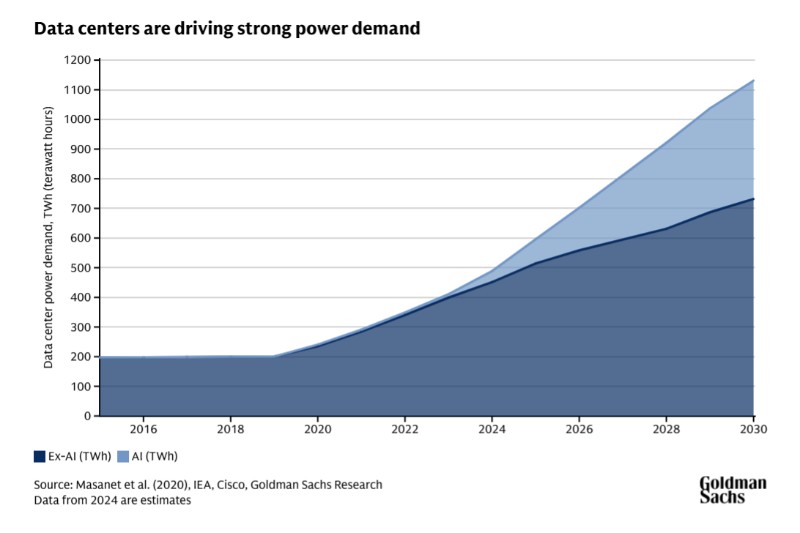
The problem is that our power grid is old. It needs a lot of investment to bring it into good working order. It can’t handle a massive surge of demand as it stands. Data centers add massive new load to that grid. They currently use 4.4% of all electricity generated in the U.S. That will jump to 12% by 2028, according to research from Harvard Kennedy School.
However, it’s not simply the unpopularity of data centers that will get them canceled. It’s mainly the supply chain for all the stuff that they need. The biggest issue regarding supply is connection to the power grid.
Utility connection can take more than five years, according to Hanwha Data Centers. They found four factors that create the largest delays:
- Utility study backlogs
- Transmission upgrade requirements
- Permitting complexity
- Equipment lead times
These problems tie back to our aging grid. It can’t handle this kind of demand growth. At the end of 2023, eleven thousand, six hundred projects waited to connect to the grid. Those projects represented 2,600 gigawatts of generation and energy storage. At the time, the U.S. grid’s entire energy generation capacity was only 1,280 gigawatts.
It’s a huge problem, but it isn’t new.
Only 13% of the new power requests submitted from 2000 to 2019 were in operation by 2024. That’s not good. Less than one in five got through. Looking ahead, that could mean even fewer data centers.
All of this is important because some folks see data centers as a lynch pin for commodity investments (particularly metals). So, I posed this question for research this week:
“What is the investment case for copper without data centers?”
Here’s the thing – it’s still great. You know I’m a copper bull. It’s my favorite metal. It’s the key that unlocks the electricity we need for the future. It’s the railroad that makes all this AI data work.
And it’s not just AI. EVs, renewable power, batteries, etc. are all incredibly copper intensive. Updating and expanding power grids all over the world, not just here in the U.S., requires billions of pounds of copper.
On the other side of the equation, we’re dealing with an aging fleet of mines that require more ore moved to produce the same amount of copper. And there is currently a lack of new copper mines coming online.
Make no mistake, data centers are not the only reason metal prices soared. And because a few won’t get built doesn’t derail the bull market case for both aluminum and copper…let alone the suite of critical minerals.
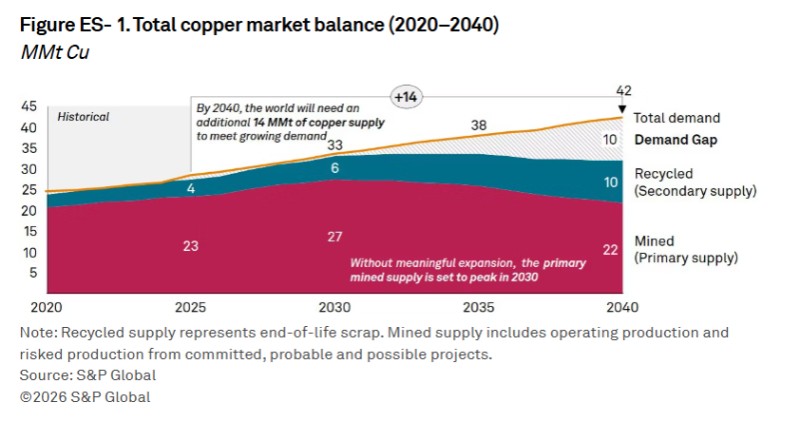
Even without data center demand, there will be a “structural deficit” of copper by the end of the decade. That’s the next few years. According to S&P Global’s recent forecast, copper mining will peak in 2030 at 27 million metric tons. That study shows current copper demand at 28 million metric tons today, rising 50% to 42 million metric tons by 2040.
We have not yet discovered enough mines to meet that demand, let alone those under construction.
Short of another massive global recession, sustained higher copper prices are inevitable. We do not have the supply we need to meet forecast demand. That’s why everyone should own copper stocks. The easiest way to do that is to buy the Global X Copper Miners ETF (NYSE: COPX). 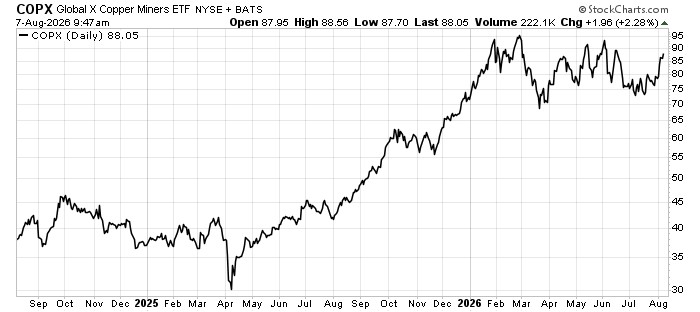
Make no mistake, if even half of the data centers get built, it’s a massive increase in copper demand. And we need copper more than ever to continue the mass migration to an electric world. Invest accordingly!

Comments: