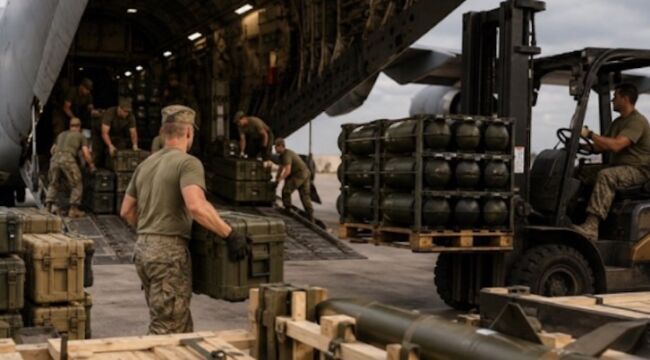


Your Grandfather’s Military Is Dead
You may have already seen some of what I’m about to share in The Daily Reckoning. But given what we’re focused on here and the sheer amount of money now moving into this corner of the defense industry… I think it deserves a second look.
The drone itself is only part of what’s happening here. Building a military around unmanned systems requires an enormous industrial ecosystem underneath it like chips, sensors, batteries, rare-earth magnets, software, machine tools and, most importantly, the factories capable of producing these systems at scale.
That’s the side of this story Byron has been looking at.
So with that, I’ll pass it over to Byron to show you just how much the battlefield is changing and what this massive buildout could mean for investors…
We’re out of time. The future is now.
I’m talking about drones, which are no longer an exotic military sideshow, tucked away in research labs while the so-called “real warriors” plan the next campaign. Like phalanxes of marching soldiers, or guys riding horses into battle, that era is over. Drones are now the latest – and likely decisive – military thing.
The Army, Navy, Marine Corps, Air Force, Space Force, Coast Guard, law enforcement and even firefighters are in the drone business. If it can fly, float, roll, crawl, loiter, listen, jam, scout, strike or blow itself up at the right place and time, it belongs in the new, unmanned order of battle.
Think of drones the way old-timers once thought of radios, radar, GPS, precision navigation or night vision. First, they look like clever add-ons, bolted to the airframe, deck plates, or a rack in the back of a truck. Then they become force multipliers. Over time, they become doctrine. Finally, they become table stakes.
Air Power Gets Less-Manned
Begin with air power. The Air Force has been “droning” for years, whether it used that word or not. Cruise missiles, decoys, loitering munitions, anti-radiation weapons and electronic attack packages have blurred the old line between aircraft, missiles and science fiction sky-robots.
A loitering munition can search, wait, attack or return if there is nothing worth killing. MALD, the Miniature Air-Launched Decoy, spoofs air defenses. HARM, the high-speed anti-radiation missile, hunts radar systems. Together, these tools show where air combat has gone: aircraft, missiles and semi-autonomous or autonomous systems now occupy the same battlespace.
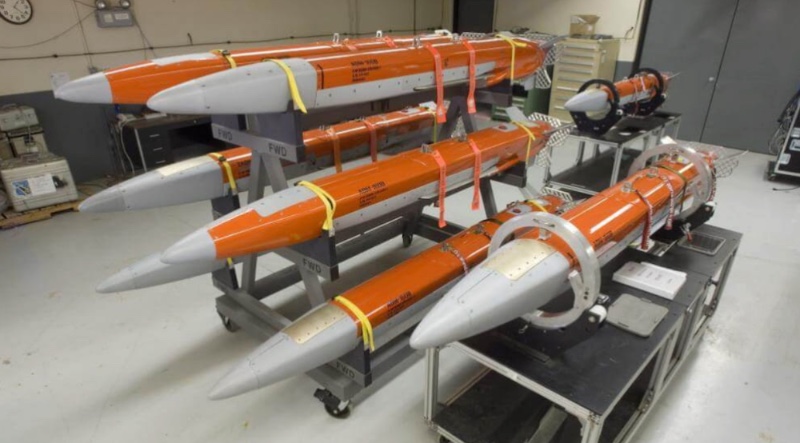
MALD missiles. Credit Raytheon/RTX.
In other words, the drone is no longer a science and engineering experiment. It has become a business model for modern war, and a rebuke to past planning processes, acquisition timelines and chronic risk aversion, all designed for a slower world that is long past.
The Pilot Becomes a Mission Commander
Here’s the next step: collaborative combat aircraft, or CCA. These are unmanned aircraft that function via artificial intelligence (AI), built to fly alongside manned fighters, bombers, surveillance birds and tankers. They carry sensors, scout ahead, jam radars, haul missiles, absorb enemy fire or hit targets where commanders do not want to risk a living, breathing pilot. But the key part of a CCA is not the airframe; it’s the autonomy stack that lets the machine sense, decide, maneuver and cooperate inside a larger combat network.
For years, a small community of defense visionaries argued that war would become faster, cheaper, more distributed and driven by autonomous systems and AI. They were called too commercial, too theoretical, too Silicon Valley-ish. Turns out, though, those guys were right.
Now the Air Force has moved CCA from PowerPoint Dreamland to contracts, flight test and production. The air service is not just buying drones. It’s moving toward a procurement model in which hardware and mission software can be competed and upgraded on separate timelines. A future F-35, F-47 or B-21 will not fight alone. It will fight inside a moving code-cloud of sensors, shooters, jammers and electromagnetic tricks.
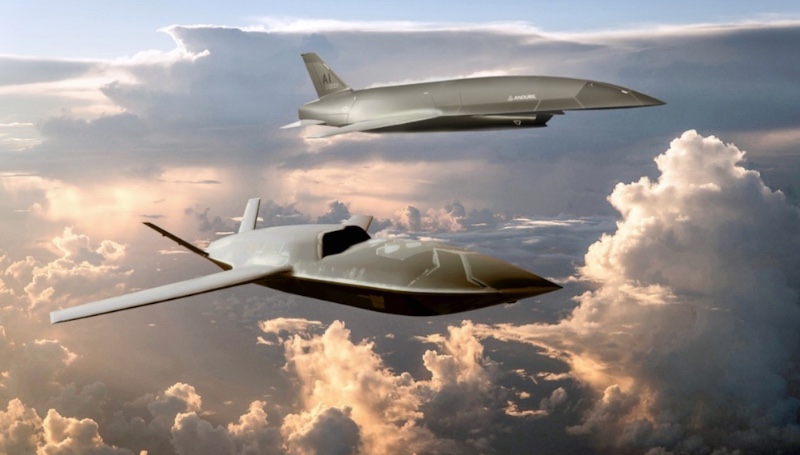
Drone is my copilot and wingman. Future notional CCA. Credit US Air Force.
And the central question is not whether a pilot is comfortable with an autonomous wingman. Broadly, that decision has been made and now the issue is how the overall package works in wartime, especially when ideas cycle through in days and weeks (and as we’ll discuss below, this is one of many lessons from Ukraine).
Trust in new technology is not an immediate and warm feeling; it must be earned. So, before anyone trusts an AI-driven CCA, the software, communications and cyber defenses must survive deception, electronic attack, GPS denial, spoofed data, degraded links and every other dirty trick a thinking enemy will throw at them.
The old Pentagon way of buying and building new weapons was to fund new ideas on the margin while protecting legacy programs of record. But that luxury is gone, which is why CCA is not just an aviation story. It’s a validation story, a software-assurance story and a network-resilience story.
Manned or unmanned, every aircraft is now a node in a large kill chain. If the network is hacked, delayed, spoofed or denied, the airplane’s performance becomes almost secondary.
The Navy Builds Mother Ships
Characteristically, the Navy took longer to get there, but it is getting there. In the mid-2010s, Northrop Grumman’s X-47B proved that an unmanned aircraft could launch from and land on an aircraft carrier; no small trick, considering that carrier aviation is one of the most demanding operating environments on earth (as I know from first-hand Navy experience).
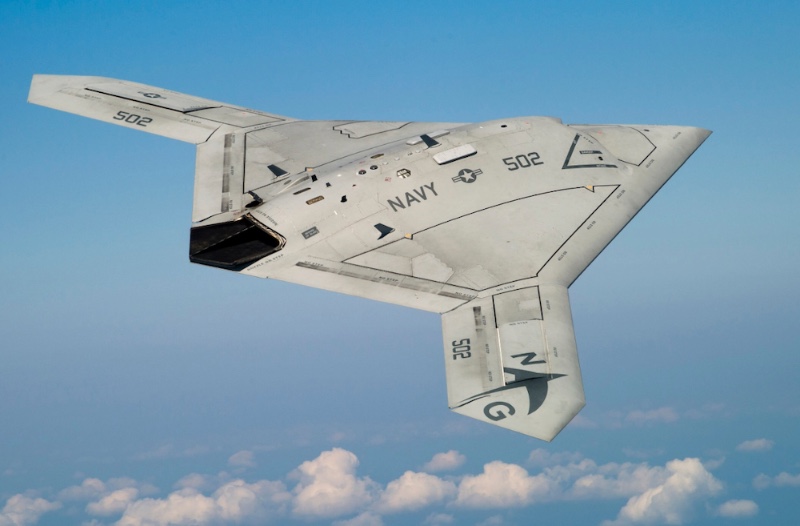
Navy X-47B autonomous drone in 2015. Credit U.S. Navy.
The actual, experimentalX-47B aircraft (image above) went into storage; but over time, the idea behind the program morphed into Boeing’s MQ-25 Stingray, an unmanned carrier-based refueling aircraft.
And okay, aerial refueling may sound boring, but it’s not (again, ask me how I know). Because tanking is range, range is reach and reach is combat power. Meanwhile, MQ-25 lays the command-and-control foundation for a future carrier air wing full of unmanned systems.
Follow that drone-style logic into non-carrier shipbuilding. New vessels are being built with dedicated space to store, fuel, prepare, arm, launch and recover unmanned systems — not just aerial drones, but surface and underwater drones too. In other words, a modern warship is no longer your granddad’s gray hull, stuffed full of guns, missiles and sailors. It has become a mother ship for both controlled and autonomous drones.
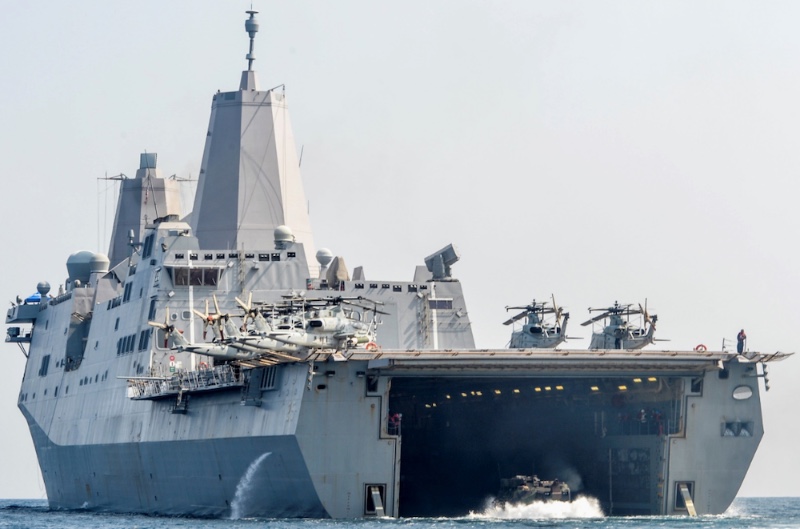
USS Somerset (LPD-25) can carry aerial, surface, subsurface drones. Credit U.S. Navy.
Whether launched by air, surface ship or submarine, drones can scout or attack. Underwater drones can map, listen, lay sensors, hunt mines, shadow submarines or perform missions too dangerous or dull for real people. That creates opportunities not just for traditional shipyards, but also for suppliers that can build unmanned vessels cheaply, quickly and at scale.
Ukraine Shows the Future
This is where Ukraine enters the story as a brutal laboratory and testing-range for drones. Small FPV (first person view) drones, long-range strike drones, loitering munitions and improvised systems have changed the character of the battlefield.
Drones watch trenches, spot artillery, attack armor, cut logistic lines, strike air bases and force both sides to move, hide, jam the other guy, and adapt fast. In fact, the life cycle of a drone’s usefulness is not years or months. It can be weeks, days, even hours or minutes because the enemy watches, learns, jams, copies and counters.
One critical lesson from Ukraine is that drones are not just warfighting tools. They are product development under fire.
Production Wins Drone Wars
For investors, the market angle is that drones are not just weapons. They are complex, moving AI learning systems. They require software updates, signal processing, anti-jamming tricks, antennas, batteries, motors, optics, tactics, operators and constant verification.
A drone unit is part air arm, part artillery observer, part radio shack, part machine shop, part software lab and part test range. The side that manufactures faster, ships quicker, assembles more efficiently, tests more realistically, updates software faster and repairs better gains the warfighting edge.
The Factory Is the Front
Now we get to the hard part. You don’t win a drone war with a boutique defense-industrial base. You win it with production, and not by the dozens, hundreds or thousands, but by the hundreds of thousands, if not millions.
For this vast scope of buildout you need carbon fiber, fiberglass, aluminum, titanium, specialty steels, small engines, propellers, batteries, rare-earth magnets, chips, cameras, antennas, LIDAR, software, test ranges, machine tools and skilled workers. And you need mines, mills, refineries and factories… especially factories.
This is why the new defense companies are talking like mass production industrialists. For example, Anduril’s Barracuda family is built around software-defined, mass-producible autonomous air vehicles. The selling point is not just range or payload. It’s fewer tools, fewer parts, faster assembly and a supply chain designed for scale; to “make it rain missiles,” so to speak.
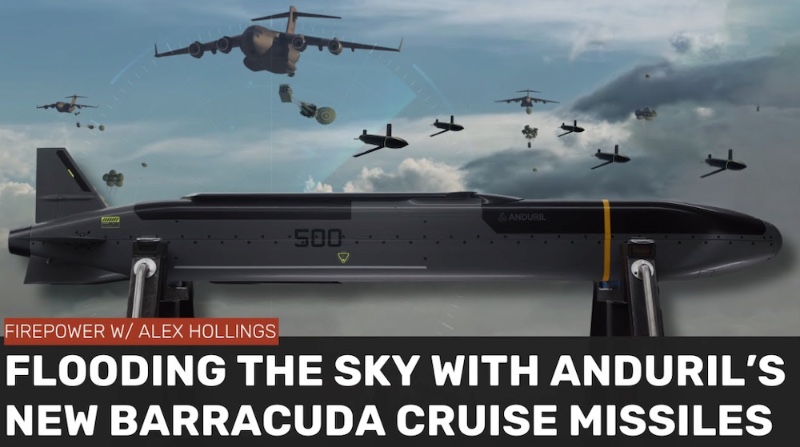
Mass drop of Anduril “Barracuda” drones. Credit Alex Hollings/You Tube.
In a high-end war, the current arsenal of “exquisite” weapons will be consumed faster than Congress can hold hearings about why the armed forces are out of them. Gold-plated systems designed like hand-sewn, bespoke Saville Row suits may be impressive. But that’s not how to win a modern war against a capable foe.
Follow the Supply Chain
All of this does not mean the old defense primes will go away. Far from it. Lockheed Martin, Raytheon/RTX, Northrop Grumman, General Dynamics, Boeing, Huntington Ingalls, L3Harris and others in that arena still have customer relationships, classified program access, integration muscle, product lines, assembly and est facilities, workforce depth, access to capital, and of course entre to Congress.
But the drone boom is opening cracks in the castle wall. Legacy primes have checkbooks and technical benches that can scale. But startups can move faster. The likely winners will combine Silicon Valley speed with Detroit-style production, along with Pentagon-grade technical authority and combat reliability. In other words, the procurement establishment can no longer afford to treat the new crowd as a kiddie-table sideshow.
Watch shipbuilders too. The Navy’s future is not just buying more big gray hulls. The sea service is building out a mixed fleet of crewed ships, unmanned surface vessels, underwater drones, autonomous mine hunters, maritime sensors and launch-and-recover platforms. That points toward demand for steel, engines, electrical systems, autonomy packages, rugged communications, modular payload bays, shipyard capacity and repair yards.
Along these lines, one company that is both legacy but also quite nimble is Huntington Ingalls (HII). It’s worth a longer writeup all on its own, but not here. The takeaway is that HII builds nuclear submarines, aircraft carriers, and large numbers of surface ships, while is also has an aggressive program of drones called Romulus and Remus; the former being surface drones and the latter for underwater. The company is definitely working to secure long-term Navy business.
(Note: HII is not an official recommendation and we won’t track it here in Strategic Intelligence. But it’s a solid company for long term investors.)
On the other side of the planet, China understands all this about drones and the industrial base. Indeed, China has spent decades building the upstream and downstream muscle behind modern war: ore deposits, mines, mills, refineries, critical minerals, rare-earth magnets, batteries, electronics, components and final assembly. China’s shipyards alone are nothing less than astonishing.
Back here in the U.S., we’re just at the point of broad realization that every drone needs a supply chain before anyone can even think about finding a target. Carbon fiber, chips, magnets, batteries and sensors do not emerge from policy papers. They come from industrial systems that have yet to be built out in America.
All of this also puts rare earths and battery metals on the front page of defense investing. Neodymium, praseodymium, dysprosium and terbium are magnet words. Magnet words are motor words. Motor words are drone words. Add lithium, graphite, nickel, cobalt, copper, aluminum and tungsten, and suddenly the drone story is also a mining story, a refining story, a battery story and an industrial metals story.
And no, we’re not tossing out the old platforms. Submarines are still war-winning weapons. Just as aircraft are critical weapons. Plus missiles, tanks, ships, satellites and radars. But ore in the ground is a weapon too. Refineries are weapons. Machine tools are weapons. Battery plants are weapons. Software libraries are weapons. Assembly lines are weapons.
Here’s the takeaway: in the new age of drone warfare, the factory is not behind the front. The factory is the front.
The Investment Lesson
Here’s the investment lesson: Drones change tactics because they put eyes, ears and explosives everywhere. They change operations because commanders can coordinate fires, movement and logistics with persistent surveillance and rapid feedback. And they change strategy because nations must plan for production depth, electronic resilience, data dominance and supply-chain sovereignty.
Follow the money and you’ll find it flowing toward autonomy, software, sensors, counter-drone systems, batteries, rare earths, machine tools, cyber resilience and the old-fashioned industrial base that still wins wars.
Modern war is industrial war, now fought at software speed. Stockpiles matter, but stockpiles run down. Production keeps armed forces in the fight, and logistics keeps production relevant.
So, while we’ve been discussing drones, don’t confuse the shiny moving thing with the whole story. The real story of a drone is the stack beneath it: motor, magnet, battery, chip, sensor, code, secure network, factory, mine and ore in the ground.
This is where the next great defense trade begins: not with an aircraft on a runway or a ship cutting a wake, but with the magnets, batteries, tools and factories that make drone war possible.
That’s all for now. Thank you for subscribing and reading.

Comments: