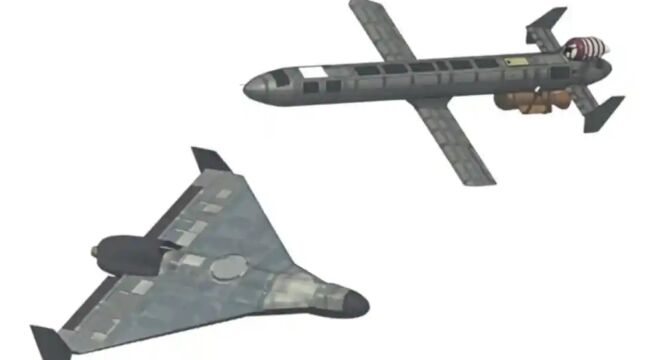

The Evolution of Hunter-Killers
For decades, America was the undisputed king of drone warfare.
Specifically, the U.S. pioneered MALE drones. MALE = Medium-Altitude, Long-Endurance.
Models like the MQ-1 Predator and MQ-9 Reaper proved highly effective in the Global War on Terror (GWoT).
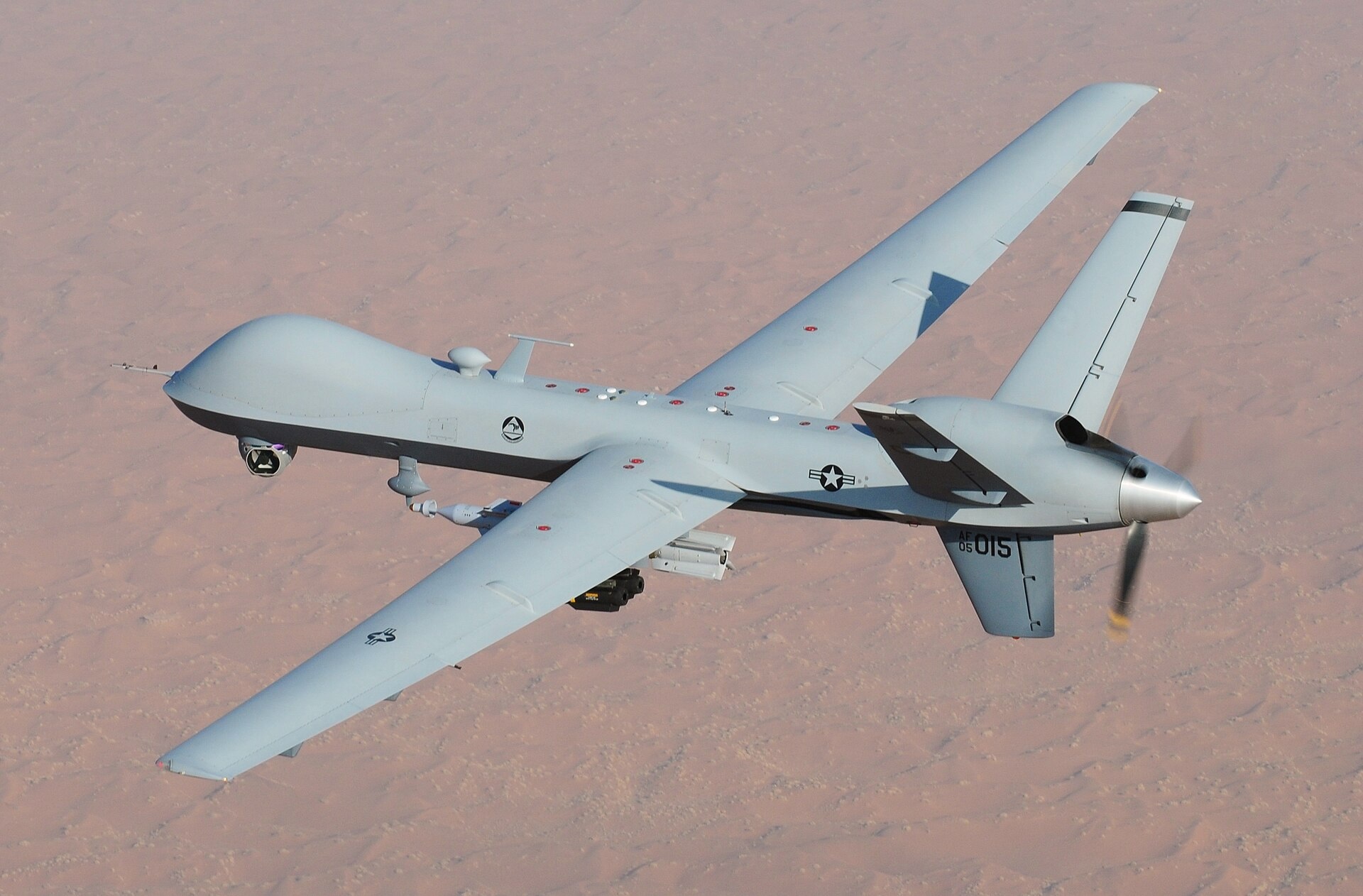
General Atomics’ MQ-9 Reaper
They can fly for up to 24 hours, performing reconnaissance, dropping precision bombs or firing missiles when targets are spotted.
MALE drones are slow, cruising at about 250 MPH. But they were still revolutionary. An eye in the sky over hot zones, delivering munitions on enemy targets. All without risking American pilots.
For a long while, the U.S. dominated military drone technology.
But the game has changed. And now the U.S. has catching up to do.
Slow, Expensive, Vulnerable
Against enemies with poor air defenses, drones like the MQ-9 were highly effective. So in Afghanistan, Iraq, Libya, and Syria, MALEs worked like a charm.
Yes, they were expensive at more than $30 million a piece, but for a long time, the model worked well.
Our adversaries weren’t idle though. Russia, Iran, China, and North Korea were all tailoring their militaries specifically to counter the superpower hegemon.
Iran developed an anti-air weapon called Missile 358. It was designed specifically to take down slow MALE drones like the MQ-9 Reaper. It can be broken down into sections and carried by a small team.
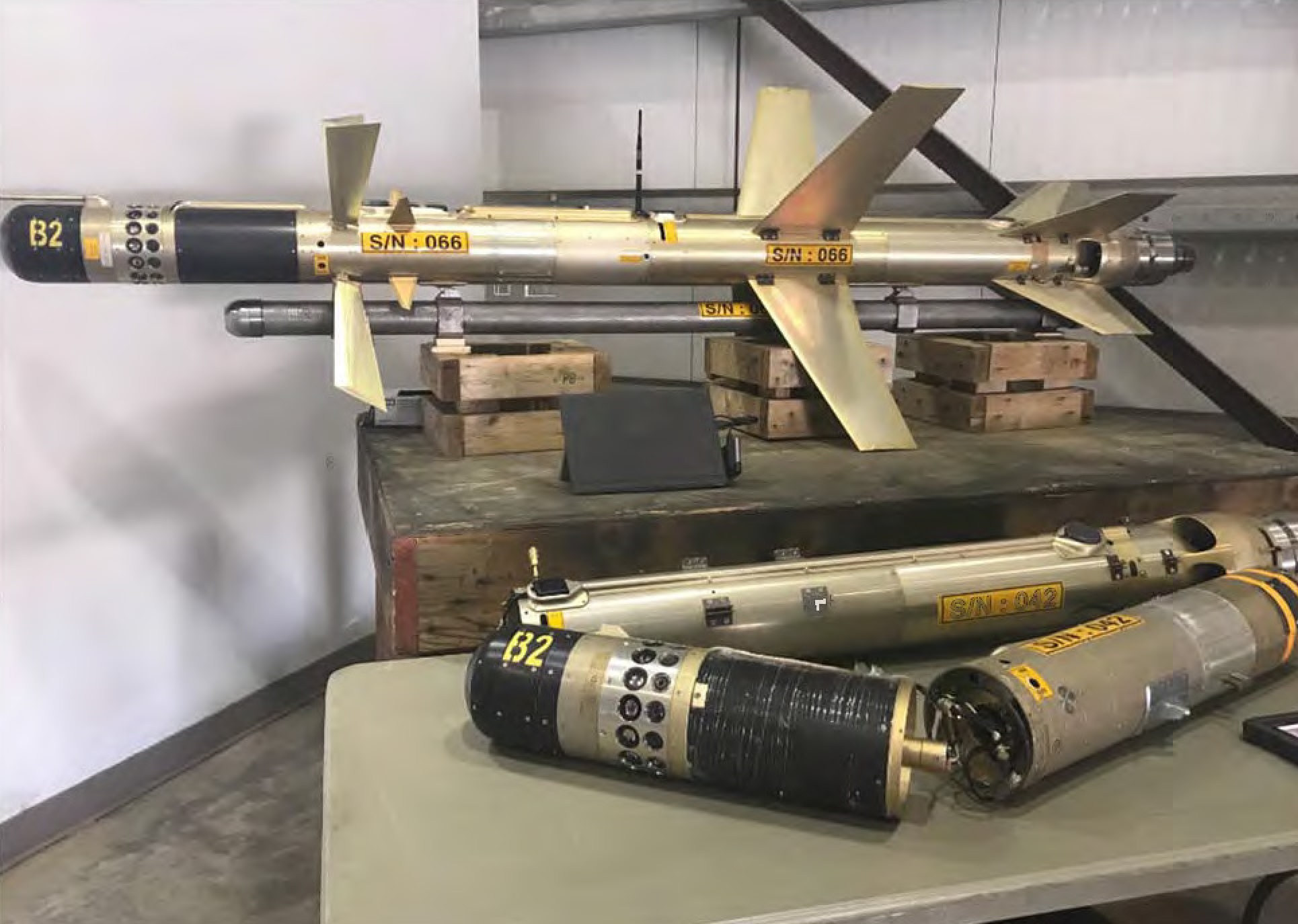
Source: SCMP
So far this year, Iran has shot down at least 30 MQ-9 Reaper drones. Likely using Missile 358s. That’s nearly $1 billion worth of hardware. Yemen’s Houthis have shot down another ~20 MQ-9s, using Iranian gear.
The problem with MALE drones is that they’re slow and expensive. A combo that no longer works for modern combat.
The new generation of drones can be fast and expensive, or slow and cheap.
But NOT slow and expensive. Not anymore.
The Kamikaze Revolution
Iran knew it couldn’t beat us when it comes to traditional airpower. So they focused on asymmetric warfare. Primarily missiles and drones.
But their drones weren’t like ours. They were one-way kamikaze models, exemplified by the Shahed-136.
A cheap fiberglass body, a moped engine driving a propeller, and 50 kg warhead (110 lbs), and some avionics and navigation gear. The wings store enough fuel for more than 1,000 miles of range. The cost is low, somewhere between $10,000 and $40,000 per unit.
The Wall Street Journal ran the picture below in a piece titled, “Every Nation Wants to Copy Iran’s Deadly Shahed Drone” last fall.
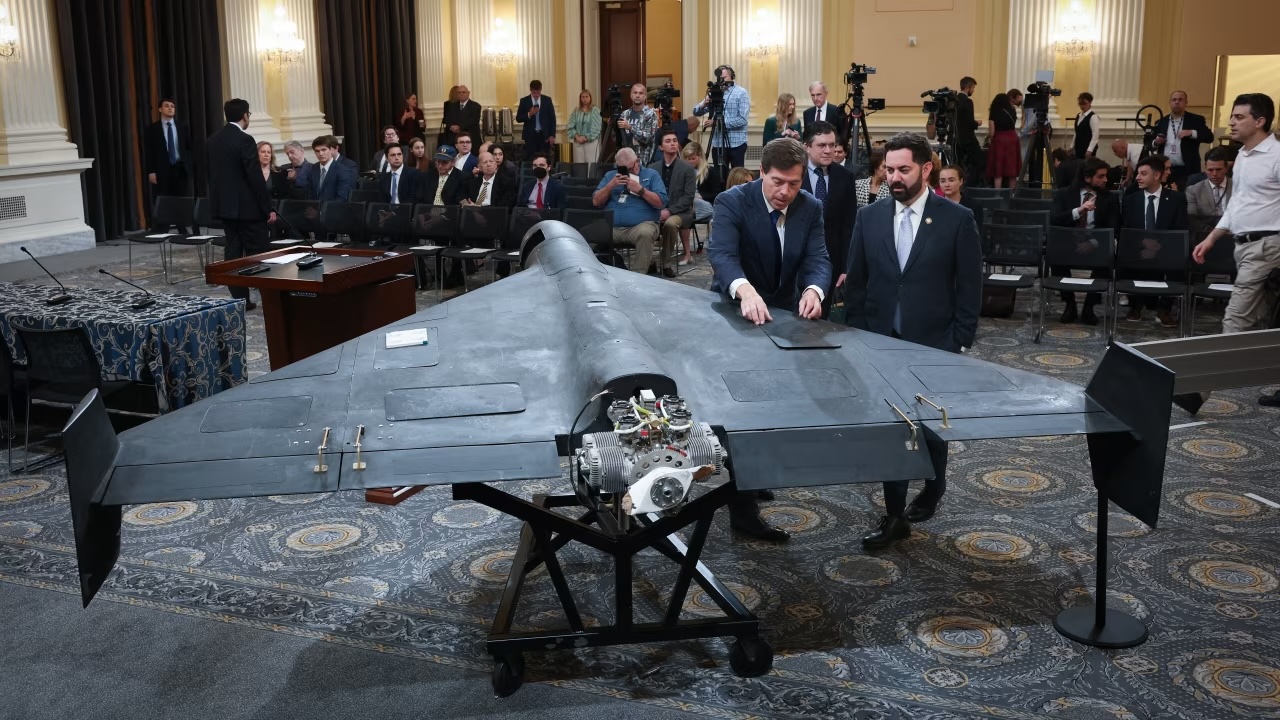
Source: WSJ
Iran licensed the Shahed-136 tech to Russia, and Putin’s military has used the design extensively. They’ve upgraded almost every aspect of it, and now have jet-powered models which fly much faster.
Around the world, every country with a respectable defense sector is working on similar platforms. The U.S. has the LUCAS (Low-cost Uncrewed Combat Attack System), which reportedly performed well in Iran.
America’s LUCAS drone costs around $35,000. So for the price of 1 MQ-9 Reaper, you could buy around 857 LUCAS drones.
Taiwan just announced a target to produce 100,000 drones per month by 2030, with the goal of making the island a “hellscape” during a hypothetical Chinese invasion.
Russia is launching an estimated 270 long-range drones per day at Ukrainian targets. Ukraine is launching volleys of up to 700 in a single night, designed to overwhelm Russian defenses (but with such large volumes, breaks are required to rebuild stocks).
We’re on the cusp of something major.
A Rare Moment
Revolutionary. Game-changer.
These words get thrown around a lot. They usually don’t mean much.
But right now such language is fully justified.
We’re in the midst of a true paradigm shift. The future of warfare is clearly unmanned systems.
Our military has received the message, and the wheels of change are turning. Spending on drones is set to soar by thousands of percent.
But it still won’t be enough. Even with proposed spending hikes, one-way attack drones still represent less than 1% of total military spending.
In Ukraine, General Wesley Clark says that 90% of Russian casualties are caused by drones. That’s modern warfare in a nutshell.
So even though spending will soar over the next year, it’s going to soar again after that. Then again, until drones reach 50% or more of total spending. That’s my target, and it’s going to happen fast.
The old American defense giants are not well prepared for this new world. Too slow, stuck in their ways. Handcuffed by bureaucracy.
A new class of nimble, fast-moving companies is laser-focused on drones. They’re gaining real-world experience in Ukraine and Iran. Rapidly iterating to beat counter-drone systems.
We’re still early in this drone story, and there are incredible opportunities out there.

Comments: