The Glorious Return of Fundamentals

Today we’re going to take a break from the Middle East, and focus on an important shift taking place in markets.
Slowly, investors are beginning to appreciate fundamentals again.
After more than a decade of reckless speculation, meme stocks, gambling, and ultra-low interest rates, we are starting to see a return to old-school investing.
A fresh focus on dividends, earnings, and real assets.
It’s refreshing. And this new paradigm is going to last a while.
Is the Dark Age of Investing Over?
There is a classic scene in the HBO show Silicon Valley (2014-2019).
The show revolves around a tech startup named Pied Piper.
When the CEO tells their biggest investor that he wants to start generating revenue, the investor loses it.
"If you show revenue, people will ask 'HOW MUCH?' and it will never be enough. The company that was the 100xer, the 1,000xer is suddenly the 2x dog.
But if you have NO revenue, you can say you're pre-revenue! You're a potential pure play.
It's not about how much you earn, it's about how much you're worth. And who is worth the most? Companies that lose money!"
For a long time, this was a real thing.
Pre-revenue startups were priced largely based on their ability to pitch investors. But once a startup began generating revenue, some investors priced them using more traditional metrics, like a revenue multiple.
So startup companies without any revenue were often valued more highly than those with it. And hot startups were expected to raise and spend vast sums of money to grow at warp speed.
This sentiment also bled over into the stock market. Investors demanded growth at all costs. And smaller tech stocks delivered plenty of growth, but plentiful losses too.
Low interest rates are partly to blame. With yields on bonds and bank accounts so low, money poured into the stock market, creating one of the wildest speculative environments in history.
It’s been a crazy time.
But I believe this era is ending. Investors are ditching software for oil and gas.
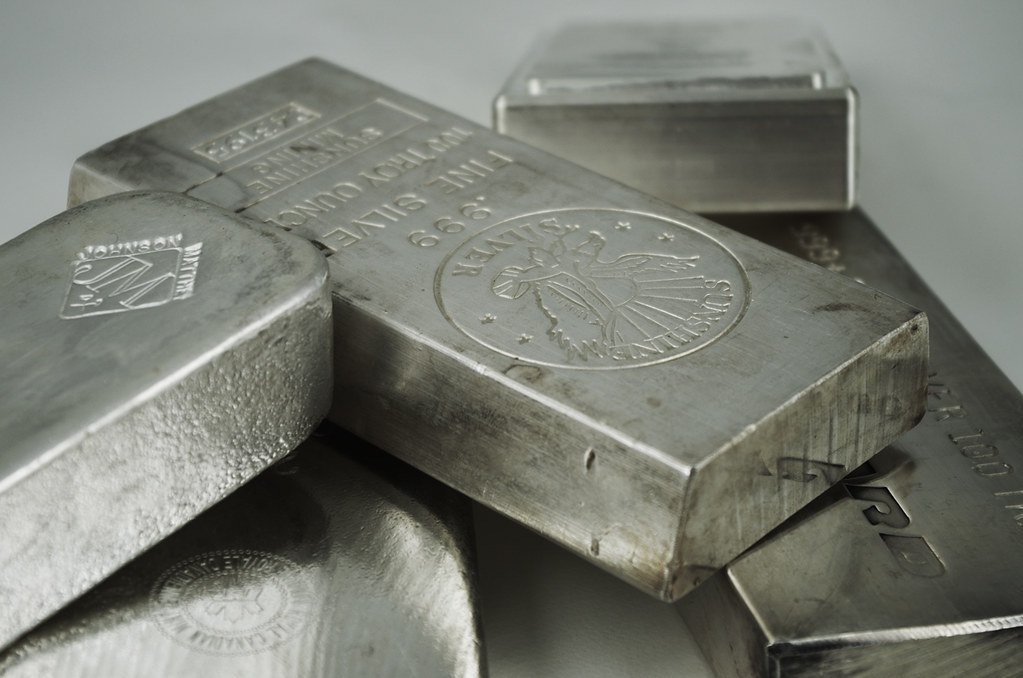
They’re ditching government bonds for gold and silver. Over the past year, U.S. bonds are basically flat, while gold is up 46% and silver is up 134%.
And they’re shifting out of overpriced U.S. stocks into emerging markets like Brazil. Over the past year, the iShares Brazil ETF (EWZ) is up 72% compared to the S&P 500’s 28%. And Brazil still looks cheap.
I believe this trend will be dominant for at least the next decade.
The Revenge of Buffett and Graham
Legendary value investor Benjamin Graham famously said, “In the short run, the market is a voting machine. In the long run, it is a weighing machine.”
In other words, manias and bubbles can push stocks to crazy levels temporarily, but over the long run, it is ultimately earnings and dividends that drive returns.
We’ve already started to see a shift away from money-losing stocks and startups. Primarily in the tech space.
For example, Snowflake (SNOW) was the hottest tech stock in the world for a brief period. Its 2020 IPO even attracted Warren Buffett’s Berkshire Hathaway.
Snowflake shares soared over $350 in 2021. But since then, like much of the software/tech space, investors have lost interest. The company is still growing fast (30% YoY), but in 2025 it generated a loss of $1.3 billion.
SNOW shares are now down 62% to $131. There are dozens of stories just like Snowflake’s. Tech firms that spent too much money, gave their employees too much stock, and lack a realistic path to profitability.
The rise of AI is also contributing to this shift. It has made the outlook for software stocks especially murky. In such an environment, companies that own hard assets like oil wells, mines, and factories are increasingly attractive.
U.S. Stocks – Still Overvalued
We’ve seen the first hints of a shift in investor psychology. A desire for profitability, dividends, and real assets.
But U.S. stocks are still quite overvalued. When Walmart is trading at a P/E of 46, you know things are out of whack. This is a stock that has historically traded in the 10-16 P/E range. And today it’s 3x that.
So just because a business owns real assets doesn’t make it a good bet for this environment. It needs to be cheap to offer real protection.
So while we’ve seen the beginning of a shift, the trend has a long way to go.
The world will soon face a financial reckoning. It will happen regardless of what occurs in the Middle East. Though if that situation escalates, it will worsen it.
So this is not a time to have a large allocation to pricey speculative stocks. During market crashes, speculative stocks are always hardest hit.
It’s a time to buckle down in hard assets and high-yield value stocks. Companies that can thrive in a chaotic environment.
Here in the U.S., stocks that are cheap, attractive, and high-yield are somewhat rare.
So I will continue to invest primarily in emerging markets for value. Emerging markets now make up about 40% of my stock portfolio, and that will likely rise over time.
Strangely, the return of fundamental investing means we need to own more non-traditional assets. More on that soon.