
Iran Ceasefire Teeters
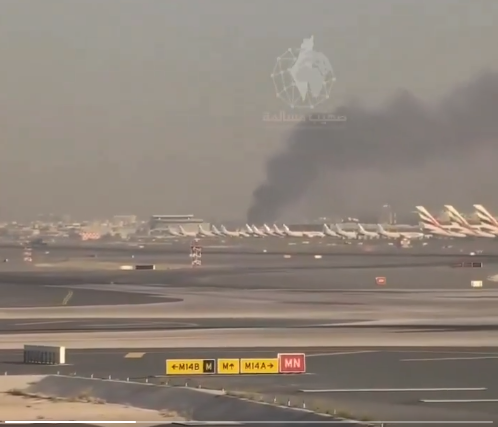
In the last 24 hours, Iran has launched missiles and drones at the UAE, hitting an unknown target at Dubai International Airport (causing a large plume of smoke).
Censorship in the UAE is heavy-handed, but a passenger on their way out of the country snuck a few pictures from the runway:
Iran also claims to have hit American destroyers with either anti-ship missiles or drones, forcing them to retreat. But we’ve seen nothing to indicate this is true. CENTCOM reports that all attacks were intercepted.
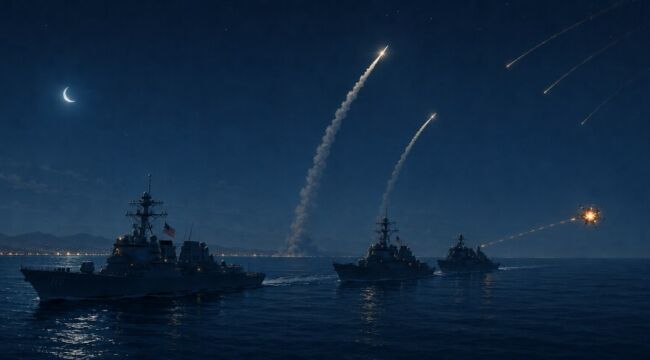
The U.S. Navy has also been busy, hitting two Iranian tankers attempting to bypass the blockade, and striking Iranian military positions along the coast. American destroyers are patrolling the Persian Gulf, which didn’t happen during the earlier stages of the war.
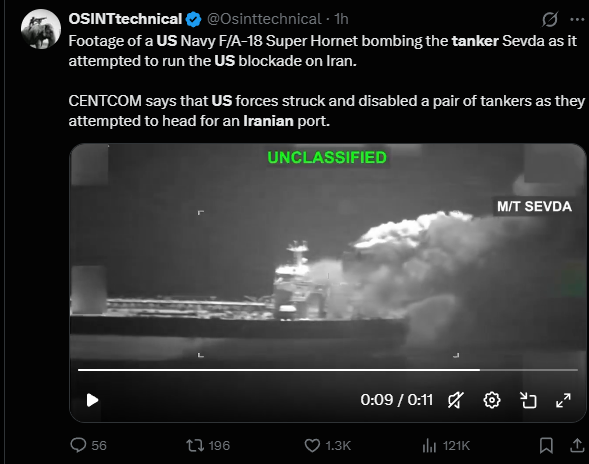
US Navy F/A-18 strikes an empty Iranian oil tanker | Source: X
I guess the ceasefire is holding?
It is true that full-on war hasn’t resumed yet. But it sure looks like we’re headed in that direction.
Today, let’s examine some key aspects of where we are in this conflict, and how things could play out from here.
Opening the Strait By Force
Since the beginning of this war with Iran, I have believed that opening the Strait of Hormuz by force is not going to work.
Iran’s anti-ship missiles and drones are too spread out. Their longest-range anti-ship missiles can strike from roughly 800 kilometers (500 miles). Their fast-attack boats and naval drones wait hidden in deep tunnels.
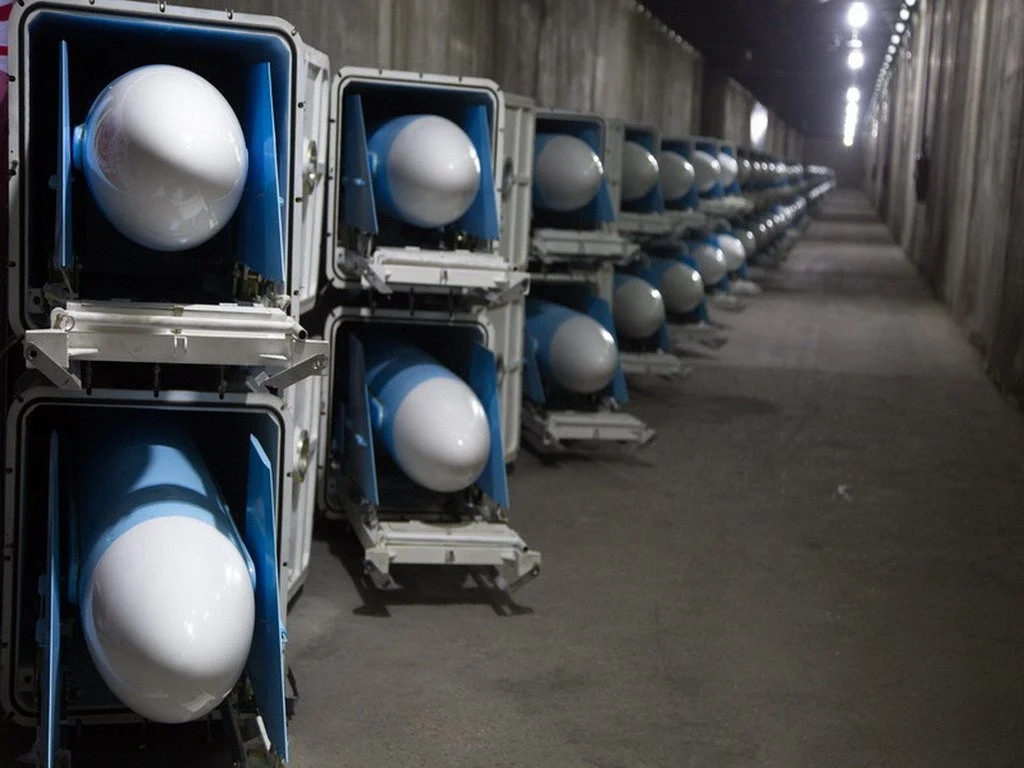
Iranian anti-ship missiles in a deep underground tunnel | Via AP
Rooting all that out would take years. Hundreds of strike aircraft, thousands of missiles, and a large ground force basically going cave-to-cave.
So President Trump has taken a different route. First, he attempted to bomb Iran into submission. Hitting bridges, power plants, and oil infrastructure. But Iran hit back, striking U.S. bases and key Gulf oil and gas sites. It wasn’t working, which is why we changed the strategy.
The Navy blockade of Iranian ports is working better. But some tankers were still getting through. So the Navy started confiscating vessels, and is now disabling them with missile and artillery fire.
Meanwhile negotiations are going nowhere. Both sides are sticking to red lines the other will never agree to.
And the global economy is looking like a hostage locked in an airtight room with limited oxygen.
Hitting Tank Bottom
Oil industry guru Jeff Currie was recently on Bloomberg TV. His interview was sobering. He says in all his years in the commodities business, he’s never seen anything like this.
Jeff says Europe’s oil storage will hit “tank bottom” sometime this month. Australia, the Philippines, and Thailand are in even worse shape and already rationing fuel. China is OK for now, because it has reserves of around 1.3 billion barrels of oil.
Jeff expects the U.S. to hit crisis levels around July 4th. Yes, we are not immune. Right now we’re exporting vast quantities of oil and fuel. So we are still affected by global prices. And inventories are dropping rapidly.
Our colleague Jim Rickards has been warning about this for months. Jim says the “floating pipeline” of ships which left the Gulf before the blockades has now arrived at their destinations and delivered their cargoes.
Much of it is already refined by now and in the market. These sorts of disruptions work on a delay. And it’s going to hit very soon.
Fertilizers Too
In a press conference this week, Secretary of State Marco Rubio stated the following:
“It’s other countries’ fertilizer that’s stranded in the Persian Gulf, not our fertilizer.”
It is true that we only import about 10% of our fertilizers through the Strait of Hormuz. But that’s still a decent amount.
And more importantly, fertilizers are a global market. They will be delivered to whoever is willing to pay the most.
And farmers around the world are already struggling. High diesel costs, high electricity costs, and now sky-high fertilizer costs, too.
This war began at a very unfortunate time. Spring planting season. This is a critical period for fertilizer application.
This war needs to be resolved soon.
Pressure’s On
President Trump is once again threatening to bomb (and possibly nuke) Iran. In response to a reporter’s question about the ceasefire, Trump replied that it is still in effect, but warned:
“If there’s no ceasefire… you’re just going to have to look at one big glow coming out of Iran. They better sign the agreement fast… If they don’t sign, they’re going to have a lot of pain.”
Meanwhile, an Iranian advisor warned that if Trump and Netanyahu renew their attacks, “the Islamic Republic’s response will be ruthless. The global economy collapses.”
Iran’s primary deterrence continues to be threats to strike local oil and gas infrastructure. Which they’ve proven they can do on short notice.
I realize we sound like a broken record by this point. But truly, nothing has changed. Both sides are capable of carrying out their threats.
So we remain at a stalemate.
Stocks Stumble Forward
Despite the chaos and looming shortages, markets are partying like it’s 1999 (literally).
I really don’t know what to make of this situation. It doesn’t seem like a good time to get overly bearish. The vibe is downright manic. Take advantage of it where you can.
This could be the market’s “blow-off top”, which tends to happen before every big correction.
How long could it last? Who knows…
These things tend to go on longer, and run farther than a rational person would expect. Bubbles are intoxicating, and the world is hitting that punch bowl hard right now.
I suspect it may be an eventful weekend. Markets are closed, and that tends to be when most of the action happens. We’ll be keeping a close eye on the situation. More next week.

Comments: