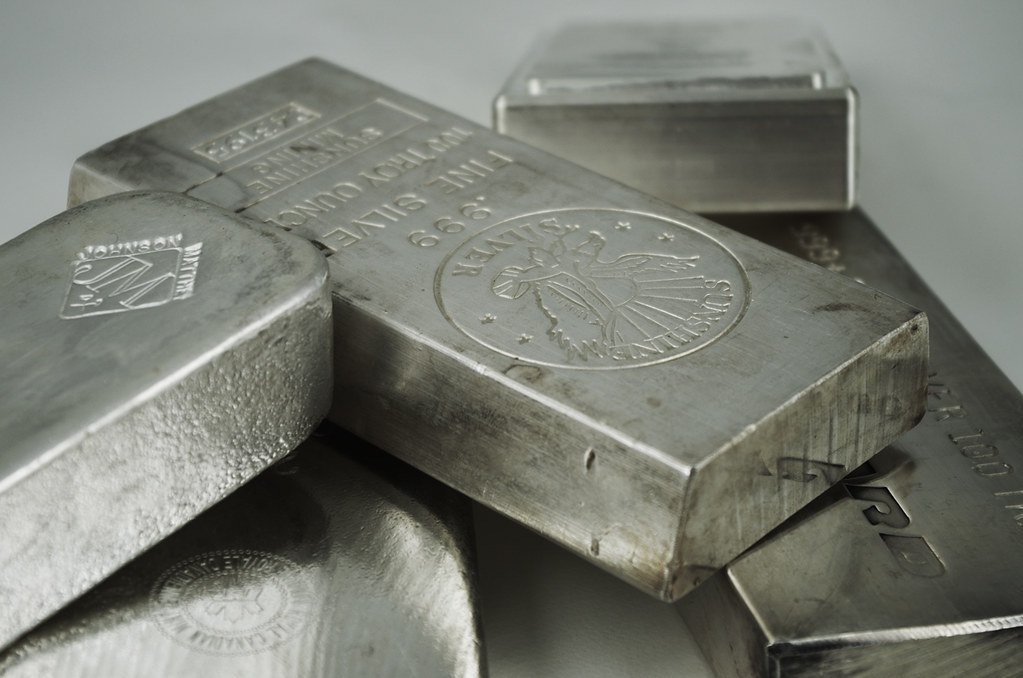
Miners: Flush with Cash

Barrick Mining (B) is a gold mining giant. They also produce lots of copper, silver, lead, and other metals.
Today we’re going to do a deep dive on the company. The goal is to help readers understand just how much money miners are making today, and how they’ll spend it.
First up, Barrick’s all-in sustaining cost (AISC) to mine one ounce of gold was $1,708 in Q1 2026. Their cost-of-sales (CoS) was $1,922 (this metric includes amortization and depreciation – accounting stuff).
Gold currently trades at $4,148. So for every ounce of gold they mine, they earn over $2,000. In 2025, Barrick produced 3.26 million oz of gold. In 2026, they expect to produce 2.9 to 3.25 million oz.
In the ground, Barrick has around 85 million ounces of proven and probable gold reserves. At current rates, that’s enough to last about 28 years. More is indicated and inferred, and additional discoveries will be made. And it’s likely Barrick will acquire junior miners with attractive reserve profiles.
Cash Flowing
In the first quarter of 2026, Barrick generated about $1.2 billion in attributable free cash flow (FCF). In 2026, the company is expected to produce around $5.7 billion total FCF.
With a market cap of $64 billion, the company is trading at about 14x attributable free cash flow. It trades at a P/E ratio of 9.8x. Pretty cheap.
This is why we say miners are printing money.
Today Barrick has $7.1B in cash, and $4.7B of debt. Of course, they could pay off the debt, but they’re already fairly lean. Back in 2014 they had around $14B worth of debt. Barrick, and the industry as a whole, have shored up their balance sheets.
So that leaves a few interesting options to spend the money.
Nice Dividend Yields
Over the last 12 months, Barrick has paid a 2.5% dividend. That includes a regular quarterly $0.175 payout, plus an additional yearly payment based on FCF.
In February, Barrick announced it would aim to pay out 50% of attributable free cash flow as dividends going forward.
Based on current gold prices, this could amount to a 3.6% yield for the next year. If gold goes higher, so will the dividend. And of course, the opposite is also true.
That’s a handsome yield for a gold miner.
Stock Buybacks
Barrick has also authorized up to a $3 billion share buyback. This can be a good use of cash, depending on the price the company buys back shares at.
Buybacks reduce the total number of shares outstanding, while helping support the price. But honestly, if I owned the stock, I’d prefer higher dividends or acquisitions.
Buybacks should be utilized strategically to buy back shares when they’re dirt cheap. Sometimes companies use buybacks to push shares higher, regardless of price. Then executives can exercise their stock options more profitably. I’m not saying Barrick does this, of course. But it’s always a risk.
I expect they will utilize some of that cash to buy back shares. And at current prices, that seems like a reasonable use of funds.
Snapping Up Smaller Miners
In their Q1 earnings announcement, Barrick announced they are actively looking to do “selective acquisitions”. This is a change from their previous focus on organic growth and expansion.
Barrick has new leadership, having parted ways with long-time CEO Mark Bristow. New CEO Mark Hill has different ideas about M&A, so it’ll be very interesting to see if they begin to snap up attractive companies during this pullback.
The important takeaway here is that gold producers have bundles of cash to spend. This is a good reason to have exposure to high quality junior miners which might be targets. But please, don’t go out and just start buying junior miners you read about online. That’s a dangerous path.
Unless you’re a pro, make sure you’re following the recommendations of independent experts like our own Jim Rickards, Dan Amoss, Matt Badiali, and Byron King. Buying random juniors you find online often means you’re the target of a marketing campaign.
Ok, now let’s get back to Barrick.
Upcoming Spinoff
Barrick plans to spin off its North American mining operations by the end of 2026. The company will IPO its safer U.S. and Canadian mines, while maintaining a majority ownership. This will allow investors to choose whether they buy the “safer” North American projects, or its riskier, but very profitable operations in places like Mali.
Why? Barrick has had some problems dealing with Mali’s government and regulators. Some investors don’t like dealing with the uncertainty of emerging market exposure.
As a result of their issues in Mali, and the gold price falling, Barrick shares have fallen significantly from their recent highs. B hit a new all-time high over $54 in January and trades at $36.70 today.
Conclusion
I don’t own Barrick currently. So to be clear, this isn’t necessarily an endorsement of the stock. It’s a breakdown of how much cash miners are generating, and how they’re spending it.
However, I think Barrick should do well over coming years. Its higher-than-average dividend yield makes it attractive for income investors. And it has more copper exposure than most gold miners, which is a positive in my opinion.
Personally, I’m more focused on miners with heavy silver exposure, as well as smaller gold producers and developers.
But if you’re looking for a (relatively) stable gold miner, Barrick is a solid pick. It’s a giant of the sector.
We’ll explore some smaller gold mining stocks soon. Junior miners have fallen significantly since the Iran war began, and there are some excellent buy-the-dip opportunities out there.