

American Oil Won't Save the Day
A good friend and schoolteacher posted this question on Facebook the other day:
An honest question- PLEASE don’t turn it into politics- Do we not have our own oil in this country? Why do we not drill more and supply more? If we have it and can drill, why are we not? Prices would drop, no?
I posted a short answer, but I keep hearing this question from all over. The snarky, economics answer is that markets work and oil is too useful to be cheap for long. Before we start, we need to learn a new word (for some of us):
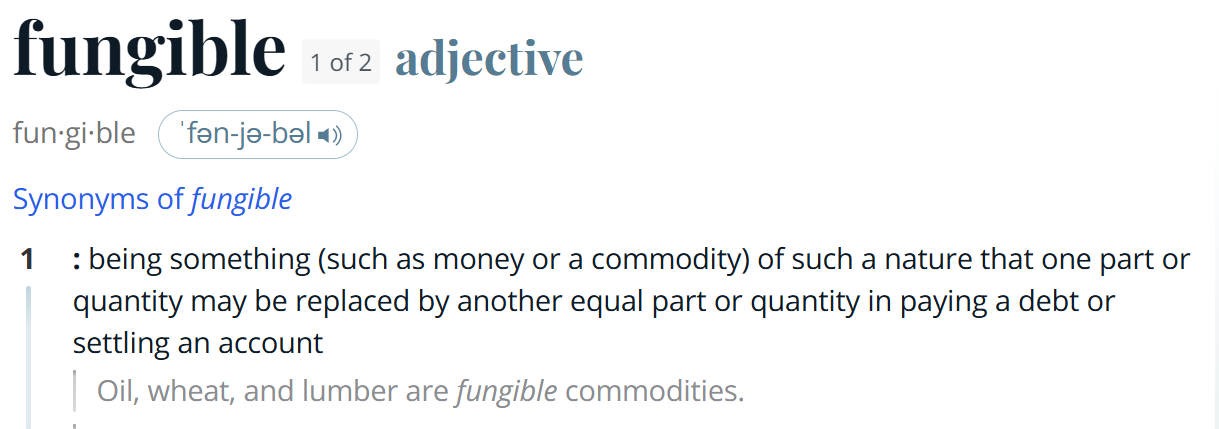
To economists, oil is fungible. It means that a barrel of oil in Abilene is the same as a barrel of oil in Singapore. And so, if the price of a barrel in Singapore costs more than a barrel in Abilene (plus shipping costs), then we should buy the barrel in Texas.
But there’s a much more interesting and detailed answer…
Okay, buckle up. Because I want to take a deep dive. You see, I love oil. Back in the early 2000’s, I thought that was going to be my career path. I partnered with some wild-catters on oil wells in West Texas. It fascinates me, so hopefully I can share some of that with you!
Let’s start with the fact that oil is a global market. In other words, you can swap barrels from almost anywhere. There is a little more nuance that we’ll get to in a minute. But generally, you reach a price point where you can substitute crudes to save money.
That balances the price of oil, so you don’t have one region with super cheap oil and another super expensive. In other words, the market works…
But, since I love oil so much, I’m going into a little more detail on this. We’ll start with chemistry and go on from there.
You see, oil isn’t monolith…it’s not like a metal, which is made of identical atoms. Oil is like a soup. It’s made up of chains of “hydrocarbons”. They are literally hydrogen and carbon atoms linked together in different lengths with some other stuff too. If the crude has a lot of sulfur, it’s called sour. If it has a little, it’s called sweet.
We see both ends of the spectrum every day in our lives. Gasoline is another soup of chains that contain 4 to 12 carbon atoms. On average, gasoline is C8H18. That’s eight carbon atoms and 18 hydrogen atoms linked in chains.
Asphalt on our roads are hydrocarbon chains that have more than 42 carbon atoms. In general, the longer the chain, the thicker and heavier the oil. But both are hydrocarbons found in oil. Some chains, like those found in Canada’s oil sands, are so long that they need to be heated to flow.
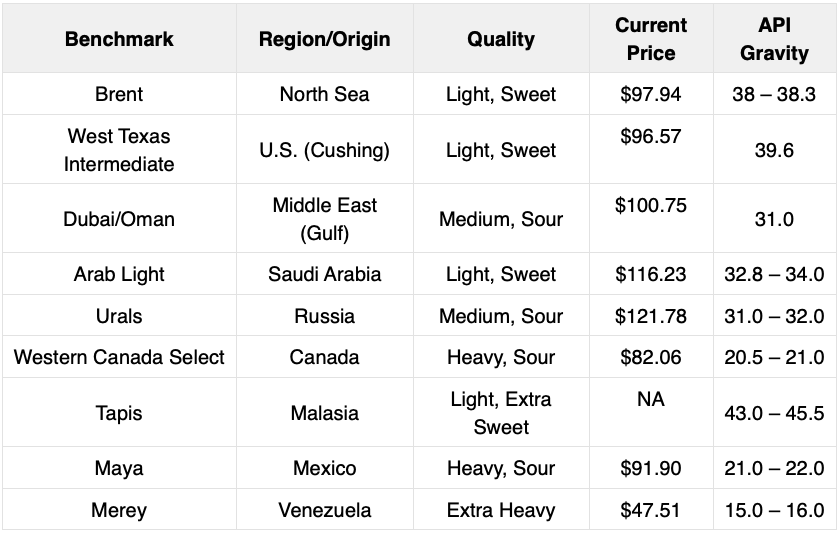
We measure the average length of hydrocarbon chains in oil using “API Gravity”. This measures the density of the oil. The higher the gravity, the lighter the oil.
Water has an API Gravity of 10. Below that, the oil sinks in water.
As a rule of thumb, the lighter the crude oil, the higher percentage of shorter chains. That crude is easier to turn into vehicle fuels. And it gets a premium to heavier, sour crudes.
Since oil varies by region, the world has a series of “benchmark” prices. When you drill a new well, the oil gets classified against your benchmark. We use West Texas Intermediate, here in the states.
The oil coming out of the ground in the U.S. gets graded against the West Texas Intermediate benchmark. That’s how the price is set here in the U.S.
For reference, here are the main oil benchmarks around the world, with the current prices:
In general, the benchmark crude prices trade in lockstep. You can see an example of three key benchmarks’ prices here:
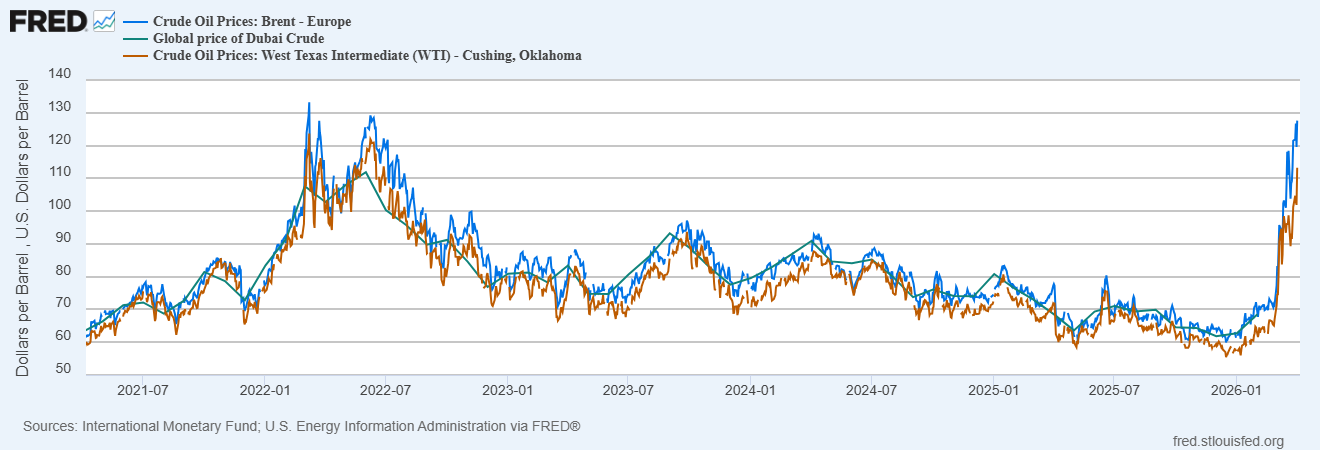
Quality of the crude will create a small discount or premium, but for the most part, the market moves together.
That’s why, when war closed the Strait of Hormuz, crude oil from Dubai to the U.K. to Cushing, Oklahoma all soared. It doesn’t matter who has the oil.
Markets are global, and oil is the beating heart of the economy today.
The world produces and processes around 103 million barrels of oil per day (pre-Iran). So if one country raises output, it won’t affect the local (or global) price much.

Comments: