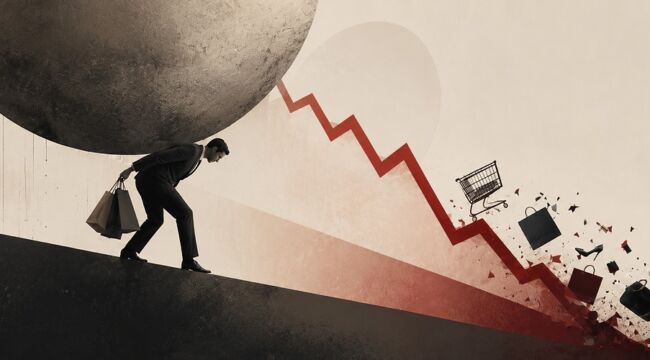

Time to Sell *These* Stocks
On June 25, 2026, the technology giant Apple Inc. (Nasdaq: AAPL) increased prices for its computer products by $100 to $500. So, a new MacBook Neo went up 17%. And a new iPad Pro jumped 25%.
That, my friends, is inflation. The company cited the rising cost of memory for the need to bump up prices. Effectively passing along the cost increase to consumers.
Inflation is a funny thing. There is the political version, which relies on the arbitrary Consumer Price Index (CPI). And then there’s the “boots on the ground” version, which is the basic cost of the stuff we buy.
The CPI theoretically tracks a basket of stuff that reflects the average consumer. But it’s nearly impossible to create an “average” across every person in America.
Today, the reported annual CPI is at 4% through the end of May. That seems a bit low. I don’t know about you, but the cost of my daily life is up far more than 4%. And I don’t need the government to gaslight me on what my daily life costs. I know it intuitively, because of the price of gasoline, food, cleaning supplies, etc.
I like to use a different basket of goods to track inflation. And it shows me that the cost of living is up 20% so far in 2026.
The Commodity Research Bureau (CRB) Index tracks the cost of raw materials. It began in 1958 and originally tracked 28 commodities. The original index tracked things like barley, flax, cottonseed oil, onions, wool tops, soybeans, etc.
Today, the index tracks 19 commodities like cocoa, aluminum, copper, coffee, gold, hogs, cattle, nickel, orange juice, etc. Oil and petroleum products make up 33% of the commodities.
That collection of commodities tracks the fundamental cost of life. These are the basic building blocks of today’s world. And as you can see, they cost more:
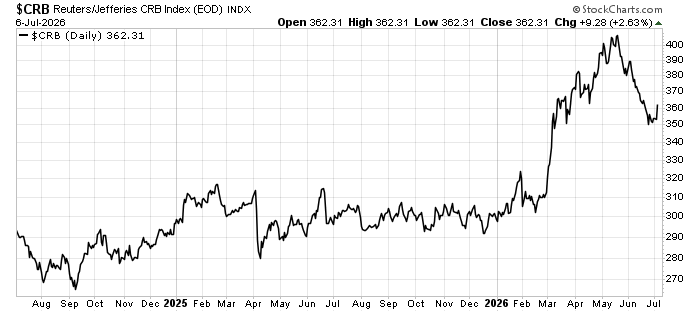
While this basket of commodity prices is down from their high in May, it’s still much higher than it was in January. And it turned higher again this month.
One of the principal drivers of actual inflation is transportation. Gasoline drives that increase:
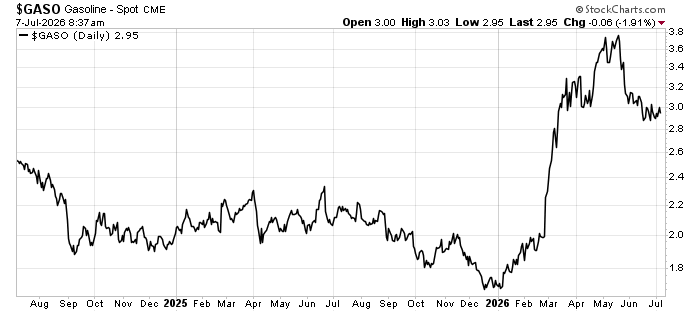
The spot price of gasoline is up 75% year to date according to the futures market at the Chicago Mercantile Exchange. Diesel is up more than 40%, according to the St. Louis Federal Reserve data.
That’s a huge increase. Fuel costs hit everything we use, from the cost of grain to Amazon deliveries. And companies need to pass that cost on to consumers. That’s why we see such increases in grocery prices, especially fresh produce.
When fundamentals go up so much, so rapidly. It makes everyone feel less rich. And that influences what we do in the future. Sentiment matters. When we feel rich, we spend money. When we feel poor, we save it. And right now, the Conference Board’s Consumer Confidence Index is near Covid pandemic lows:
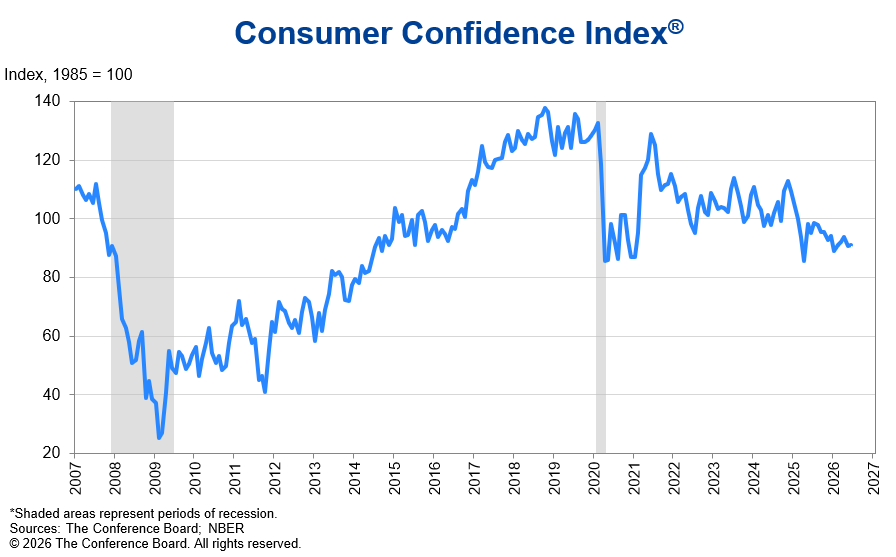
And when consumer confidence is low, it does not bode well for the companies that sell us stuff. It’s time to get out of consumer discretionary stocks, airlines, auto makers, and other stuff we don’t need right now.
Instead, we want to own agriculture, utilities, health care, and military contractors. That’s the stuff we can’t do without.
Today, the cost of living in the U.S. is up, so the average consumer feels poor. That will have an impact on stocks. Combine that sentiment with much higher prices and that’s not great for the broad stock market.

Comments: