

The Next Big Commodity Winner
Better than gold. Better than copper. Better than oil. This one grain has the potential to be the best performing commodity in 2026.
According to the latest U.S. Department of Agriculture data, the hard wheat crop will be the smallest in 69 years. The June update revised the entire wheat crop down from 1.4 billion bushels last month to just 1.0 billion bushels. And the export variety of the grain is well down.
Wheat prices don’t reflect that shortage…yet. There’s a simple way for investors to cash in on the coming jump in wheat prices.
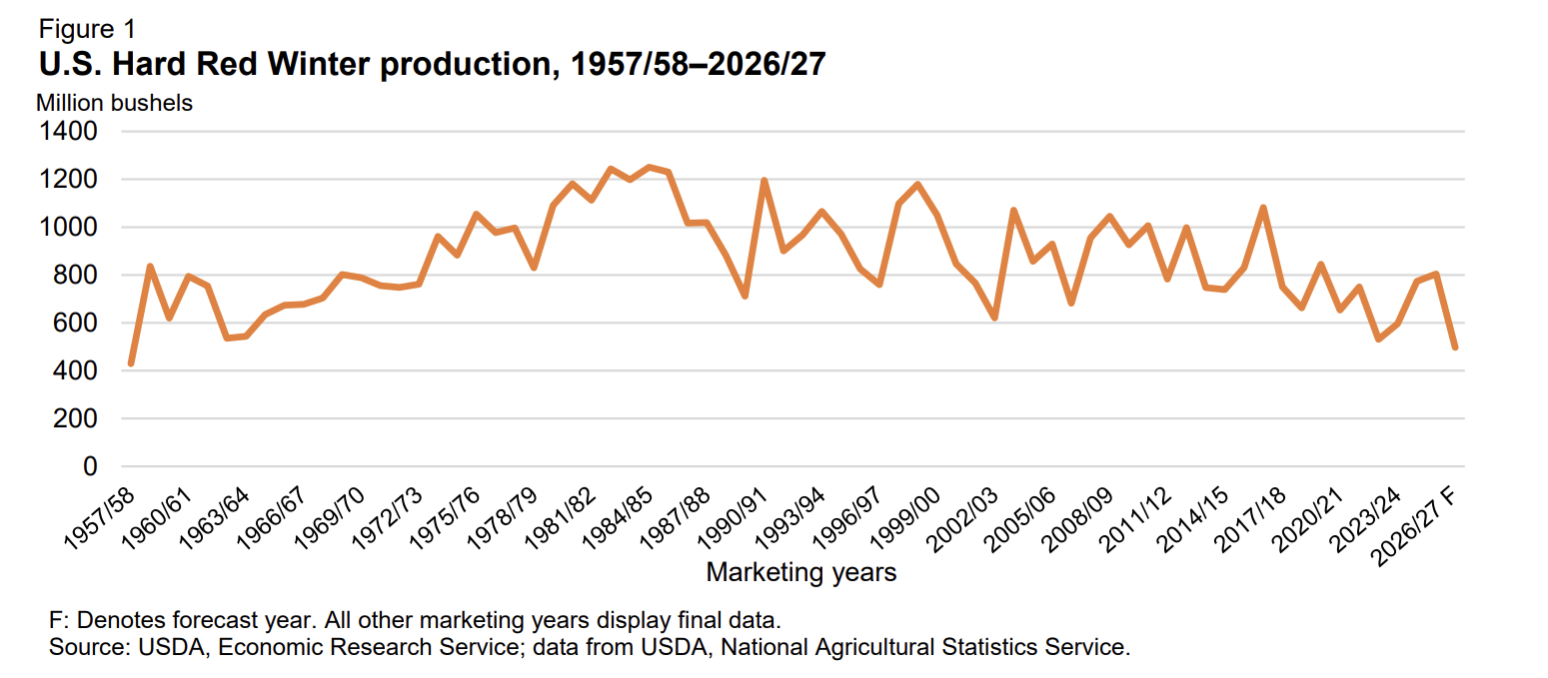
Hard red winter wheat (HRWW) is the main source of bread and exports. This harvest will be the smallest since 1958, primarily due to drought across the Great Plains. According to Reuters:
Production of hard red winter wheat, the largest variety grown in the United States, was projected to fall to 497 million bushels, down from an outlook for 515 million last month and well below last year’s 804-million-bushel crop.
The quality of the harvest is poor as well. Only 25% of the crop rates as good to excellent. That’s the lowest since 1986, according to Reuters’ reporting.
Let’s look at historical wheat prices. As you can see from the chart below, the wheat price is nowhere near recent highs.
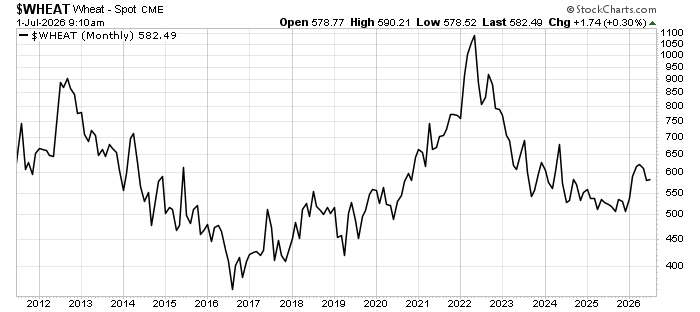
Commodity prices tend to move in cycles. Oversupply leads to low prices. Undersupply leads to high prices. And we are firmly in the undersupply situation. Competition for the available supply will drive prices up.
That’s the opportunity for investors today. This isn’t an overnight 20% trade. This is a several month, double your money kind of speculation. And if the wheat price tests recent highs, it could be a 200%+ return.
These kinds of opportunities happen in cyclical commodities. The trick is to buy when no one is talking about the trade. When the headlines scream about soaring wheat prices, it’s too late.
We want to buy wheat now and sell it when the price goes up. And make no mistake, this will happen. Wheat is like oil. It’s a commodity we all buy every day. It goes into nearly everything we eat, either directly or indirectly.
Livestock can substitute grains when one gets too expensive. You cannot substitute soybeans in breads, rolls, flatbreads, noodles, pasta, crackers, cookies, cakes, pastries, cereal bars, and some other processed foods.
The reason wheat prices could soar is two-fold. First, the main supplies of wheat come from the U.S. and the Black Sea. The war in Ukraine is a material risk to Black Sea grain exports. And the other risk is weather.
The incoming super El Niño is a major weather phenomenon that could impact wheat crops around the world. Historically, these events bring dry conditions to wheat producers in Australia and Asia. Reduced global supply at a time when U.S. productions are at extreme lows will add upward pressure to the price.
The risk in this trade is that there is plenty of wheat on the market right now. The lack of wheat will hit later this fall. And that’s when I expect to see the price climb.
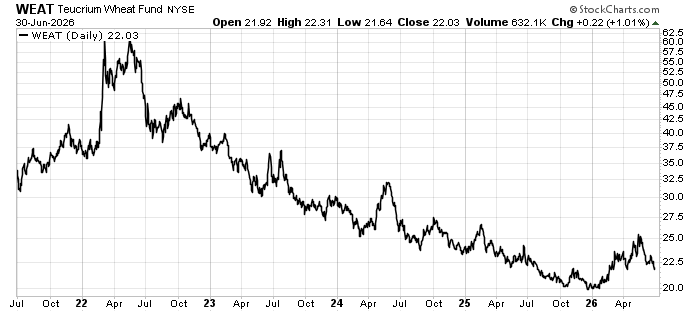
The best way to profit from the coming wheat shortage is by owning the Teucrium Wheat Fund (WEAT). It’s an ETF that holds wheat futures.
If the wheat shortage is as bad as I expect, WEAT could double over the next 6 months or so. The risk/reward ratio here looks excellent.

Comments: