

America Turns 250... But what if?
Today, let’s discuss “America 250,” in which the country celebrates a quarter-millennium since the Declaration of Independence. It ought to be big news. Indeed, I recall the 200th national commemoration in 1976, a huge deal at the time.
But this year? To me at least, the 250th comes across as lackluster so far, and we’re already into May. Perhaps it’s a sign of the times and coarsening culture. (Ugh… speaking of coarse: did you see any imagery of the Met Gala from last night, in New York? Yuck.)
Meanwhile, time flies, we’re all busy, gasoline is expensive, and maybe this 250-thing isn’t at the top of your list. Still, the fact remains that we have but two months until the July 4th festivities.
And oh-by-the-way, just so you know: Mark your calendar because Paradigm Press will hold an online “250” event on June 4th for subscribers to Strategic Intelligence, via broadcast from Philadelphia. Details are coming soon.
Meanwhile, at least some 250-related merchandise is out there. It ranges from kitsch like T-shirts and ball caps to fancy, engraved bottles of whiskey, and even commemorative coins from the U.S. Mint, like this proof-set of Walking Liberties priced well north of $10,000:
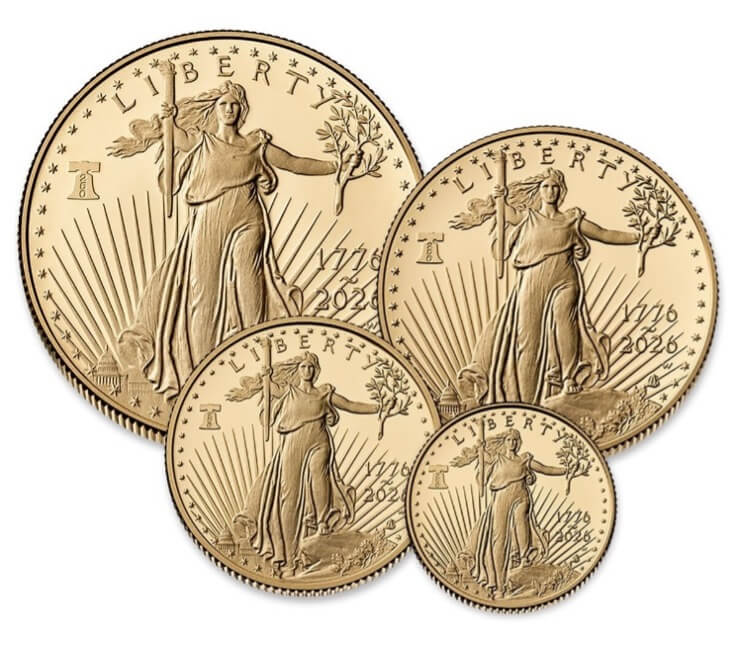
Commemorative “250” gold coins. Courtesy U.S. Mint.
But now, let’s dig in… Because what if there had been no American Revolution? No Declaration of Independence? No July 4th?
Historians call this a “counter-factual” scenario. And I mention it because no less than the King of England raised the matter last week, during a state visit to the U.S.…
“You’d be Speaking French.”
Yes, in honor of America 250, Britain’s King Charles III paid a call. And befitting his office, the man was ceremoniously welcomed, wined, dined and feted… all quite royally.

Fit for a King: Charles III at the White House amidst splendid fanfare. Courtesy AP.
Indeed, during an address to Congress, the King was cheered and applauded, including several standing ovations. And those stander-uppers included a sizeable number of politicians who are known to attend domestic rallies premised on the idea of “No Kings.” Astonishing, although it definitely demonstrates how American politics are truly bizarre.
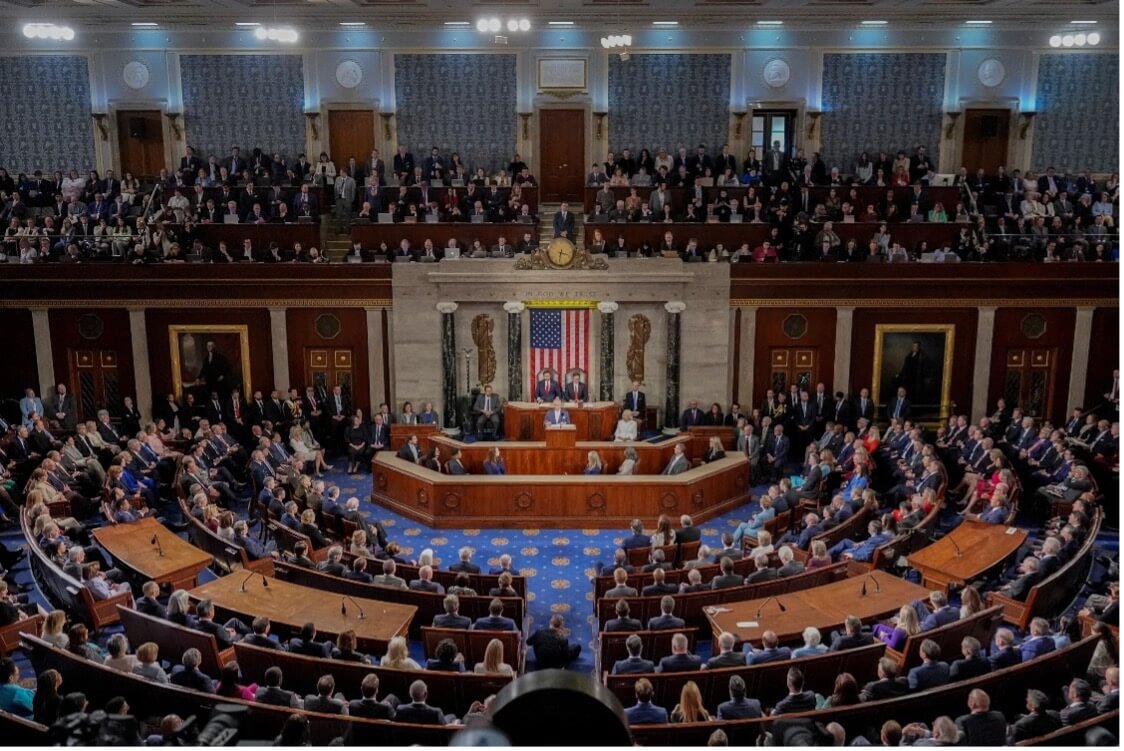
King Charles III addresses a Joint Session of Congress. Courtesy AP.
When he spoke before Congress, and then at several other venues, the King delivered remarks with a characteristic British sense of history, humor, and diplomacy. He described the U.K.-U.S. relationship as one of the most consequential alliances in modern history.
At one point during a state dinner, Charles aimed a tongue-in-cheek, yet pointed remark towards President Trump, referencing an earlier comment by the U.S. leader about World War II:
“You recently commented, Mr. President, that if it were not for the United States, European countries would be speaking German. Dare I say that if it wasn’t for us, you’d be speaking French.”
The line drew laughs. And indeed, much humor is fundamentally rooted in truth. But what kind of truth? Because a comment like this actually raises questions. It opens the door to what are called “counter-factual” versions of history. And what does that mean?
What If? What If?
More than a few professional historians don’t hold much use for counter-factual questions, and theirs is a respectable position. That is, many people believe that history is history, so stick to what it was; follow the script in a manner of speaking. Don’t play fiction-games.
Then again, back when I studied at the Naval War College, the instructors – solid thinkers with impressive amounts of academic wax and ribbon to their names – often posed counter-factuals. Indeed, they loved posing contrarian questions to spur discussion, debate and thorough thinking. For example:
- What if, in 1941, the Japanese navy had sent a third wave of aircraft to attack Pearl Harbor, and destroyed the fuel storage area for the Pacific Fleet? Or…
- What if, in 1942, the Japanese navy had prevailed at the Battle of Midway? Or…
- What if, in 1950, General MacArthur’s landing at Inchon, Korea had failed?
I could go on, but you get the idea… What if…? What if…? Pick any event and ask “what if” things had gone differently.
Of course, in our own reality there’s always just plain “what actually happened,” although even that is not necessarily clear in the mists of history, if not the fog of war. And definitely, entire realms of critical, controlling information may be classified, such as what pertained to, say, signals intelligence for 40 or more years post-World War II. (Seriously, how do you discuss World War II absent knowledge of code-breaking?)
Still, the pedantic point is that there’s a “forcing” aspect to counter-factual questions. Sometimes you cannot really know what happened until you examine the matter from the standpoint of what “didn’t” happen, or what “might have” happened. And only then can you see the granularity of events as they occurred. (eg., What if Pickett’s Charge had succeeded at Gettysburg?)
I could go on with this, but let’s get back to King Charles III, and how he raised the question of why the U.S. speaks English versus French.
No Revolution Without a Pre-Revolution
People who study revolutions will tell you that such events don’t happen in a vacuum. For a revolution to occur, there must be something “pre-revolutionary” going on.
In the case of the American Revolution of 1774, 75, 76 – and historians argue about even those dates! – the forcing mechanism was the French & Indian War, 1754-63, aka the “Seven Years’ War” despite the longer indicated time from start to finish. (The peace treaty took two years to hammer out.)
Basically, this war was about who would control the interior of North America, meaning what’s now Canada and lands west of the Appalachian Mountains. Among other things, the war involved Colonists moving westward versus Natives, plus regular British forces fighting French over control of Quebec and the Maritime provinces.
In the end, Britain prevailed over France, and the door was wide open for “British” interests – the coastal colonies – to move westward, all be it there were extensive Spanish claims out towards the Mississippi region and beyond.
But for now, let’s not dwell on the military or even geographic outcomes of the French & Indian War. Because the important point for the American “pre-Revolution” is that Britain wanted the Colonials to pay for the effort which led to new taxes via the Sugar Act (1764), Stamp Act (1765), Townshend Acts (1767), and Tea Act (1773).
Of course, the Colonials generally were not pleased to be taxed to pay for the war, although of course it benefitted them greatly; and this alone sowed many seeds of the Revolution of the mid-1770s.
Meanwhile, at a different level of governance, many within the British governing class looked down at rough-hewn American Colonials, and in fact treated them with disdain and disrespect.
One telling moment that defined transatlantic class difference came in the late 1760s, in London, when a Colonial representative – Benjamin Franklin – was mocked by members of Parliament. Then and there, Franklin realized that he was no longer “British,” despite his birth in a Colonial America, ruled by an English King. And thus did Franklin become, in the words of historian H.W. Brands, “The First American.”
Benjamin Franklin, “The First American” by H.W. Brands (2002). Fabulous book!
And What If Things Were… “Different”?
So again, we return to the counter-factual question behind King Charles III’s comment: what if the original 13 Colonies had followed a different course?
For example, what if the French had prevailed in the French & Indian War? What if, by the 1770s, British colonies were hemmed in to a narrow space between the Appalachians and the sea?
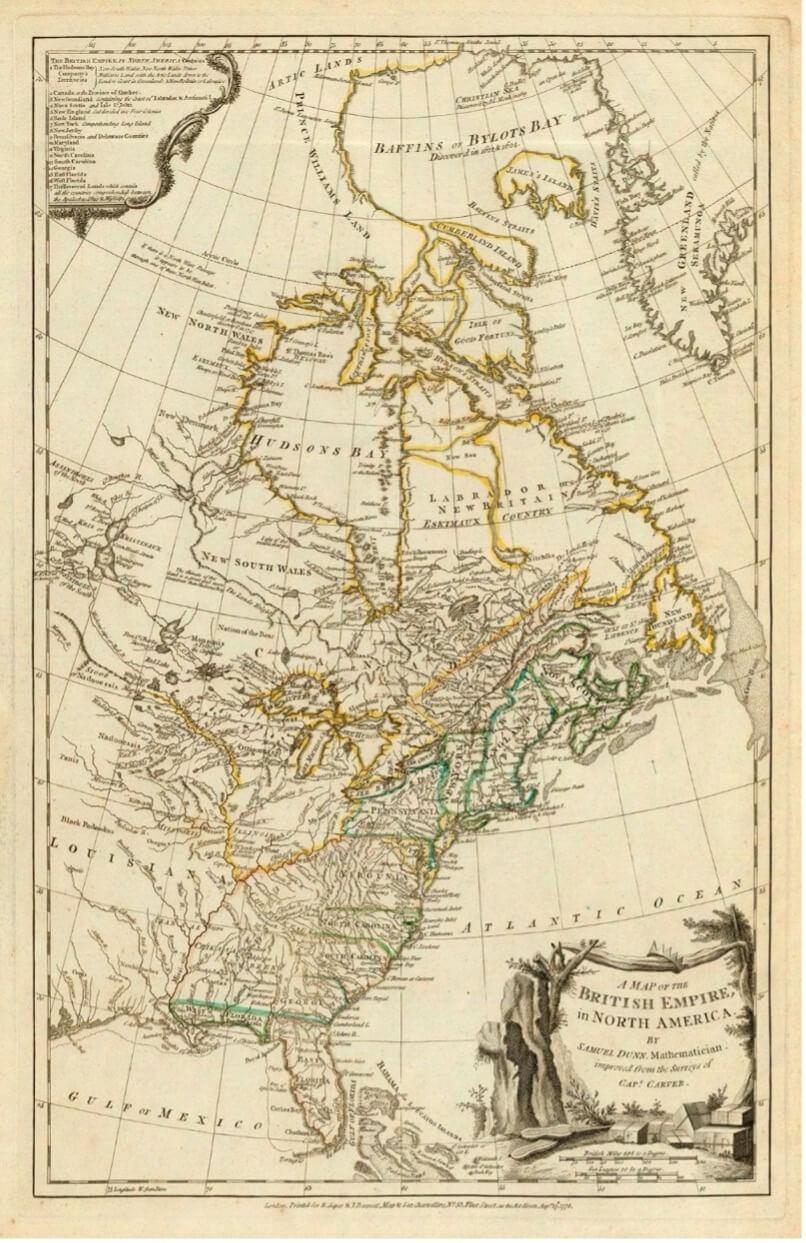
British Empire in North America, 1776. Courtesy Muir Maps.
What if the French controlled the interior of most of North America, with extensive Spanish holdings further West? And note that at the same time, Russia had expanded into what’s now Alaska, and was establishing settlements down the West coast? Already, the eventual geography and map lines begin to alter greatly.
Offer up just a few “what if” premises like that, and the next 250 years would be quite different, right? Or take King Charles’s musings another step, and ask what if there had been no American Revolution, of it the Revolution had been suppressed relatively quickly? That is, what if Britain had remained dominant in the 13 Colonies?
One key fact is that France financed a large portion of the American Revolution (1776 – 81) and went deep into debt to do so. And consider that by the mid-1780s France had fallen into dire financial straits. But in an alternative scenario, with no American Revolution, King Louis XVI would not have called the Estates General, which means that there might not have been a French Revolution in 1789.
No French Revolution means, in due course, no Napoleon; no Napoleonic Wars; no invasion of Egypt; no conquest of the Iberian Peninsula; no Louisiana “Sale” to the U.S.; no 1812 invasion of Russia; no armies marching back and forth across the German territories; no rise or unification of Germany; probably no unification of Italy.
Just on the point of, say, Napoleon’s invasion of Spain, consider that this broke down Spanish imperial governance across Central and South America. And this led to the rise of populists like Simon Bolivar, and revolutions that brought independence to countries that range from Mexico south to Argentina and Chile.
Meanwhile, Britain’s loss of 13 American Colonies led that island nation to expand elsewhere, particularly into India – another prize from the French & Indian War – as well as into the South Seas. Or stated another way, had Britain retained its hold over what became the U.S., there would have been fewer reasons to sail around the globe and colonize Australia and New Zealand.
Indeed, speaking of sailing, if Britain had remained more deeply involved in administering what became the U.S., there would have been less incentive to expand into Africa or Asia. So, imagine China without the Opium Wars of the 1830s-40s; or less meddling in, say, Crimea in the 1850s; or less British interest in the mostly Dutch region of what became South Africa, meaning no Great Trek, or no Boer War.
Closer to home, imagine if mid-1800s Britain had received ample and assured supplies of food from North America. Perhaps there would have been a less harsh British policy towards Ireland; no “Potato Famine,” and the mass-exodus of Irish to North America and across the world (Australia as a destination, again).
And a solidly British-controlled “America” would likely have been less of a welcoming place to other immigrants from Europe, such that large numbers of Eastern and Southern Europeans would never have set foot on North America.
Obviously, if we all “spoke French,” per King Charles III’s quip, it would truly be a different world. Indeed, almost assuredly, we’d not be here and the planet would be populated and run by others.
Wrap-Up
We could go on with these lines of questions, but past a certain level it gets deep into the realm of just raw speculation, no matter how informed it all may be by actual events. So, let’s return to the “real” history, meaning what happened 250 years ago and what followed.
We’ve got this country, the United States of America. Along the way, a lot of great things happened, and more than a few not-so-great things. But we’re here, it’s our time, and we can only make the best of what’s in the here and now.
For all the “what ifs” out there, the big question is… What do we do next? What about energy, industry, the economy, education, culture? How do you want to live? Where do we steer this ship? And who sets the rudder orders?
Well… as it all unfolds, we’re here at Paradigm Press to help you see through the smoke and fog. Our focus is the future, and how to make the best of it. That’s what we do. And that’s all for now.
Thank you for subscribing and reading.

Comments: