
SMRs and the Uranium Miner Opportunity
Scale is the biggest innovation in nuclear power today. Historically, nuclear power plants were massive constructs.
As we can see in the graph below, the existing power plants generated between 600 and 1,500 megawatts.
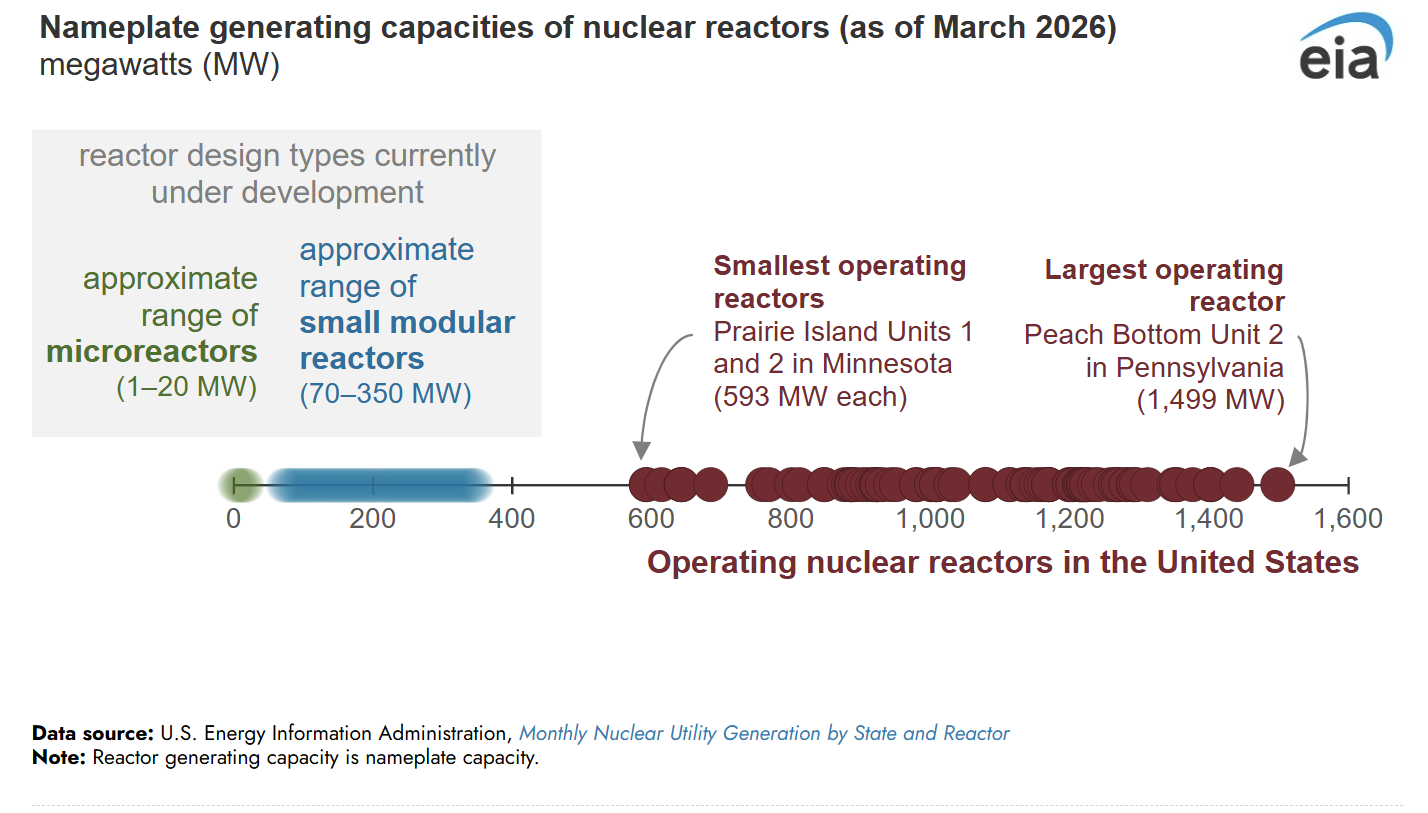
Those kinds of plants are incredibly expensive. The most recent nuclear power reactors completed, Georgia’s Vogtle Units 3 and 4, cost a whopping 15,000 per kW…that’s about $16 to $17 billion per unit. They also take many years to plan, permit, and build.
New power plants are incredibly rare in America. Most of the U.S. nuclear fleet is old…built before 1990. The Vogtle Units are two of only three nuclear power plants built since 2000. The industry retired over 30 new plants since then.
According to Jacopo Buongiorno, professor of nuclear science and engineering and Director of the MIT Center for Advanced Nuclear Energy Systems, cost over-runs and construction delays played a large part in sidelining nuclear power in favor of other sources.
That’s changing thanks to the introduction of small modular reactors (SMRs).
There are two new SMRs in Oak Ridge Tennessee (Kairos Power Hermes 1 & 2). These are in a demonstration facility that will eventually be tied into the grid.
The military is also building several small reactors. The Air Force plans to construct one at the Eielson AirForce base in Alaska next year. And the Army’s Janus program plans to build multiple SMRs on bases.
Commercially, NuScale Power (ticker: SMR) and the Tennessee Valley Authority plan to build SMRs at its Clinch River site. And Holtec International plans to build two 300-megawatt SMRs at its Palisades site in Michigan. They plan to be online by 2031.
There is a lot of discussion around using SMRs for data center power. X-Energy (ticker: XE), Energy Northwest, and Amazon (ticker: AMZN) plan to build a complex in Washington state up to 960 MW. That’s a fairly large plant.
The U.S. government is onside with these new power plants, which should encourage companies to get them built. The government must streamline the permitting process to allow the projects to meet timelines.
Red tape has crippled projects over recent decades. The Trump administration has worked to improve the process.
The problem soon will be fueling these new power plants. Here’s the current state of uranium mines in the U.S.:
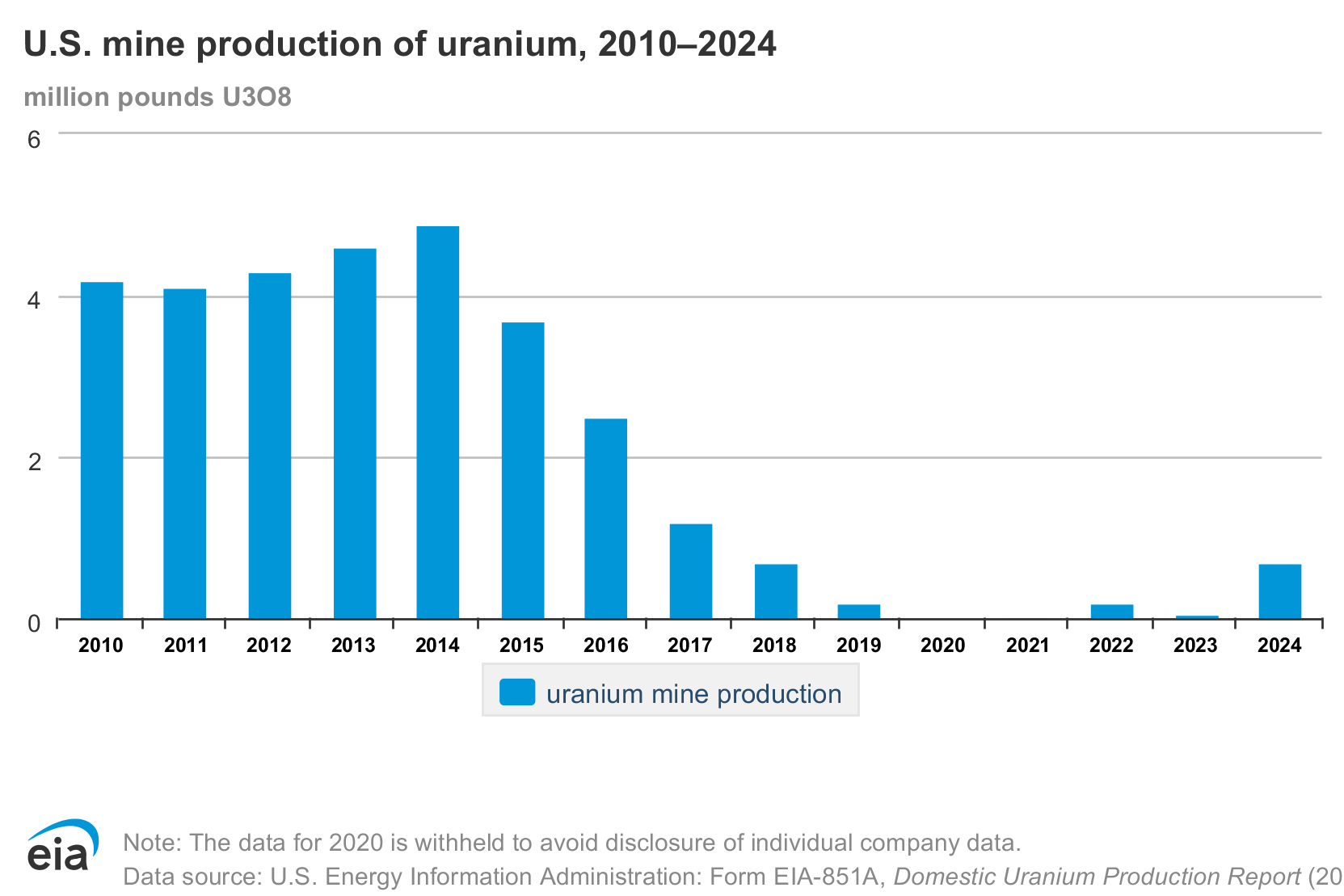
You can see the problem…we don’t produce enough fuel.
These new SMRs need 300 to 500 tons of uranium fuel per year. It takes about 45 to 50 tons of mined (yellow cake) uranium to make a ton of uranium fuel. A quick, back of the envelope calculation, means each new SMR will add between 13,500 and 25,000 tons of new uranium demand.
The U.S. currently produces about 680,000 tons of uranium per year. But the situation isn’t that simple. The U.S. consumes about 5 million tons of uranium per year! So each new SMR will add to an already significant deficit. And there are many SMRs in the pipeline.
Small modular nuclear reactors are set to revitalize nuclear power in America. But we need a lot more uranium production to meet the new demand.
Even small reactors need significant amounts of fuel. And we currently don’t have it. That’s why we see U.S. uranium miners as an excellent investment opportunity for the next decade.

Comments: