
Missiles and Drones Fly as Iran War Smolders
The ceasefire with Iran is hanging on by a thread.
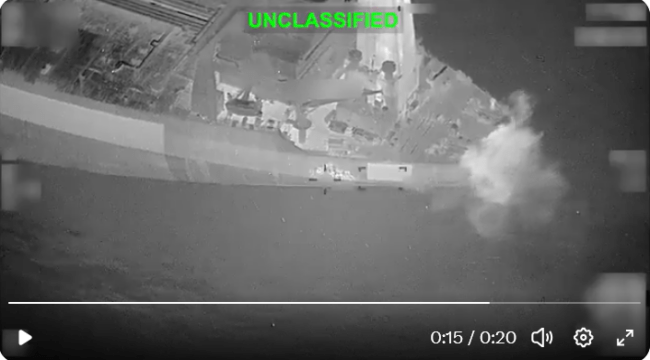
Yesterday the American Navy fired on and disabled an empty oil tanker headed to Kharg island. The ship attempted to bypass the blockade and ignored commands to stop.
An aircraft fired a Hellfire missile into the tanker’s engine room, disabling it. CENTCOM posted a video of the incident on X:
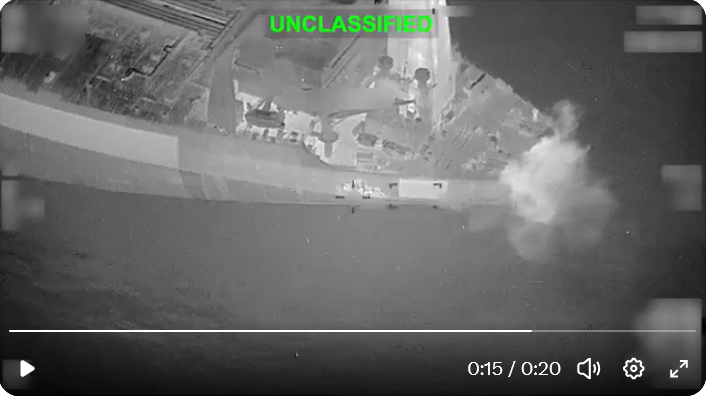
Source: CENTCOM
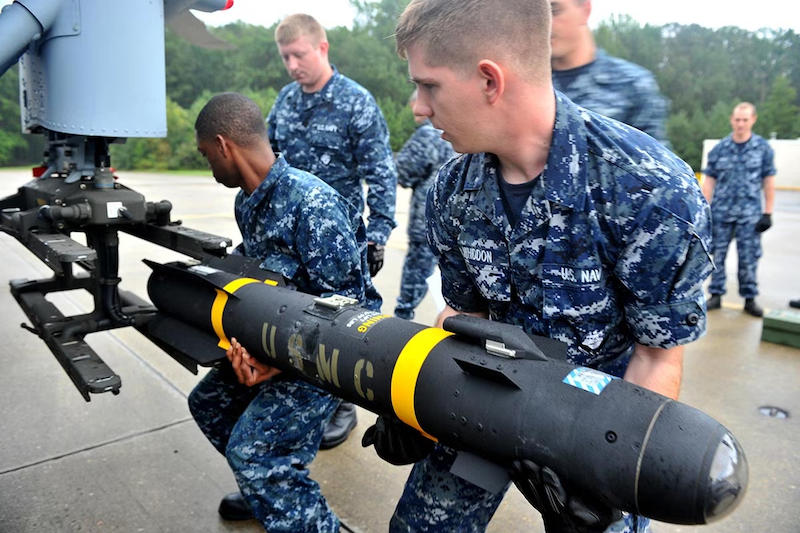
AGM-114 Hellfire missile. Source: Military.com
In order to maintain the blockade’s credibility, U.S. forces are being forced to disable ships which attempt to run it. Some of them, at least.
Targets on Iran’s Qeshm Island in the Strait of Hormuz were also struck.
Meanwhile Iran targeted U.S. military bases in Bahrain and Kuwait. CENTCOM reports that all attacks failed or were intercepted. Iranian sources dispute this. Commercial satellite coverage of the areas has been severely restricted, so we likely won’t know the full story for a while.
Then today Iran hit Kuwait’s international airport with a missile and drone attack. At least one terminal was seriously damaged.
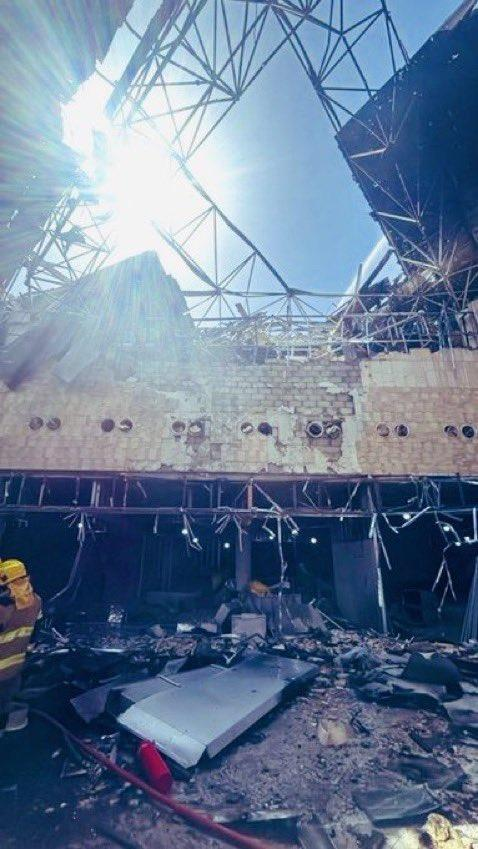
Kuwait’s International Airport
Kuwait is a key American ally in the region, hosting large military bases and cooperating on missile defense, and perhaps even conducting strikes of its own on Iran (though this is disputed).
Escalation, or Aggressive Negotiation?
Will this fresh action lead to a full-scale return to war? Or is it simply each side demonstrating that they aren’t afraid of fighting, to strengthen their position in negotiations?
I’m leaning toward aggressive negotiation. I don’t think either side wants a return to all-out war.
There is too much at stake. For Iran, the fate of their economy hangs in the balance. The worrying part is that they’ve been sanctioned for 47 years and are accustomed to dealing with hyperinflation and lean times.
However, Iranian lead negotiator M.B. Ghalibaf posted the following aggressive message on X back on May 29th:
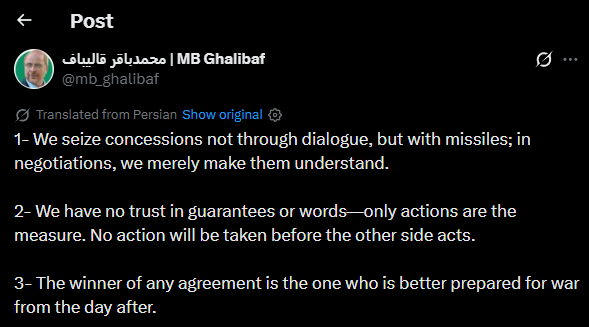
For President Trump, a return to intense fighting would be unpopular at home, could crash markets, and may threaten the GOP’s midterm efforts. He seems determined to reach a diplomatic solution, but at the same time isn’t budging on his red lines.
Here’s the President’s latest Truth Social post on the Iran situation:
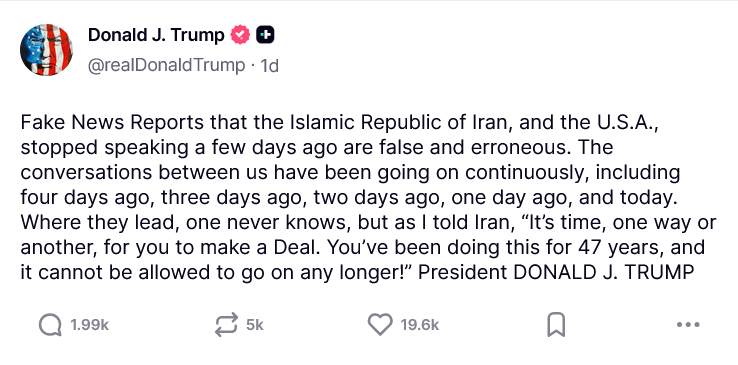
Both sides seem to want a deal, but at the same time neither is willing to compromise. So it is still possible that we see a return to full-scale fighting.
Chances are this eventually ends with a deal. But as we’ve noted multiple times, that could take many months at the current pace.
Economic Fallout Approaches
The price of diesel in California is currently $7.28 per gallon. In Texas, it’s $4.81.
For truckers, farmers, and other diesel consumers, this is a massive difference.
Part of the California prices can be explained by higher taxes. But the state’s problems go much deeper than that.
Strict California environmental regulations caused most oil refiners to flee the state decades ago. And they refuse to build new pipelines. So California imported most of its oil from Asian refineries, which sourced their crude from the Persian Gulf.
The West Coast, and especially California, are rapidly approaching tank bottom when it comes to jet fuel and other distillates (mostly diesel fuel):
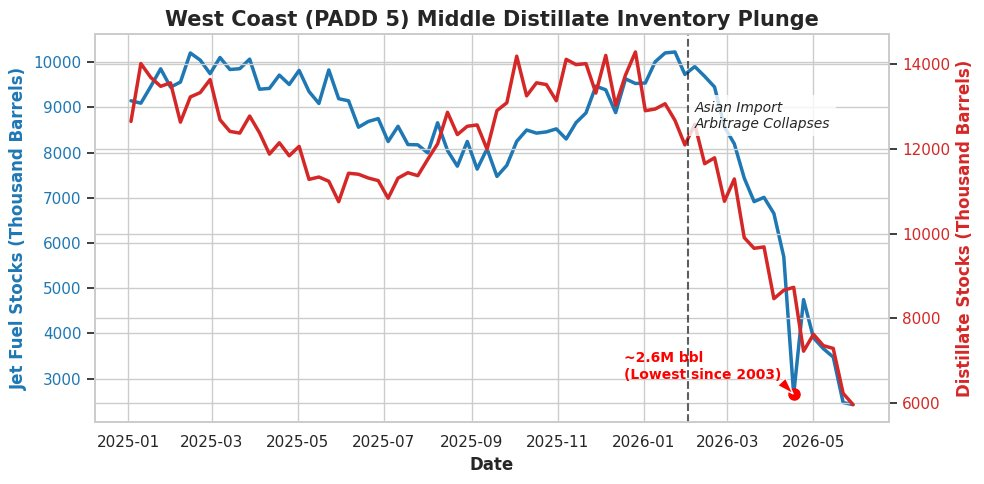
California is being forced to import much more fuel from the Gulf of Mexico, which is a long trip requiring passage through the Panama Canal. That limits the size of tankers significantly.
This is why we say America is mostly self-reliant when it comes to petroleum. And we are exporting more fuel than ever before. Existing inventories are being drained as producers sell to the highest global bidders.
Rickards’ Take
In a recent update to subscribers, Jim Rickards laid out the Iran situation bluntly.
The peace talks are a farce.
At best, we have a fragile ceasefire. But the U.S. keeps bombing Iranian bases and Iran keeps firing drones and laying mines, so it’s a thin reed to lean on.
Trump’s only paths at this point are surrender, stalemate and escalation. Surrender won’t happen because the political damage to Trump and the loss of face are too much for Trump to bear. The Iranians won’t agree to anything that makes Trump look good. Why should they? They’re winning the war. Stalemate, in the form of a ceasefire, may continue, but that won’t reopen the Strait.
Escalation could happen, but it won’t achieve any of Trump’s goals, including handing over Iran’s highly enriched uranium or achieving regime change. Escalation might give Trump a short-term political boost among the war hawks. But it would be Trump’s Vietnam and would ruin his legacy. Most importantly, escalation won’t reopen the Strait.
The bottom line for investors and consumers is that the Strait will remain closed indefinitely, with all that implies for global supply chains and inflation. Markets are not priced for this. They are priced for a quick end to the war and the reopening of the Strait.
When reality sinks in, be prepared for major declines in stock prices, higher interest rates and an economic recession — or worse.
Jim is not one to sugarcoat. He calls it like he sees it, and has called this conflict more accurately than anyone else so far. And I agree with his assessment, unfortunately.
Stocks are priced for an immediate re-opening of the Strait of Hormuz. And that’s extremely unlikely.
Last week, when everyone was convinced a deal was around the corner, WTI crude oil dropped to $87 a barrel. Now that reality is setting in, it has since risen to $96.
If the Strait stays closed, we could easily see $150/barrel by the end of summer. If the war starts back up, and critical infrastructure is hit, such as Saudi Arabian pipelines which currently bypass the hot zones, we could go much higher.
Areas like California will be in serious trouble in the very near future. Diesel is already over $7 a gallon and likely going higher. Areas like Texas and those with oil fracking will be better off in terms of shortages, but prices will still sting.
The world remains on track for a major inflationary spike. When oil soars, the price of everything goes with it.
I continue to hold my oil stocks and precious metal investments. I’m a bit worried about miners over the short-run due to a possible oil price spike, but the sector remains cheap and has already been discounted significantly since the war began. I’m holding.
We’ll continue to explore ways to prepare for the turmoil ahead.

Comments: