
Oil, Drones, and Recession
Today we’re going to look at how this energy crisis will certainly lead to a recession.
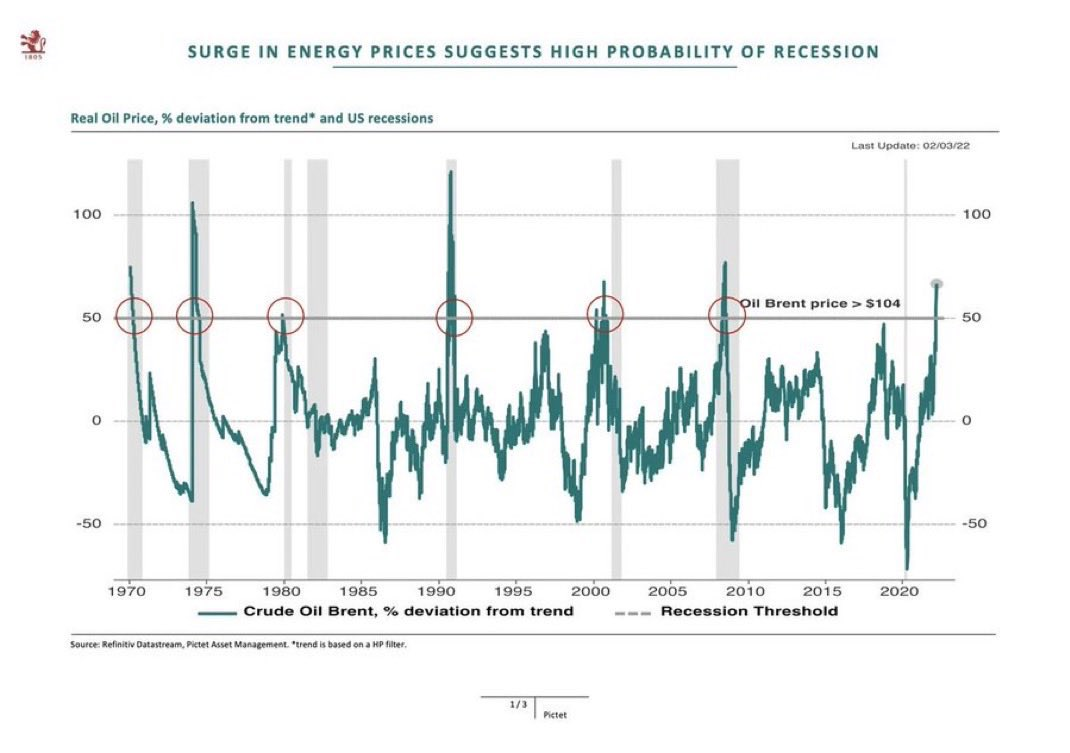
Below is a chart showing oil price spikes from 1968 to 2022, and how they almost always lead to recessions.
The blue-green line represents oil price spikes, and the shaded areas indicate recessions. Note how the two overlap.
Source: Thierry Borgeat
Interestingly, the one exception in the chart above is 2022, when Russia invaded Ukraine. Officially, there was no recession. But in reality we did have one.
A recession is typically defined as two consecutive quarters of negative economic growth. We had that in 2022. But Biden’s number crunchers cooked the books, declaring it too healthy for a recession.
Stocks Fell Anyway
Despite the fact that there was no official recession in 2022, the S&P 500 fell 25% and the Nasdaq 100 fell 34%.
Then in November the release of ChatGPT saved the day, and stocks soared on AI optimism. Ever since, the entire economy has been propped up by the AI boom.
But now we have another energy crisis, and this one is far more severe than the 2022 episode.
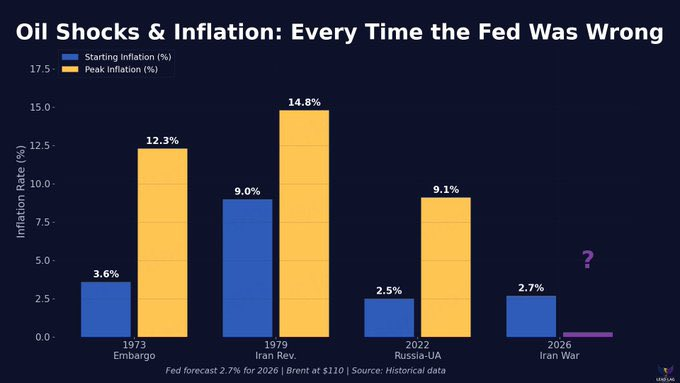
Below is another chart, which shows how past oil spikes have affected inflation. The blue bar represents where inflation was before oil spiked, and the orange bar shows where it peaked.
Source: Michael Gayed
We should remember that oil would be even higher if the world hadn’t agreed to release 400 million barrels of oil from strategic reserves. However, this release will only last 3 or 4 months.
War, Drones, Missiles, and Oil
The closure of the Strait of Hormuz is obviously a very big deal. But many are unaware that oil and gas production themselves are also under grave threat.
We covered the damage done to oil and gas infrastructure due to the Iran war in Escalation Ladders.
There is a high chance this damage continues to accelerate. And if things get bad enough, a big chunk of Gulf oil and gas production could be disabled for years to come.
But damage continues to pile up in Russia, as well. The country produces around 13% of global oil.
And Ukraine just severely damaged its largest export facility, the Primorsk port, with a long-range drone.
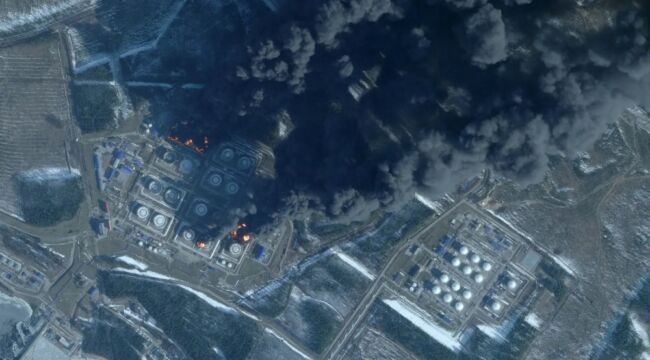
Here’s a satellite image of what the facility currently looks like.
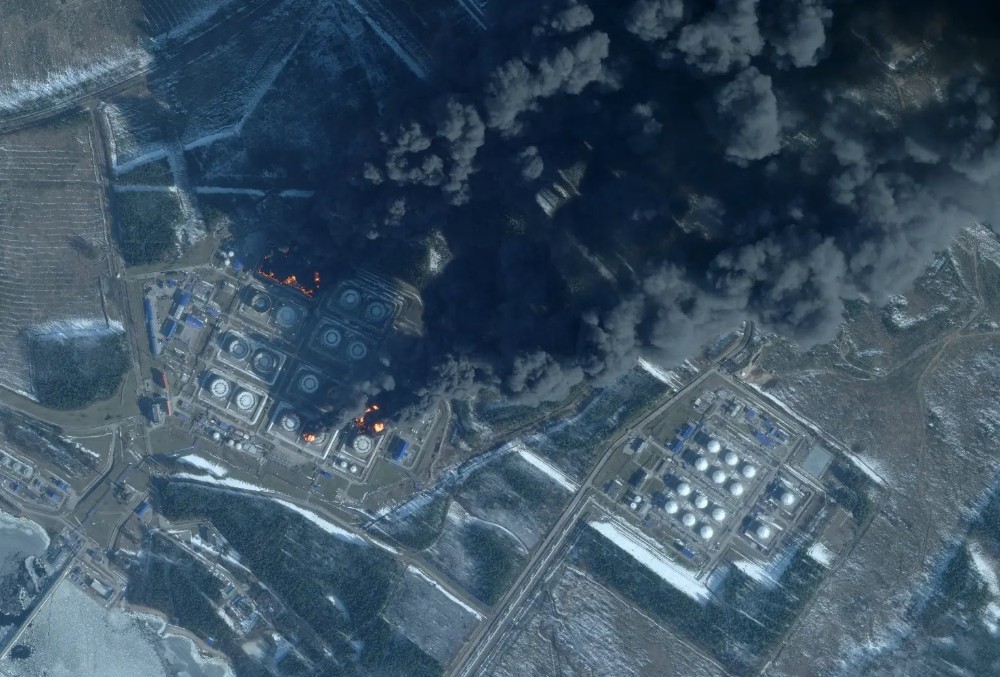
This export terminal is Russia’ largest, handling more than 1 million barrels per day. Needless to say, it won’t be operational for a while now.
Another hit to global oil supply. And this is against Russia, which has excellent air defenses.
All this damage we are seeing to oil and gas infrastructure is due to advances in long-range missiles and drones.
A 300,000x Damage Multiplier
The widespread availability of drones and missiles is a new X-factor that makes modern warfare far more dangerous. A $20,000 drone can cause billions of dollars in damages.
The $200,000 Iranian missile which struck Qatar’s Las Raffan LNG complex will cost $60 to $100 billion in lost revenue and repairs over the 3-5 years it takes to fix.
Iran spent $200,000 to do up to $100 billion in damages. That’s a 300,000x multiplier.
We’ve never seen asymmetric warfare like this. $10 million dollars worth of drones and missiles can cause a global recession, or even worse. Global markets were already vulnerable before all this happened.
The world does not yet understand this risk. Never before has global energy infrastructure been so vulnerable.
And no, we cannot eliminate it entirely through war. Eventually, we must find a path to lasting peace. Iran’s military assets are too spread out. It would take many years, and we don’t have that time.
A Muted Reaction, So Far
The S&P 500 is only down about 7% from its peak. If oil stays high, and I expect it to, we should fully expect a recession. And a significant pullback in stocks.
As I said last Friday, I’m raising cash and taking some profits on long-term positions. Still holding all my precious metals and Brazilian stocks. Have added some puts and short ETFs.
Hopefully President Trump is able to make a peace deal with Iran that lasts. Because if we don’t, this thing could rapidly spiral out of control.

Comments: