
CRAK Kills (During an Oil War)
How much has the Iran war impacted U.S. oil prices?
Here is the Energy Information Administration (EIA) oil price forecast from February 2026:
We estimate that oil-directed rig activity in the Permian will be relatively low as West Texas Intermediate prices fall from $65/b in 2025 to average $53/b in 2026 and then average $49/b in 2027.
According to the EIA, WTI should be around $53 per barrel on average this year. Here is the current oil price chart for West Texas Intermediate:
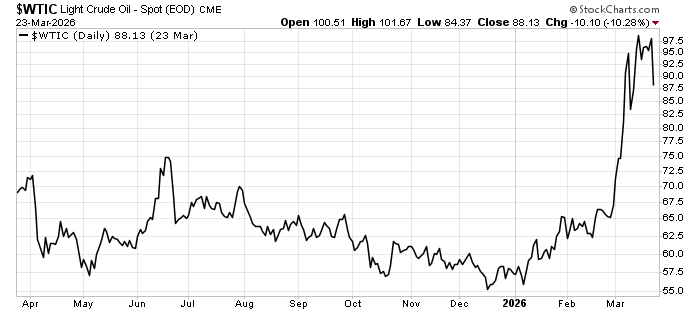
As we can see, the Iran war pushed the oil price from less than $60 per barrel to over $90. That’s a 50% jump in a few weeks. This is the highest price we’ve seen since 2022.
There’s an opportunity for investors inside this oil spike.
The higher oil price drove gasoline prices higher. However, oil price isn’t the only driver of gasoline. The explosion at Valero’s (VLO) giant Port Arthur oil refinery could send gas prices even higher. Port Arthur is the largest refinery in the U.S. and the eighth largest in the world.
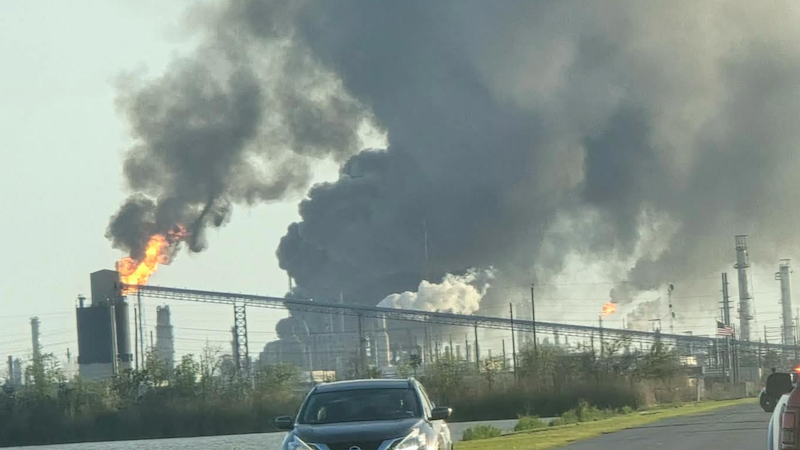
The fire at Valero’s Port Arthur oil refinery
The fire damage shut in over 380,000 barrels per day. That’s about 2% of the U.S. refining capacity. However, we don’t think its loss, even for a few weeks, will create a country-wide supply crisis. However, it will further increase the price of gasoline.
The premium of a gallon of gasoline over a gallon of oil is going to go up. Here’s what I mean…
The price of gasoline is a function of the cost of oil, taxes, and marketing. Over the past couple of years, gasoline costs about 24% more than a gallon of oil. But as you can see in the chart below, it can go much higher:
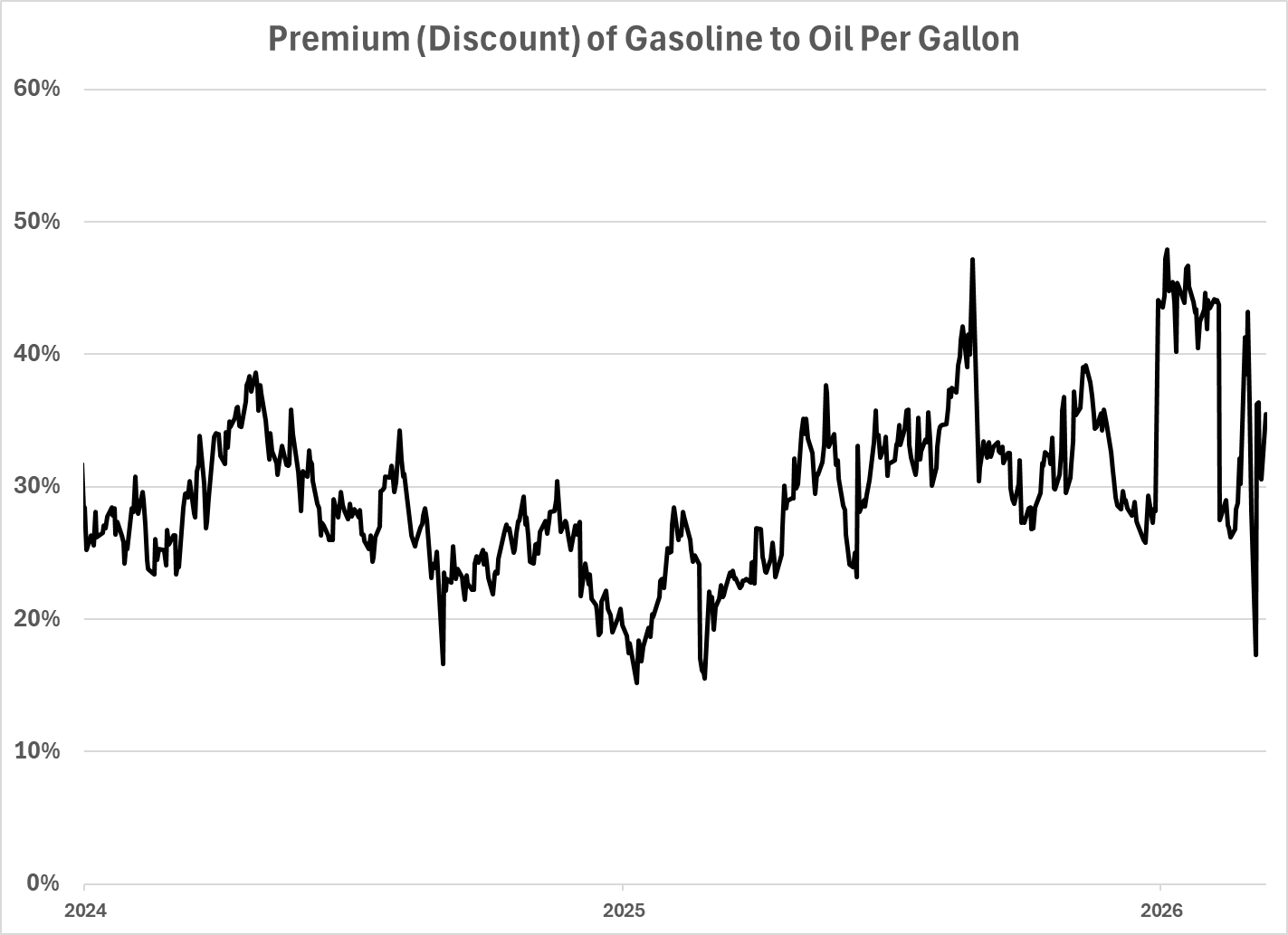
In 2022, gasoline prices spiked to 122% over the price of oil. That means, if oil was $2 per gallon, gasoline price was $4.44 per gallon. Since 2024, we saw it has high as 48% over the price of oil.
We can use this to roughly forecast earnings for refiners. When the premium is up, it’s good for them. When it’s low, it isn’t…and right now it looks promising.
The fallout from the Port Arthur fire could be a higher premium for gasoline prices. That means gas prices could go up, even if the oil price doesn’t. That premium means refiners are going to make more money.
Refiners’ share prices soared quite a bit, as you can see here:
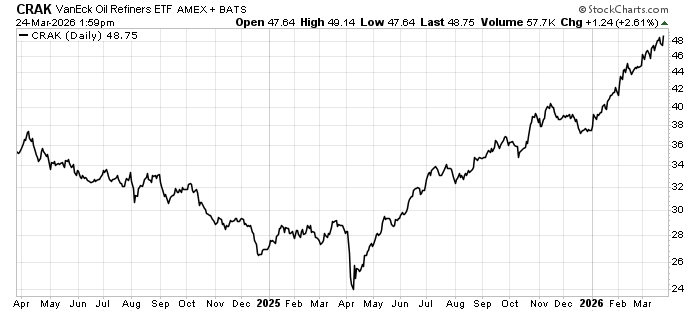
This trend remains in place. And the larger than average premium of gasoline should continue to pad their earnings.
This is one way to offset higher gasoline prices. Own the companies that are going to make more money in this situation.
The VanEck Oil Refiners ETF (CRAK) is an easy and diversified way to do so.

Comments: