

A Stillborn Ceasefire
The fragile truce reached last night is already dead.
The first big strike after the ceasefire hit Iran’s Lavan Island oil refinery, which was damaged this morning.
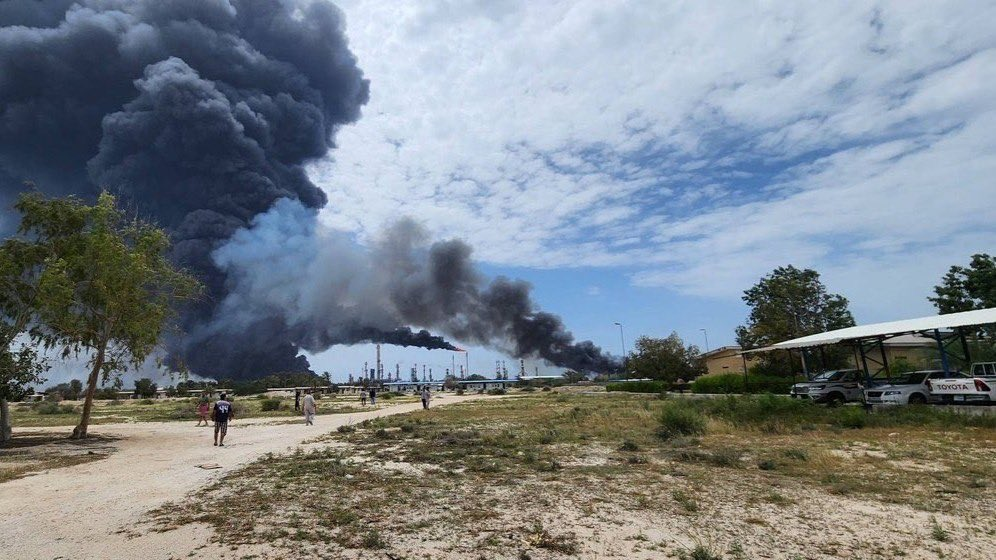
Lavan Oil Refinery in Iran – Source: X
The U.S. has denied being involved in the strike. Two military officials told Newsmax’s Carla Babb the following:
“We have not conducted strikes against Iran since the ceasefire agreement started. If anyone is striking Iran now, it isn’t our military.”
It’s possible that Israel carried out the strike. However, the island is about 1,250 miles from Israel. There are rumors that it was carried out by the United Arab Emirates (UAE). This would mark another escalation, as the Gulf countries haven’t yet used their own weapons against Iran (so far they have only hosted U.S. forces and used air defenses).
Regardless, Iran proceeded to strike a pumping station along the critical Saudi East-West oil pipeline. This pipeline is currently Saudi Arabia’s lifeline for petroleum exports with the Strait of Hormuz closed.
The East-West pipeline allows Saudi Arabia to ship up to 7 million barrels per day from their oil fields to the Red Sea.
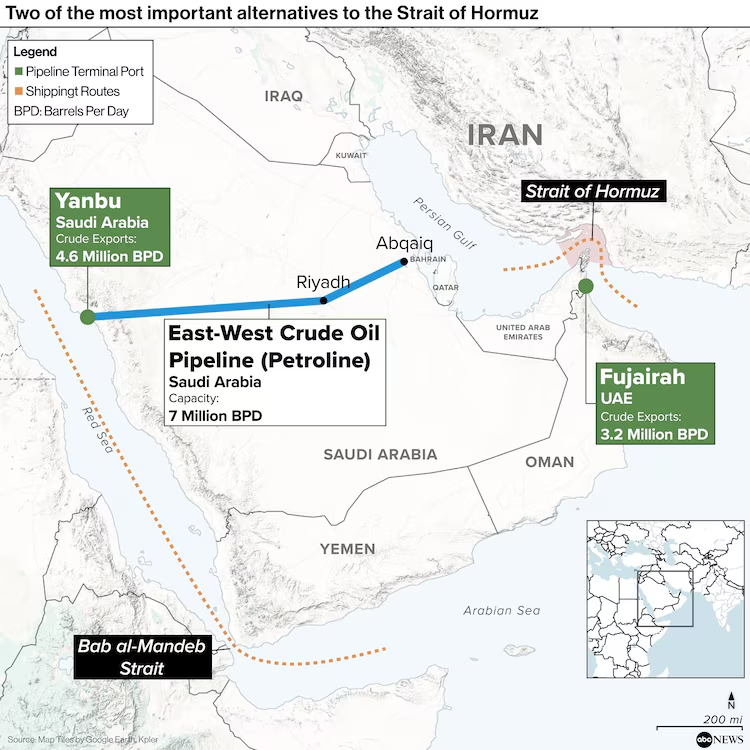
Source: ABC News
Without this critical pipeline, another 7 million barrels of oil will be taken off the market.
Iran also struck the UAE’s Fujairah oil export terminal, which handles about 3.2 million barrels per day (also visible on the map above, just below and outside the Strait of Hormuz).
These two strikes alone could potentially take another 10.2 million barrels per day (bpd) off the market. Combine that with the approximately 15 million bpd already removed, and you get an ugly situation. That’s up to 25% of global oil production offline or undeliverable.
Now, we don’t know how bad the damage to these facilities is yet. But Iran is certainly capable of taking both offline for an extended period of time.
Iran also struck targets in Israel.
Israel Keeps Going
Israel has made it clear they will continue to hit Lebanon, home of Hezbollah, an Iranian proxy force. Hezbollah has been launching large volumes of rockets, and even some crude missiles, at Israel during the conflict.
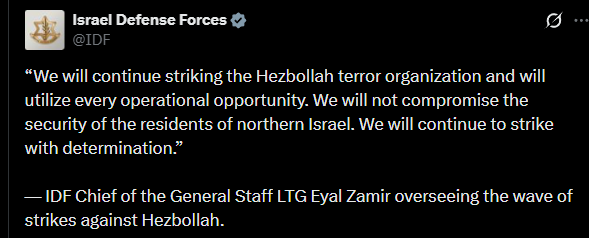
Source: X
Over the past month Israel has hit Lebanon extremely hard, and said it will expand its borders into parts of the neighboring country.
In a press conference today, Israel’s Prime Minister Netanyahu stated, “The temporary ceasefire with Iran will not include Hezbollah – and we will continue to strike them with all of our might.”
The original agreement appears to have included Lebanon, at least according to the White House’s chosen mediator, Pakistan’s Prime Minister. He posted on X that the ceasefire covered, “everywhere including Lebanon”.
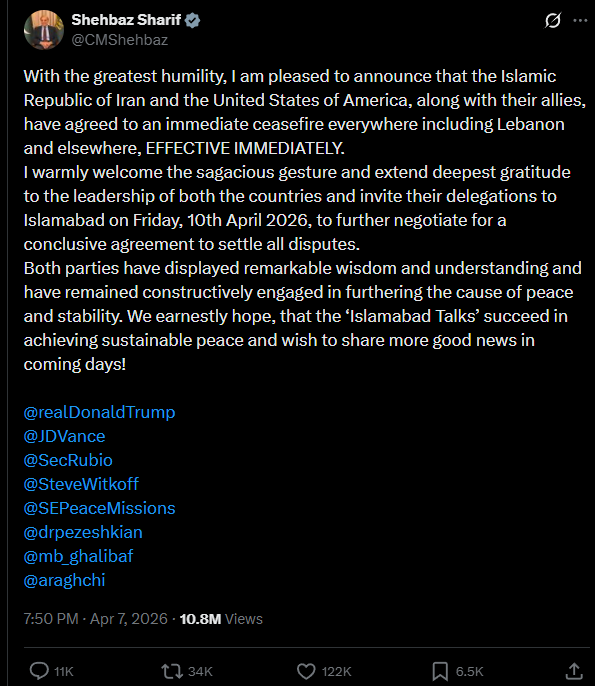
Source: X
Lebanon is apparently off the ceasefire table now. The White House confirmed today that it is not part of the ceasefire.
Iran will almost certainly not agree to a truce while their allies in Lebanon are under attack.
But in reality, even Lebanon is a moot point.
The war rages on across Iran, Israel, Saudi Arabia, the UAE, and Iraq. Iranian ally Yemen may soon close the Bab al-Mandeb Strait, cutting off a key Red Sea chokepoint. Yemen’s Houthi forces are armed with anti-ship missiles via tech transfer Iran.
Iran allowed 2 oil tankers through the Strait of Hormuz before the ceasefire was broken, and Iranian officials say it is now closed again.
President Trump and Iran are on different planets in terms of their expectations. Israel is off on its own island, with its own objectives, steadily escalating the conflict.
That’s a very long way of saying this war isn’t over, and neither is the energy crisis.
The ceasefire was stillborn. Dead on arrival.
Markets Yawn (Again)
Despite the fact that the ceasefire crumbles, markets are giddy with optimism. As I write, the Nasdaq is up 3% and the S&P 500 up 2.5%.
Oil is down 13% to 18%, depending on type and location.
There is still some hope that the meeting between Iranian and U.S. negotiators takes place this Friday, April 10, in Pakistan. Trump has said talks will happen “soon”.
J.D. Vance was originally scheduled to attend the meeting, but the administration has since said he may not be able to attend due to security concerns.
It is clear we need direct, preferably in-person negotiations. This game of pass-the-message is not working.
Unfortunately, it’s unlikely that in-person talks will succeed either.
As it stands, the path of least resistance is for the war to continue. Probably even escalate.
An Opportunity to Raise Cash
This crisis isn’t over. But markets are acting like it is.
This massive rebound in stock markets is an opportunity to take some profits and raise cash if you haven’t yet.
I believe downside risk is far higher than upside here. How much higher can stocks go in such an uncertain environment?
Meanwhile, if we do see 25% of global oil production disappear, that’d be a nightmare scenario. If that happens for a month oil could hit $200/barrel. If it happens for longer… a widespread financial crisis becomes increasingly probable.
Iran and the U.S. remain miles apart on expectations. Both have firm requirements the other will never accept.
Let’s hope that somehow a deal can be reached anyway. But as I’ve stated repeatedly, the situation may have to get worse before a lasting agreement is made.
For now, any ceasefire or truce will be temporary. So in my opinion, oil is going higher and stocks lower.

Comments: