
A Glacial Flood of Debt
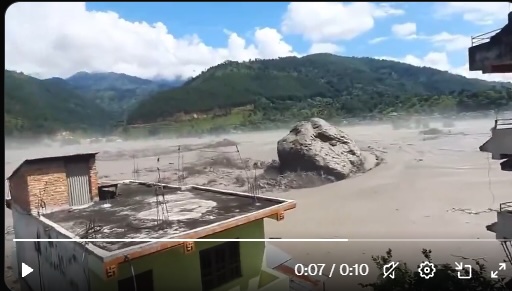
I’m sure most of you have seen footage from the tragedy on the China-Nepal border.
A glacier partially collapsed upstream, releasing huge volumes of ice, water, and mud. The raging torrent of water rushed down the valley.
Sadly, more than 500 people died. Another 1,500 are missing.
Shocking video was captured, such as this gigantic boulder rolling down the river.
Source: X
It’s a reminder of the awe-inspiring power of nature. And how disasters can slowly build for decades before they hit the tipping point.
Compared to the floods at the end of the last ice age, though, this was only a trickle.
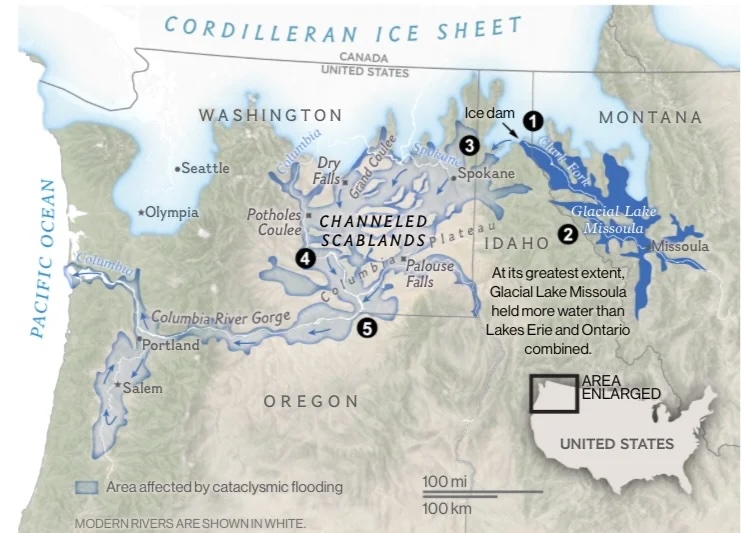
At the end of the last ice age, about 13,000 years ago, a giant glacial lake formed in what is now Western Montana. The Glacial Lake Missoula.
The lake, formed by melting glaciers, held roughly as much water as the Great Lakes Erie and Ontario combined. About 500 cubic miles of water.
Source: National Geographic
Eventually, the ice holding back this massive lake gave way. And a biblical flood of water was unleashed.
Geologists estimate the flow was equivalent to all the rivers in the world, times 10. It created massive ripples in the ground, like those you see at the beach. But these are up to 50 feet high:
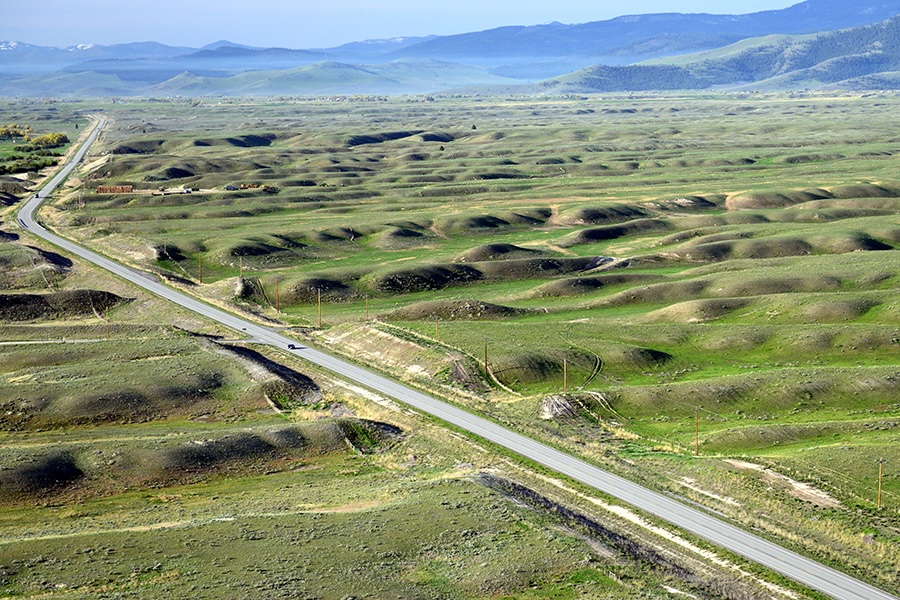
Photo credit: Dave Bennet
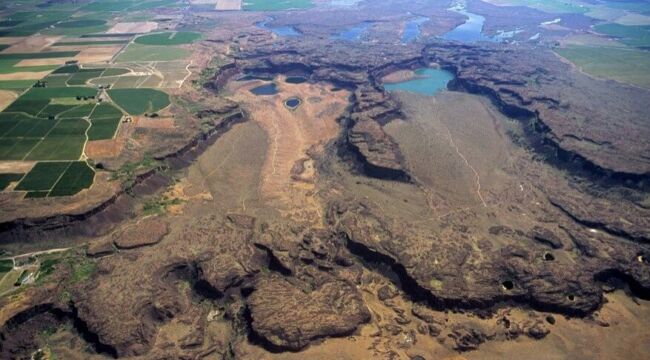
The violent cascade of water carved wild shapes into the land downstream. Like Dry Falls in the Washington scablands:
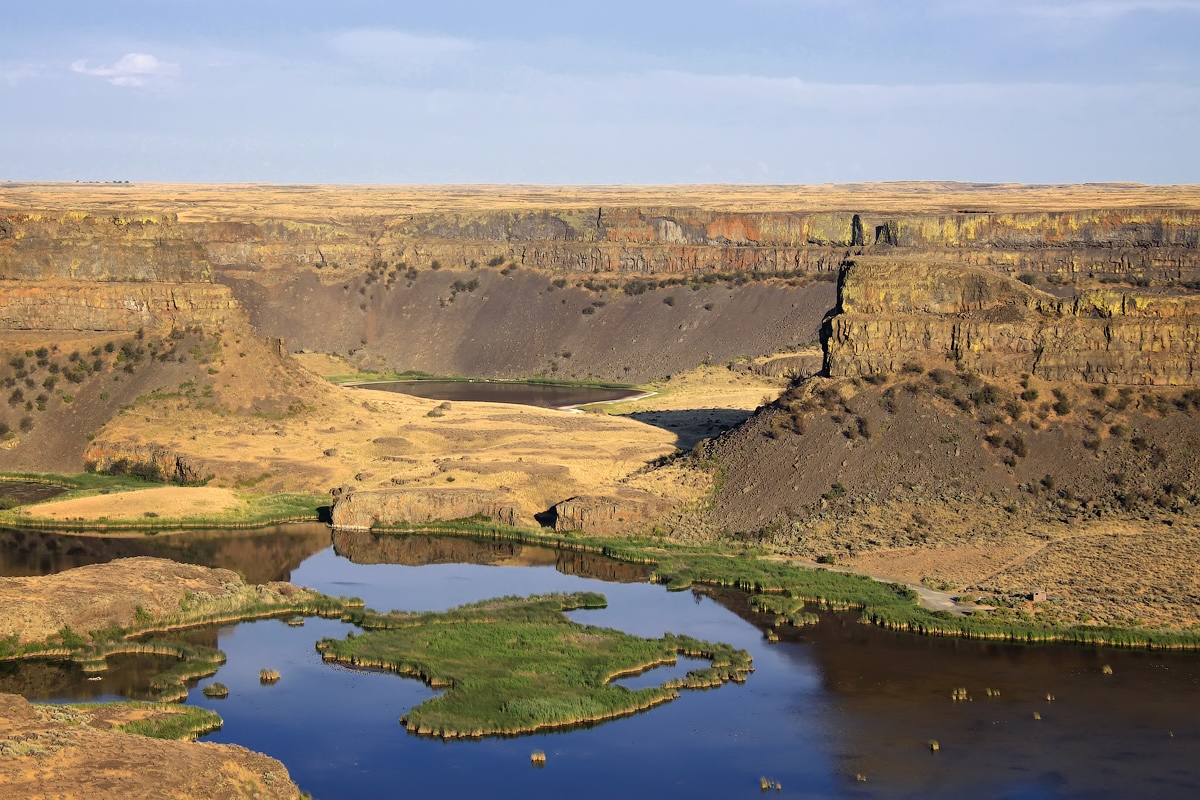
Source: Wikipedia
Imagine the power it took to carve this rock. Floods of unimaginable power.
The water accumulated gradually. But the failure of the glacial ice dams was sudden. The dam would break, release its torrent, re-freeze, and do it all again after a few decades.
And that is disturbingly similar to our global debt situation.
When the Debt Dam Bursts
Governments around the world have steadily accumulated debt over the last 45 years. This is the lake building up behind the ice dam.
Eventually, we will have a financial equivalent of the Missoula floods. I don’t claim to know exactly when it will happen.
But we’re getting to the point where interest costs are becoming problematic. Paying the vig on federal debt now consumes 21.65% of American tax revenue. As reported by the Financial Times:
The most relevant measure of US federal government debt, that held by the public, has risen from $3.4tn in 2000 to $32.3tn now, or a rise from 33.7 per cent to more than 100 per cent of GDP in just over 25 years. More importantly, the burden of servicing that debt has doubled, from 11 per cent of tax revenues in 2000 to 21.5 per cent in the first 10 months of the current fiscal year.
And it’s not just us. Countries around the world are struggling with unsustainable debt loads.
Nations without nasty debt loads are the exception. There’s only a handful of financially disciplined countries left: Russia, Switzerland, Ireland, Sweden, Norway, and a few in South America. Almost everybody else is in a similar boat (leaky).
Now, the United States does have an advantage here. Our government’s debt is still the world’s preferred fiat asset. This helps keep yields on debt, lower than they otherwise would be.
But it’s also a crutch. Knowing that the world will buy our debt has made us spend recklessly. We are currently running 7% deficit-to-GDP. And that’s during an epic stock market bull run. Wait until the next recession.
The world periodically experiences these financial disasters. The result is almost always the same. Savers and bond holders get wrecked. Gold bugs and hard asset owners clean up.
Jim Rickards described it well in his newsletter yesterday. Regarding the 1970s stagflation period, he wrote:
I lived through that period. It was a fun time if you owned gold or real estate, if you used leverage and if you had a job that gave you a raise every few months.
It was not a fun time if you depended on fixed-income streams like annuities, insurance policies, pension plans or Social Security.
When the debt flood hits, we will all want to have plenty of exposure to hard assets. Especially precious metals, mining stocks, and oil and gas companies.
Long-life assets which will maintain (and grow) in value no matter what happens with inflation.
I plan to hold at least 20% of my portfolio in hard assets for the next decade (or two). Over that time period I’m convinced we will face serious inflation, financial panics, and quite possibly a few sovereign debt crises.
The lake of debt is building, and will unleash a torrent of inflation and chaos when the dam breaks.
This is an environment where you want plenty of exposure to durable and defensive hard assets.

Comments: