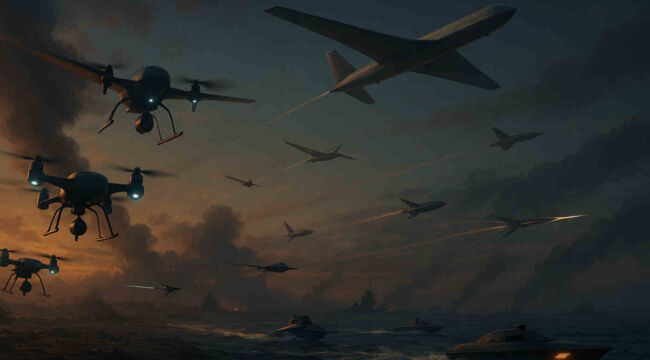

Modern Warfare: Lessons from Ukraine
Before Russia invaded Ukraine in 2022, we had very little insight into what modern warfare would look like.
How would hypersonic and cruise missiles perform? What impact would drones have on the battlefield? How important is artillery in modern warfare? How relevant are tanks? And what about electronic warfare?
All these questions have been answered by this war.
Today let’s review what we’ve learned so far. The future of war is looking more science-fiction by the day.
Drones are Key
The soldier, with a GoPro camera strapped to his helmet, hides in an abandoned building. He’s breathing heavily.
Suddenly, the loud whir of a drone appears. The soldier whispers a prayer and takes cover.
BOOM! The drone explodes nearby. Screaming from a wounded soldier erupts.
I’ve seen this situation play out dozens of times. For both Russian and Ukrainian soldiers.
It’s a terrifying scenario. Sometimes I’ll see a video where a group of soldiers is being attacked by dozens of these killer drones at a time. The whine of a drone’s electric engine has become an ominous sound on the front lines.
These new weapons systems are cheap. A $300 civilian drone combined with a $50 RPG warhead can take out a $4 million tank. This is asymmetric warfare perfected. Tanks will likely maintain a role going forward, but it will be substantially diminished.
Each side uses tens of thousands of these drones per month. They’re so common that 12 gauge shotguns have become essential kit for soldiers on the front-lines. It turns out that birdshot is among the most effective counters. See this video for an example of how effective shotguns can be.
But electronic warfare is also becoming a key defense against drones. The Russian anti-gun drone below works by scrambling a drone’s signal, causing it to crash.
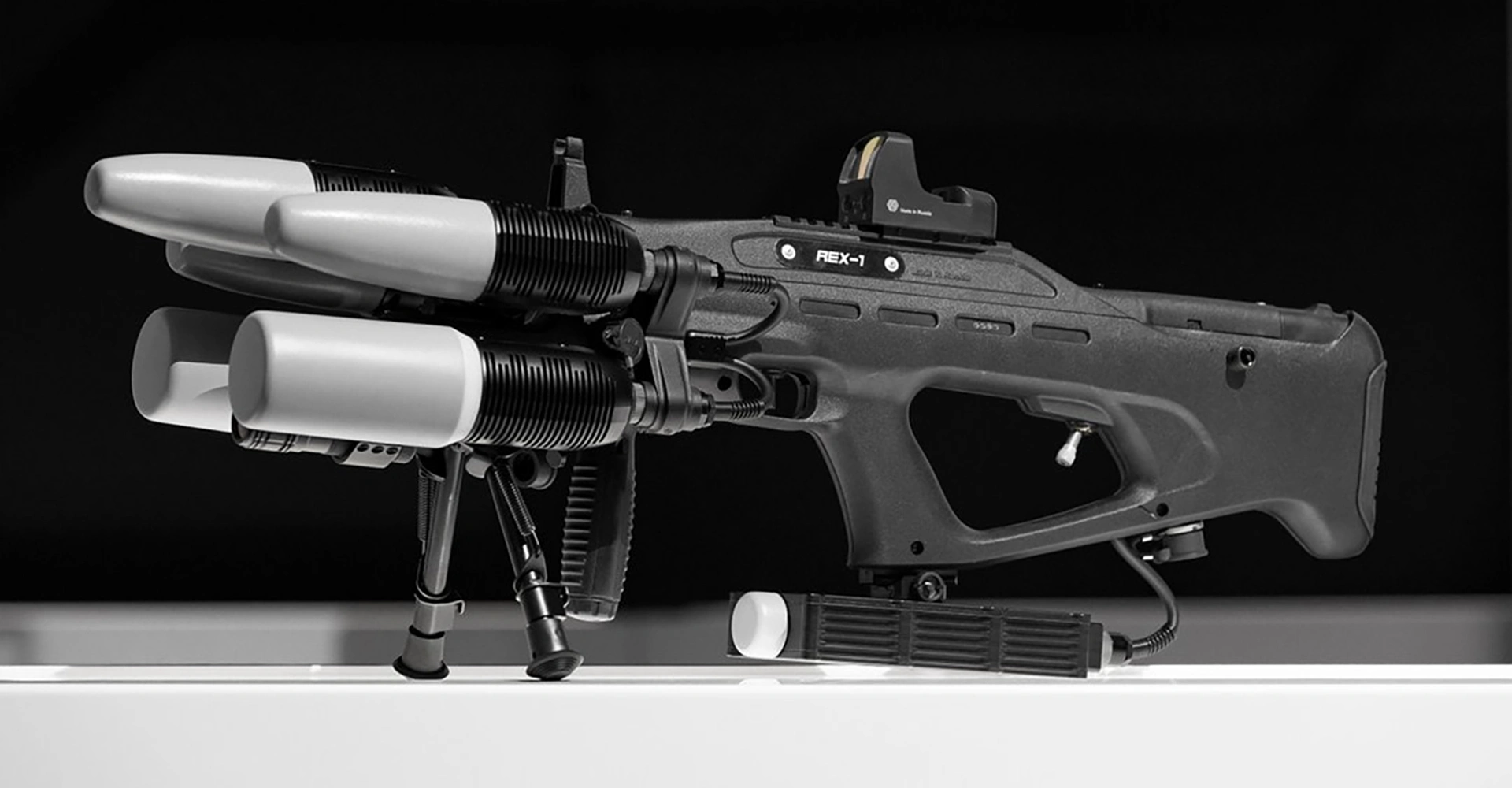
Re-purposed civilian drones have already changed warfare forever. At first they were primarily a scouting tool, but now they’ve become a deadly weapon.
The abundance of weaponized drones on the battlefield has made advancing extremely difficult. A small hidden group armed with a few dozen drones can hold back hundreds of vehicles from advancing.
Of course, there are also dozens of new models of military-grade drones being released every year. There are now mass-produced killer drones of all types being churned out by the tens of thousands. We covered some of the more important modelsback in July.
Ground and Sea Drones
It’s not just flying drones. Unmanned ground combat vehicles (UGVs) are also coming into play. The screenshot below shows Ukraine’s new UGVs armed with .50 caliber machine guns.
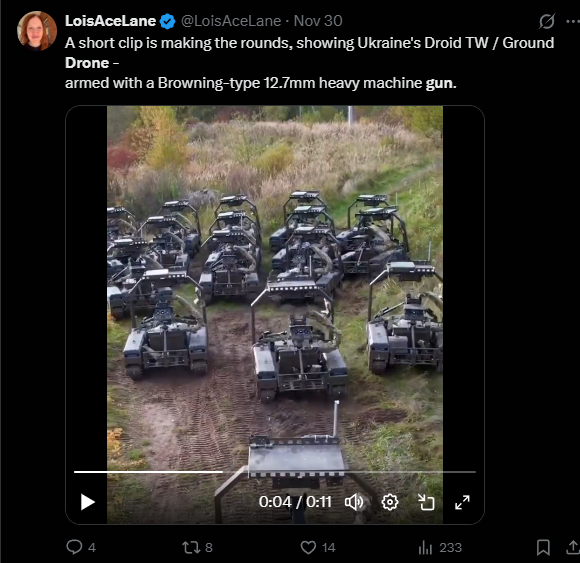
For now, these ground-based drones are crude with limited range and ammunition. But within a few years they will evolve into intimidating juggernauts roaming the battlefield. In the near future tanks and artillery will also be unmanned.
Drone warfare extends to the seas. And Ukraine has nearly perfected this form of warfare.
Below is the Magura V5, a Ukrainian sea drone which has sunk a number of valuable Russian warships. It was commemorated with the stamp shown below by the Ukrainian postal service.

The latest version of the Magura can carry an explosive payload of 1,400 lbs. That’s enough to sink almost any ship with proper placement. And the latest models even come equipped with anti-air missiles mounted on the top to counter Russian helicopters and jets.
Sea (and submarine eventually) drones will be an absolutely critical aspect of future wars. Imagine a swarm of 50 of these high-speed sea drones converging on an aircraft carrier strike group, while a swarm of airborne drones attacks from above. It’s virtually impossible to stop such an attack.
The age of mega-ships like aircraft carriers is drawing to a close. It seems likely that naval forces of the future will mostly consist of smaller missile boats and submarines.
Modern Missiles
One part of this war which wasn’t a surprise is Russia’s missile advantage. The country has always specialized in long-range fires, because it realized it couldn’t compete with NATO when it comes to traditional airpower (jets).
That investment has proved to be a wise one. Missiles have been a key advantage in this war. From hypersonic models like the Kinzhal and Iskander-M, to cruise missiles like the Calibr and KH-101, they’ve all been critical to Russia’s progress in the war.
The Iskander has been the most effective missile system of this war. The Iskander is a mobile ground-launched hypersonic missile which Russia mass produces.
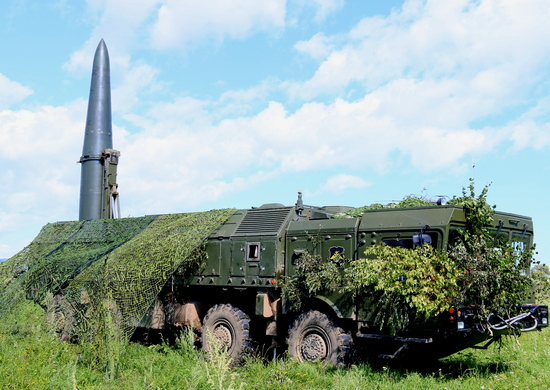
An Iskander-M launcher via Wikipedia
The Iskander-M has a range of up to 500 kilometers and carries a warhead of up to 700kg (1,534 lbs). It moves fast, with a burnout speed of Mach 5.9. It can maneuver during flight, and contains decoys and flares which are released as it approaches its target. Each launcher carries 2 missiles and is often accompanied by a reloading vehicle.
The Iskander-M has proven very difficult to intercept, as we covered back in October. The Patriot missile defense system has mostly been outmatched by it.
Iskander missiles are used to strike valuable targets such as command centers, Patriot missile defense systems, ammo/fuel depots, and HIMARS rocket launchers.
Speaking of HIMARS, this American-made rocket system has proven to be an extremely effective weapon for Ukraine.
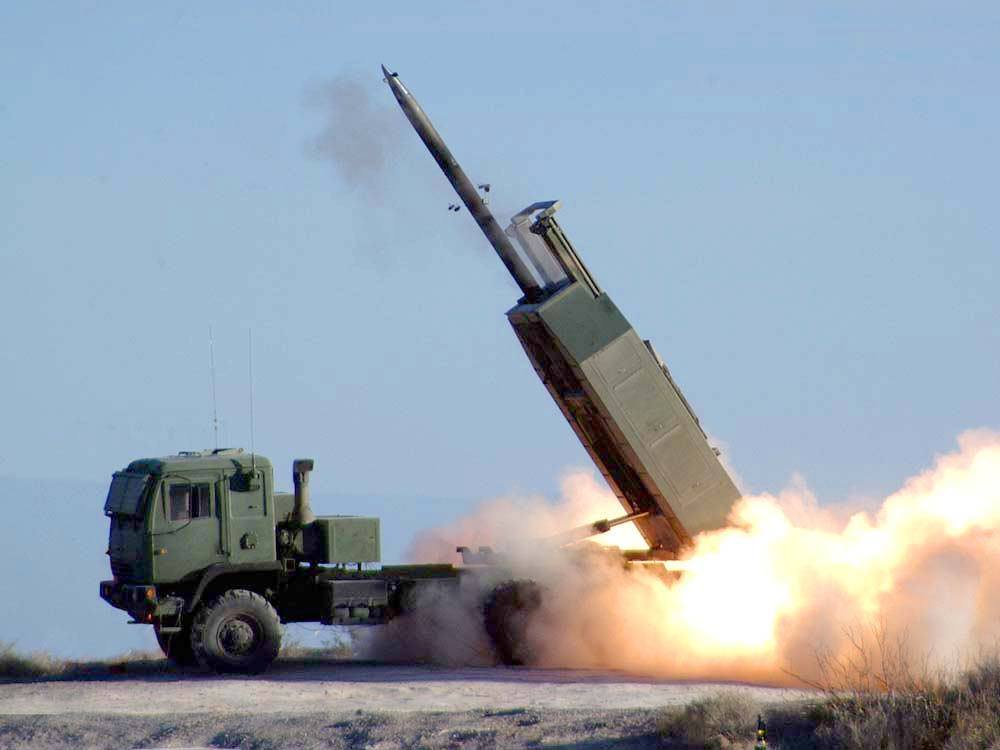
HIMARS launching a guided rocket, via Wikipedia
The HIMARS system fires 227 mm guided rockets at ranges up to 150 km. The warheads are relatively small at around 200 lbs, but have proven effective at taking out enemy command centers and other valuable targets. Each “pod” contains 6 rockets and is disposable. HIMARS can also fire a single larger ATACMS missile with a ~450 lb warhead.
Early on, the HIMARS was a wonder weapon for Ukraine, having devastating effects on Russian ammo/fuel depots and troop concentrations.
However, as the war has gone on, Russia has figured out how to “spoof” the satellite signals used to guide HIMARS rockets, and the weapons system has become less effective as a result. I’m sure the engineers at Lockheed Martin are working on fixing this, but it’s going to be an ongoing game of cat and mouse for the foreseeable future.
This is another takeaway from the Ukraine/Russia war. Electronic warfare is absolutely critical in modern conflicts.
Conclusions
The Ukraine war has been a wakeup call to the world. Drones are going to be the focal point of future conflicts. When a $350 piece of equipment can take out a $4 million tank and 4 specialist soldiers, the game has changed.
Soon, tanks and artillery units will also be unmanned.
Due to the rise of drones and unmanned systems, electronic warfare will become increasingly important. If you can jam the signal, you can stop the weapon. I expect future battlefields to be absolutely flooded with radio signals and microwaves.
We didn’t even get to AI in this piece, but will look to cover that in depth in the future. Drones and missiles are already becoming capable of autonomous action. But both sides are understandably secretive about their capabilities.
The bottom line is that the hunter-killer robots from The Terminator are moving from sci-fi to reality.
Combined with this new generation of hypersonic missiles, it’s a completely different landscape than it was just 20 years ago.
I am hopeful the war in Ukraine ends soon, but it has given us a rare peek into what modern warfare truly looks like. And it’s terrifying.
This is the age of asymmetric warfare. Pinpoint long-range weapons systems have eliminated the advantage of large troop concentrations and capital ships like aircraft carriers.
For a long time, only superpowers like America and Russia had access to these types of systems. Now they have proliferated throughout the world. The implications have yet to be fully realized.

Comments: