

Energy Crisis: Phase II
The war with Iran is heating up again.
In the Strait of Hormuz, Iran has fired on a large number of ships attempting to transit without permission. Missiles and drones have hit a number of U.S. bases in the region, sadly killing a small number of U.S. soldiers.
American forces have also been busy, launching heavy missile and bomb strikes at Iranian targets throughout the country.
Today we’re going to explore why negotiations failed.
And what the resumption of war means for investors.
Finger-Pointing
Both sides blame the other for the ceasefire failing. President Trump says Iranians are “scum” who violated the memorandum of understanding (MoU) in numerous ways.
Iranian leaders say the U.S. never released its frozen funds, and allowed Israel to continue bombing Lebanon.
Regardless of how it happened, the key takeaway is that the war is back on. There is little hope of a quick resolution now.
Jim Rickards is one of the only analysts who correctly read the situation. A few weeks back he wrote, “My estimate is that both sides have been playing for time in order to rearm and resume fighting.”
Throughout the ceasefire, Jim warned that a return to war was the most likely outcome. Now here we are. Back on the escalation track.
Yemen Joins the Fray
Yemen, a nation of 42 million people, is Iran’s only true military ally in the Gulf region.
For a long time, Yemen refused to be pulled into this war. Clearly, something has changed.
Today the country announced an embargo on Saudi ports. They aim to block Saudi Arabia’s oil exports, most of which have been re-routed to the West coast through the Yanbu pipeline.
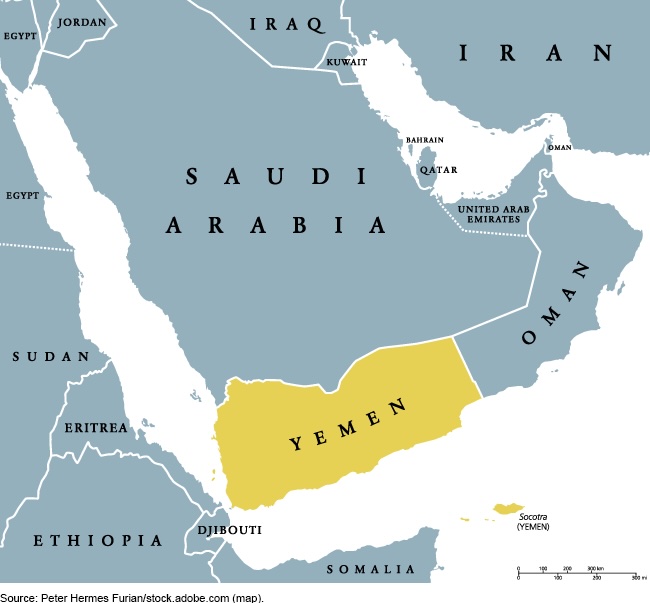
Source: GAO
As you can see in the map above, Yemen’s southeast corner overlooks the Strait of Bab el-Mandeb. This is a critical chokepoint for Saudi Arabian exports. Now Yemen claims that they will prevent Saudi oil tankers from entering ports or passing through the Strait.
Yemen has been at war with Saudi Arabia for much of the last 12 years. Iran has transferred missiles, drones, and other tech to allied Yemeni forces.
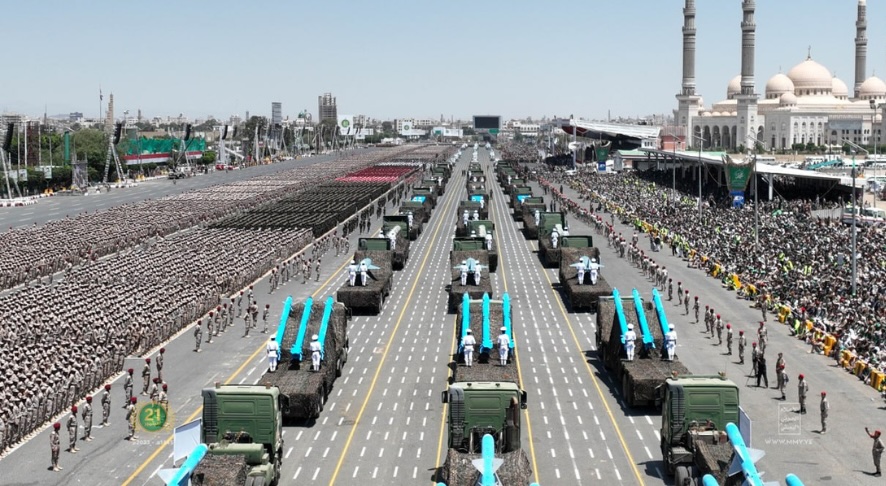
A military parade featuring Yemen’s Houthi missile forces. Source: IISS
Does Yemen have the firepower to shut down Saudi oil exports? We’re about to find out. Technically they don’t even need to hit moving ships in the Strait. They can target them in Saudi ports.
If they are able to cripple Saudi oil exports, the energy crisis will re-ignite in a major way.
Investor Implications
Brent crude oil has risen from a recent low of around $72 to $88.
If the Strait of Hormuz remains closed, and Yemen is able to prevent Saudi exports, we’re going a lot higher.
If both sides begin to target oil infrastructure in earnest… sky’s the limit. Hopefully this outcome can be avoided. But the blockades and embargoes alone have the potential to send oil prices soaring.
Because global oil inventories are already running on fumes. And strategic reserves in the U.S., Europe, and Asia have been drawn down significantly.
America’s Strategic Petroleum Reserve (SPR) just hit a 43-year low:
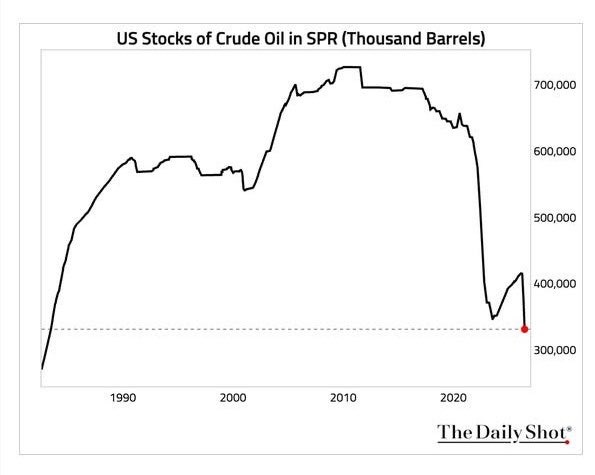
Source: Daily Shot
Many of the barrels that are left are unusable. If we drain these reserves too low, the caverns risk collapse. And the oil at the bottom is dirty and contaminated.
Jim Rickards explains the SPR mechanics today in his 6th link:
The SPR has a storage capacity of about 700 million barrels of oil. It can be drained and refilled, but it cannot safely be drawn down below roughly 250 million barrels. At that point, the salt caverns begin to lose structural integrity and critical equipment can fail.
The SPR was always intended to be used for national security and was never meant to manipulate gasoline prices or serve partisan political purposes.
But in 2022, Joe Biden drew down the reserve to help offset inflation that was showing up at the gas pump. In my view, he did this to improve Democratic prospects ahead of the November 2022 midterms.
Trump has had to draw down the SPR even further to offset reduced oil flows through the Strait of Hormuz during the war with Iran. This conflict involves direct U.S. military action and is closer to the type of supply disruption the SPR was originally designed to address.
Still, Trump could also be seen as trying to lower gasoline prices ahead of the 2026 midterms, much as Biden did in 2022.
The result of this political use of the SPR is that reserves are now at their lowest level since the early 1980s, and there are growing signs of equipment failures and structural deterioration within the system itself.
In short, the energy crisis is entering its second phase. And $150+ oil could still be in the cards.
This conflict must be resolved quickly to avoid a disastrous situation. And a quick solution seems unlikely.
Worlds Apart on Expectations
Negotiations were doomed to fail. American and Iranian leaders remain on opposite sides of the planet in terms of expectations.
Both want everything, and neither is willing to compromise.
The only real option left is a return to war. And unless a diplomatic miracle happens, we’re headed for more chaos and disruption.
Yet somehow U.S. stocks remain near all-time highs. I don’t believe this can last. The economy looks shaky, stocks remain richly-priced, inflation is uncomfortably high, and phase II of the energy crisis looms.
This week we’ll explore what investors can do to prepare their portfolios for this chaotic environment.
More soon.

Comments: