Trump’s Russia Play | China’s Fear

There has been a flurry of activity between U.S. and Russian negotiators recently involving global energy markets and the role of Russia in the war in Ukraine.
So many deals are being discussed, with some already announced, that it’s a challenge to keep abreast of the news. All of these deals have implications beyond the four corners of each.
Despite the blockage in the Strait of Hormuz, the world is not running out of oil. There’s plenty of U.S., Russian and Venezuelan oil around and substantial amounts are making it out of the Persian Gulf, albeit at higher prices due to insurance costs.
But we don’t put oil in our cars and trucks. We use gasoline and diesel. Planes use jet fuel, which is derived from kerosene. Those are all refined products. The real bottleneck is not in the Persian Gulf — it’s in the refineries.
Ukraine has been blowing up Russian refineries using swarms of drones that are relatively easy to manufacture. Russia is a major exporter of refined products, as are the Persian Gulf countries. Damage to Russian refineries, combined with limited exports of Persian Gulf refined products, is reducing the world supply of diesel and keeping the world price high.
In turn, higher diesel prices get passed along to consumers because trucks transport much of the nation's goods and supplies.This is the real source of current U.S. inflation and is a huge political problem for Republicans in the coming midterm elections.
Trump wants Ukraine to stop attacking Russian refineries. That’s ironic because Ukraine is using geolocation and satellite intelligence supplied by the U.S. to launch its attacks. If Trump simply cut off intelligence sharing with Ukraine, that could go a long way to stopping the Ukrainian attacks on Russia because Ukraine relies heavily on outside satellite imaging and targeting information. Trump recently threatened to do just that.
The U.S. is finally moving on the diplomatic front to reach deals with Russia. One deal would allow U.S. investors to buy assets of Lukoil, a major Russian energy company with a retail gasoline and diesel network. The U.S. could offer partial sanctions relief, allowing Lukoil's Russian energy output to reach its distribution network.That’s another step in the direction of lower prices for gasoline and diesel at the pump.
Natural Gas Too
Another deal under discussion would allow U.S. investors to invest in the Nord Stream natural gas pipelines. These are pipelines that bring natural gas from Russia to Germany. This relatively cheap natural gas was critical to Germany’s success as a manufacturing and export powerhouse as Germany phased out nuclear power and reduced its reliance on coal-fired plants as part of the green new scam.
A covert operation, probably conducted by the CIA and MI6, blew up a section of Nord Stream in September 2022 as a way to choke off revenue for Russia after the start of the war in Ukraine. Russia found other markets for some of its gas, but German manufacturing became globally uncompetitive due to high energy costs.
Getting U.S. investment in Nord Stream could lead to a repair of the pipelines and get natural gas flowing back into Europe from Russia. In exchange for allowing these investments, Russia would get sanctions relief from the U.S.
The net effect would be to increase the supply of diesel and natural gas and to lower world prices. Ukraine would be a big loser, but they’re losing their war anyway. Some kind of detente between Russia and the U.S. would help get the Ukraine war over sooner. As an added bonus, Russia could help the U.S. pressure Iran to end the war there.
Investors should understand how all of these matters are connected: energy, money, sanctions, Ukraine, Iran, Russia and the U.S. are in a multi-tiered, multi-vector mélange that could bring peace and prosperity if handled diplomatically.
In addition to Ukraine, another big loser would be China if the U.S. and Russia join hands to isolate the Chinese Communist Party (CCP). One of the big impediments to this kind of multi-part deal is Western Europe and the UK, which seem to have a death wish to go to war with Russia (they would lose).
Chokepoints
Investors are familiar with the idea of chokepoints in the geographic sense. Important global chokepoints in seaborne transportation include the Strait of Hormuz, the Straits of Malacca, the Suez Canal, the Bab al-Mandeb Strait at the mouth of the Red Sea, the Panama Canal and several others.
Arctic shipping lanes that pass Greenland are an emerging chokepoint. But there are other supply chain chokepoints of global significance that are not strictly geographic. The Nord Stream pipeline is one. Diesel refineries are another.
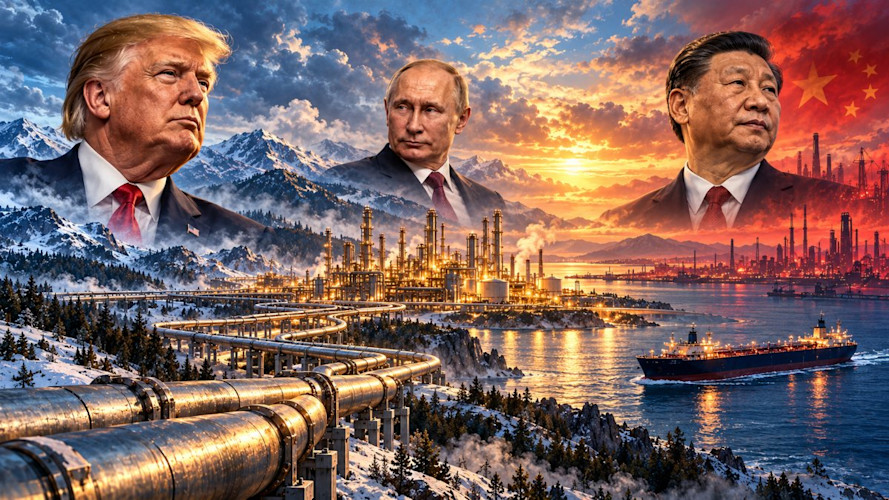
Russia plays a critical role in Arctic shipping, the Nord Stream pipeline system and global refining operations. China is vulnerable to interdiction of every geographic and supply chain chokepoint noted because of its dependence on energy imports to drive its economy.
The U.S. already has influence over many of these chokepoints and could extend that influence in cooperation with Russia. This would leave China on its own against the combined power of the U.S. and Russia exercised through the chokepoints.
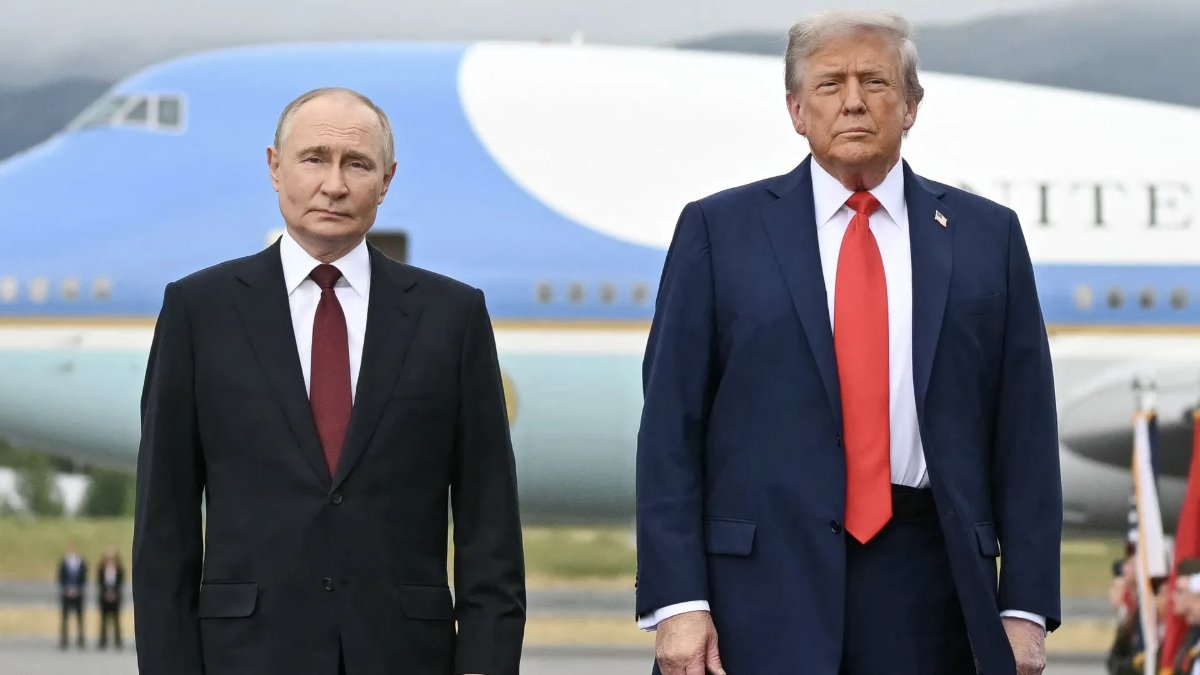
Let’s give this time. These energy and geostrategic plays won’t solve inflation problems or increase growth overnight. But they do represent important steps in the right direction. Trump and Putin both know exactly what they’re doing.