Lies About Oil

In the energy world, all eyes remain on the Persian Gulf.
Crude oil exports from the region are increasing. But by how much? That question is hotly debated.
An official White House account on X quoted a WSJ article today around noon:
"With flows through Saudi Arabia’s East-West pipeline recently restored, the 10-day average of crude exports from the Middle East has rebounded to 17.5 million barrels a day, or 98% of prewar levels, J.P. Morgan analysts said."
If JPMorgan is correct, this is a major breakthrough. A return to 98% of pre-war crude exports would mean the U.S. strategy is working.
But 98%? Again, call me skeptical.
Earlier this week, a separate source said oil exports from the region returned to 93% of pre-war levels in September. The problem with that claim is that Saudi Arabia’s primary pipeline was down due to drone strikes for about 2 weeks in September. That alone accounted for about 5 million barrels per day.
The source of much of this new data is tracking firm Kpler. They use satellite images and on-the-ground reports, among other data collection methods.
It’s important to note that Kpler says the September data is both “provisional” and “preliminary”. So it’s essentially an educated guess.
Notably, Kpler also reports that Iran’s oil exports dropped to zero last month, from a peak of over 2 million barrels per day in February.
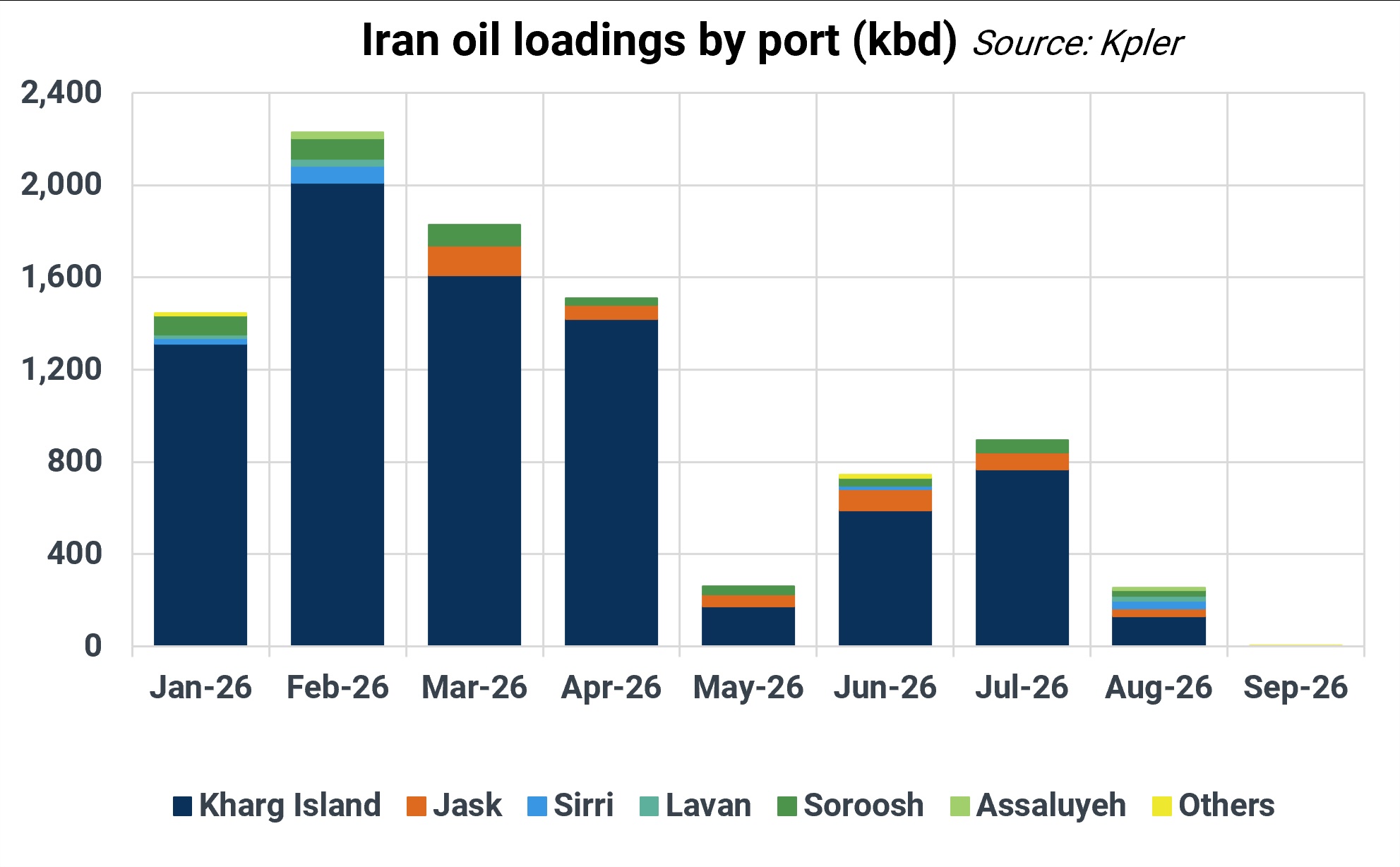
This claim looks solid. No oil tankers have been spotted filling up at Iran’s Kharg Island in a long time. It looks like their exports are finally cut off. This starts the clock ticking on an economic time bomb, but the fuse may burn for a year or longer.
And it seems that only oil exports are increasing. Bloomberg reports that liquified natural gas (LNG) shipments out of the Gulf are still only about 20% of pre-war levels. Refined fuels are similarly low.
Despite all the good news about oil exports, Brent crude moved up 3.29% as of 12:30pm ET today. Murban crude, which is the UAE’s oil benchmark, moved up 5.46%.
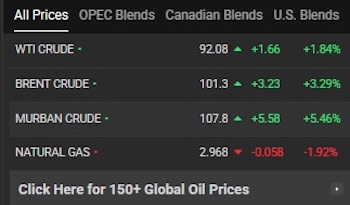
Source: OilPrice.com
The market isn’t fully buying this “98% of pre-war levels” story. At least not yet.
Oil prices are still 55-70% higher than pre-war. This could be partially a transit and processing issue. It takes a while for oil to be refined into usable products, then shipped to its destination.
But there are three other factors we must consider.
- The optimistic data on oil exports from the Middle East could be wrong
- Iran continues to hit tankers transiting Hormuz with anti-ship missiles
- At any time, a volley of drones and missiles aimed at oil infrastructure could spoil the party (again)
Data Wars
Tracking and measuring oil flows is trickier than it may seem. Oil is escaping the gulf today partially through a huge network of ships which transfer oil from one tanker to another.
Many of the tankers “run dark” with their AIS tracking systems turned off. So measuring exports requires detailed analysis of satellite imagery.
Even from space, a picture can tell analysts how much oil is in a tanker. They simply measure the shadow, and can tell how full it is by how deep it sits in the water.
But the problem is, there’s been heavy censorship of satellite images over the Persian Gulf since early March.
So it’s difficult for anyone to confirm Kpler’s data.
A Cornered Animal?
One issue about all of this bothers me most. Iran is still hitting tankers and ships with missiles and drones in Hormuz.
For now, at least some brave captains and crew appear to be pushing through. But how long will shipping companies take the risk? The monetary rewards are great, but there’s a chance that Iran just keeps firing missiles at adversarial tankers.
My fear is that even if our strategy is working, Iran could ramp up attacks on tankers and pipelines. Like a cornered animal, they are most dangerous when seriously threatened.
If they feel like they have no way out, another wave of infrastructure destruction becomes likely.
Don’t get me wrong, more oil is getting out of the Middle East, and that’s a good thing. But for now, I remain cautious.
I believe the reports saying we’re back at 90%+ of pre-war oil exports are far too optimistic. The U.S. just told France and Germany to release their emergency diesel stockpiles, or they’ll stop getting diesel exports from us.
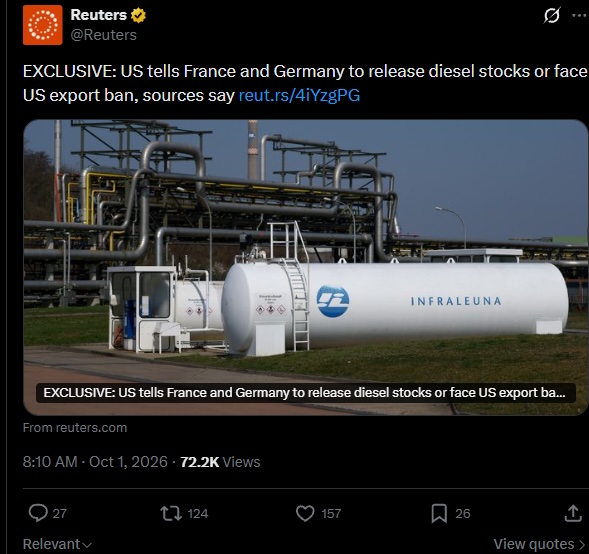
Source: X
Would we be doing this if exports were truly back to normal levels? I doubt it.
And at any time, a few missiles or drones on Saudi Arabia’s pipeline could set exports back 30% again. And if Iran ramps up attacks on tankers transiting Hormuz, then we’re back in an ugly spot.
Then there’s the Houthis in Yemen, who have been firing missiles at Saudi oil infrastructure over the past month. Things have cooled down a bit on that front, but could fire back up at the drop of a hat.
In short, we’re not out of the woods yet. The increase in oil exports is good news, but we don’t know how much is truly getting out. And it may not last.
Some readers may be wondering why I’m spending so much time monitoring the situation in the Middle East.
The outcome will greatly impact our positions in gold miners and oil producers. Gold miners thrive in a low oil price environment, and oil stocks are the inverse.
This is why I recommend owning some of both, at least for now. There will come a time to take profits on oil stocks, but I don’t think we’re there yet.
My base case is that oil exports via Hormuz and the broader Gulf region remain crippled for far longer than most analysts currently project.