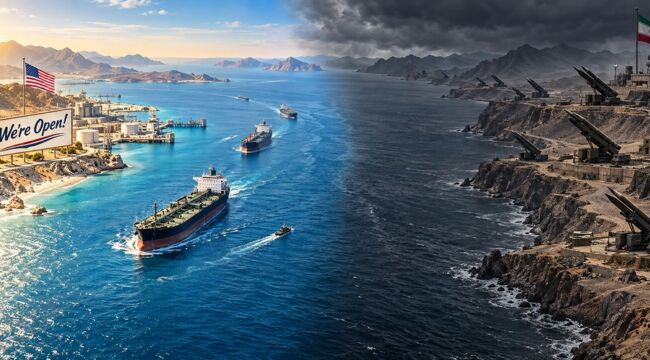

The Strait Debate Gets Heated
Is the Strait of Hormuz open or closed?
Depends who you ask.
Oil bears will tell you that oil is flowing through the Strait, back at 80-93% of pre-war levels. Here Bloomberg oil specialist Javier Blas says Gulf crude oil exports are back to 80% of normal:
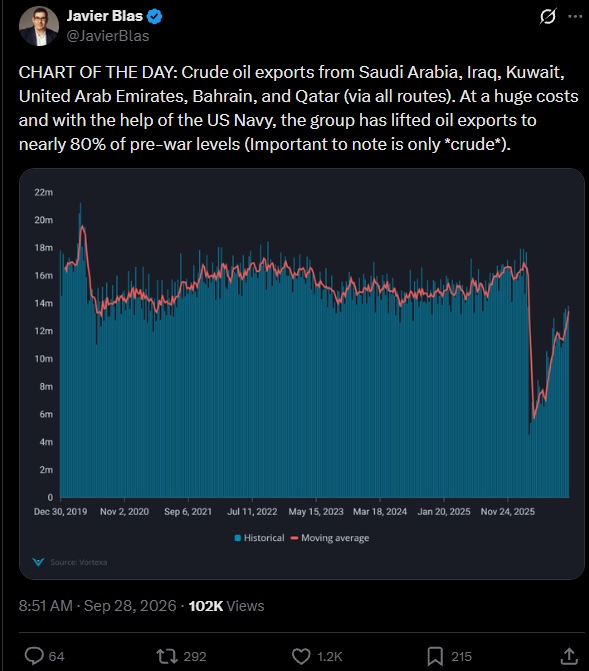
Javier is a widely followed energy reporter. But he tends to operate from an “everything’s going to be alright” perspective.
If Javier’s data is correct, it means oil is flowing through Hormuz at high levels. Call me skeptical. But let’s examine the evidence.
Here’s what the Strait looks like currently. It is essentially divided into two paths. The northern route, controlled by Iran. And the southern (Oman) route, controlled by the U.S.
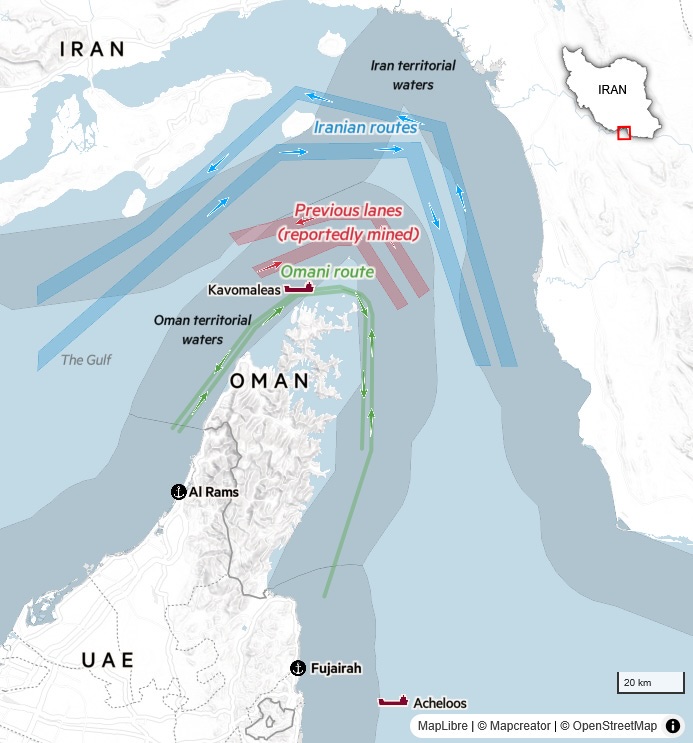
Source: Financial Times
Ships passing through the southern Omani route are often escorted by U.S. fighter jets, which can shoot down and jam drones and missiles.
The Omani path has apparently been dredged out by U.S. forces, to make it passable for large tankers.
And surprisingly, it appears the U.S. soldiers are sometimes on board the tankers. NBC News just reported:
Eight U.S. Marines were injured two weeks ago when an Iranian cruise missile attacked the ship they were operating on in the Strait of Hormuz, according to three U.S. officials.
The Marines were not on a U.S. Navy ship, according to the officials. The officials declined to define what type of ship it was, instead referring to it as a maritime vessel.
Importantly, it was not a U.S. Navy ship. And thankfully all 8 marines were able to return to duty.
But this is a big story. The timeline really jumps out: “two weeks ago”. Why is it just coming out now?
What role do U.S. soldiers have on a ship crossing the Strait of Hormuz? Are they the crew? Or just providing defense assistance? We don’t know, and the details are sparse. But something’s happening here.
Information Wars
It is clear that more oil is sneaking through Hormuz than at the beginning of the war. But exactly how much is a hotly-debated matter.
Before the war, there was about 20 million barrels of oil per day flowing through this chokepoint. Today? I’d guess 7 million, at most.
Some of that shortfall was being made up via Saudi Arabia’s East-West pipeline, but that was hit by drones a few weeks ago, and is only now becoming operational again.
And we need to keep in mind that the newly-repaired pumping stations could be hit again at any moment.
The world’s energy situation remains precarious. And at any time, the war could re-escalate. This is why I can’t get on board with oil bears who are predicting $60 a barrel by the end of the year.
In order for me to get bearish on oil, I have to see a path to resolution to this conflict. And there’s still nothing in sight.
Iran Tells a Different Story
Iranian news agency Fars reported that over the weekend, Iran struck 19 ships in the Hormuz area with anti-ship missiles. At least one video of a burning ship in the area was posted, but the “19 ships” claim is unverified for now.
We’ve covered Iran’s anti-ship capabilities in detail before. This picture sums up their strategy:
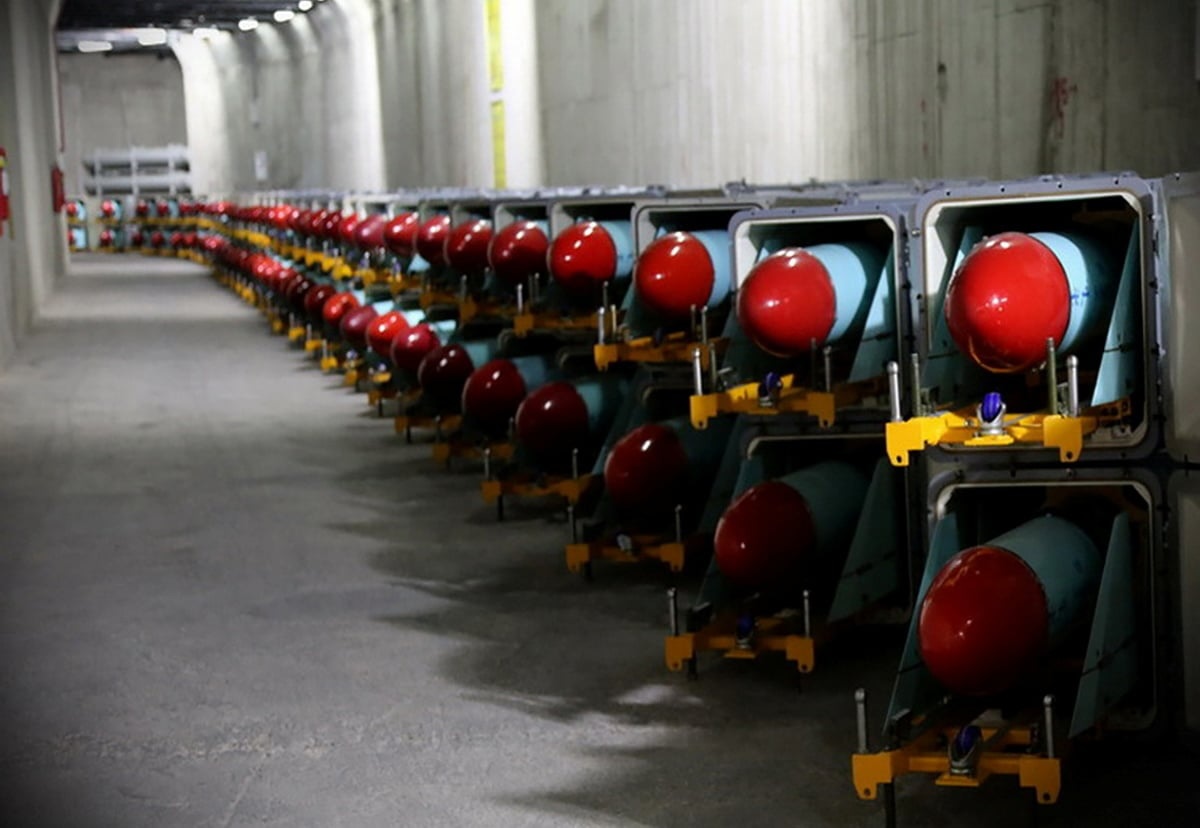
Source: National Interest
Thousands of anti-ship missiles, hidden in reinforced tunnels and underground bases across the coast. It’s a very difficult challenge.
Who’s Right?
So who are we to believe? The oil bears, who say that Middle East exports are returning to normal, or the bulls who say it’s not?
Personally, I continue to side with the skeptics. I’m bullish on oil, and bearish on a resolution to this war anytime soon.
We don’t have a good read on how much oil is actually getting out of the Middle East at this time.
Additionally, there are just so many ways the situation could go sideways from here. A few drone strikes, and the East-West pipeline goes down again. A few oil tankers struck, and ship owners may refuse to run the Strait.
Every time we hear about a deal “just around the corner”, it turns out to be another mirage. So when the market continues to react to every supposed peace proposal, I just shrug.
I don’t think Hormuz will return to normal traffic levels until we reach a deal with Iran. At the current pace, that’s going to take a long while.
I worry that all the celebration over a miraculous recovery in oil shipments is premature. The data is far from clear.
So I’m staying long oil for now. If that changes, you’ll be the first to know.

Comments: